Donate today to help Birmingham stay informed.
The Birmingham City Council approved a public camping ordinance Tuesday aimed at clearing out homeless encampments while also providing support to unhoused residents who have been living on the streets.
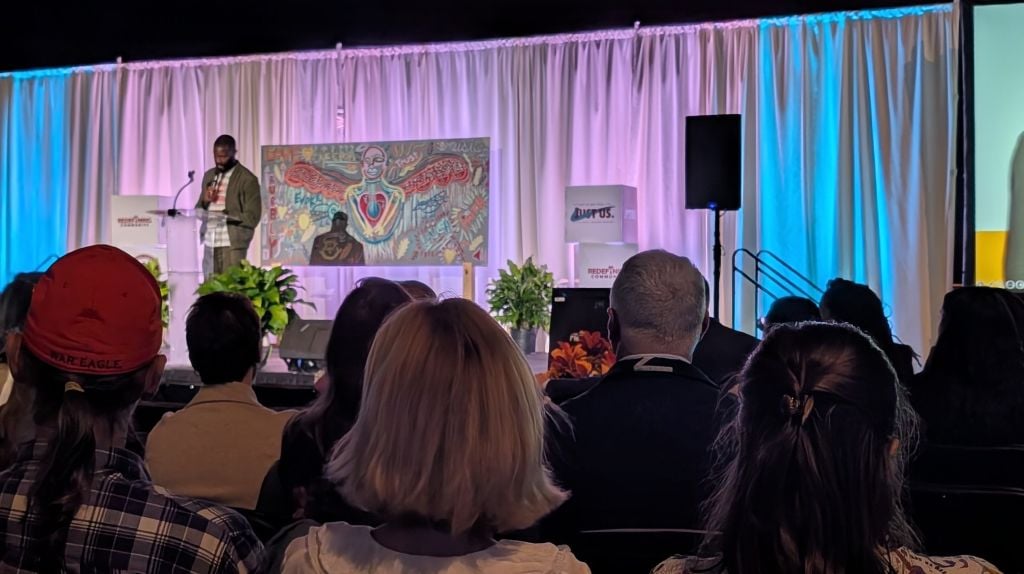
The move came just days after the city’s 2026 State of Homelessness Summit, in which city leaders and advocates reiterated a commitment to reducing homelessness and discussed approaches to make that happen.
The new ordinance takes a three-pronged approach. It prohibits camping on public-owned property, it establishes a process for removing encampments, and it connects individuals experiencing homelessness to available resources.
“This ordinance establishes clear expectations and a consistent process for addressing encampments while ensuring that outreach, compassion, and connections to shelter and supportive services remain part of our response, Mayor Randall Woodfin said in a press release. “We can prioritize public safety while recognizing the humanity and dignity of people experiencing homelessness.”
The ordinance allows for a tiered notification system for clearing out encampments. Unhoused residents will receive a standard 48-hour clear-out notification for unauthorized encampments; residents will receive 24 hours’ notice for encampments near infrastructure such as bridges and viaducts; and two-hour notifications will be given for encampments that pose an imminent threat to public safety. Notifications will be given in writing, in both English and Spanish.
The city will provide 30 days of storage for eligible personal items of unhoused individuals who are displaced.
Alanah Melton, director of the city’s Unhoused Strategies initiative, said the city’s approach aims to balance public safety and human decency in its process.
“We are committed to meaningful outreach, connecting individuals to available services and ensuring a consistent, compassionate process for addressing encampments,” she said.
Goal to reduce homelessness by 40% in 2 years
During the homelessness summit Friday, the initiative reshared its road map of services and highlighted its progress and the challenges it faces in its goal of decreasing homelessness by 40% in two years.
As of September, there were 220 people experiencing chronic homelessness in Birmingham, and 777 Birmingham City School students were homeless. Seventy-four veterans were unhoused.
The city pledged in the road map to reduce the number of encampments among other goals, such as reducing the number of youth experiencing homelessness to functional zero and developing a sustainable shelter framework.
An example of elements in that framework would be the $2.4 million Home For All partnership between the city and Faith Chapel that opened 15 micro-shelters in April. Currently, those shelters are filled.
Birmingham lost 37% of its permanent housing beds between 2023 and 2025, Elizabeth Caine, board chairwoman of One Roof, said at the summit.
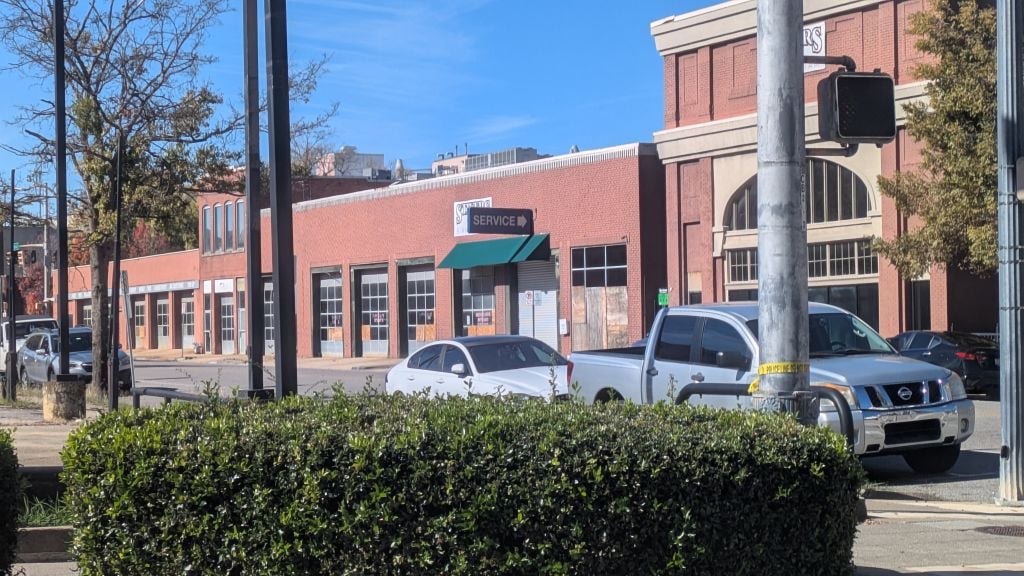
In addition to public encampments, unhoused residents have taken up residence in vacant buildings such as the former Adamson Ford building on Second Avenue South and the Alabama Power substation on Powell Avenue. The city sought an emergency court request to demolish three buildings on the former Adamson Ford property. Alabama Power has presented plans to demolish its building to the city, citing vagrancy issues along with its need to expand.
Birmingham Police Deputy Chief Heath Boackle said officers are working to establish deeper connections with the unhoused community and to connect them to available resources.
“We must understand that homelessness is not a crime and mental health should not automatically become a law enforcement issue; however, when situations create safety concerns, criminal activity or other threats occur, we have a responsibility,” he said.
Woodfin told attendees at the summit that addressing homelessness is a communitywide issue.
“No one should be living on our streets in this city,” Woodfin said. “No one should be living on the streets in America. We can do better. We can afford those who are the most in need some path to not being unhoused.”
He noted the city’s increased financial commitment to battling homelessness. It increased the general fund dollars dedicated to $3 million and will allocate $2 million to fighting the opioid crisis.
The city also will open the Birmingham Oasis, a .21-acre daytime respite center at 600 Third Ave. N., dedicated to connecting homeless residents to healthcare and other essential services.
Melton said the city is coordinating data collection with its partners and will soon publish dashboards where homelessness statistics can be tracked.
“We envision a Birmingham that’s focused on prevention instead of crisis,” she said. “No longer just reactive, but with resources that match the size of the issue. We are preparing a Birmingham that others will look to as the model of public safety and public health as we engage with homelessness. In the future that we see, all of these things are possible.”
Boots-on-the-ground approach
Michelle Roberts of the organization Community on the Rise, a nonprofit providing resources for the homeless community, is not only a part of the city’s solution. She is also a product of efforts to eradicate homelessness in Birmingham.
Roberts has gone from working two jobs while homeless to becoming a homeowner. She said she’s experienced the issue from both sides.
“People think that (homeless) people cannot become productive citizens, that they cannot be your neighbors, that they cannot teach at your child’s school, that they can’t have a house next door,” she said. “Just because you are homeless doesn’t mean you are an addict or mentally unstable. Some people like me chose it because it was the only safe space that they knew.”
“I see productive people that I help every day. These people are smart; I get life lessons and real truths from them. But you don’t get the chance to know them because they don’t live in your neighborhood, they’re not in your tax bracket.”
Roberts said Birmingham is using a boots-on-the-ground approach to solving homelessness.
“They’re reaching out to communities,” she said. “They have people up at 4 or 5 o’clock in the morning to visit encampments asking how they can help. I love the way that they’re redefining community. The people in the mayor’s offices aren’t saying I can do this by myself. We need your church, we need your community. Their approach is to include everybody.”
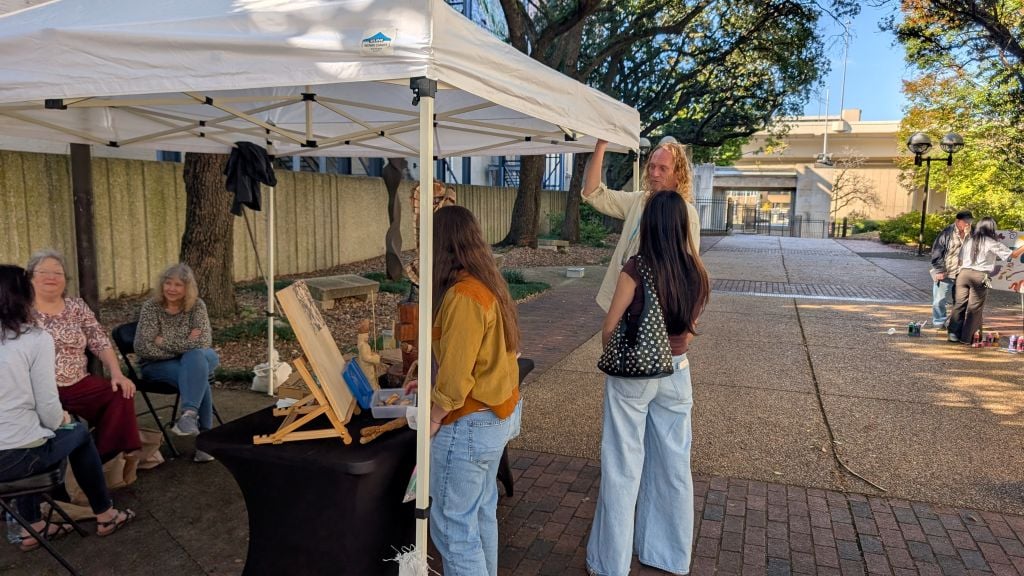
Sculpture artist Clipper became homeless for five years after breaking his back. He applauds the city’s efforts to address homelessness.
“They’re trying,” he said. You try and you fail, you keep trying. You’ll eventually figure something out. It takes heart to stay in the fight.”
He echoed the message that the community has to work to solve homelessness together.
“You always have the poor with you,” he said. “It takes people giving up a little bit of theirs. Most people are like, ‘That’s mine, that’s mine. I deserve that.’ Really? Who says you deserve? If that’s the case, everybody deserves. I think people just need to actually care.”