Donate today to help Birmingham stay informed.
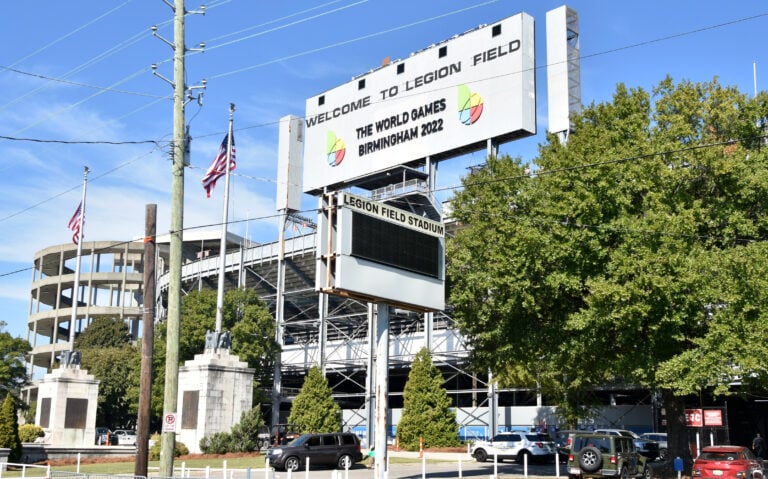
Alabama A&M and Alabama State are the centers of attention during the run-up to the 85th Magic City Classic. Dozens of events this week culminate in the featured event when the Bulldogs and the Hornets face one another on the gridiron of historic Legion Field on the afternoon of Oct 31.
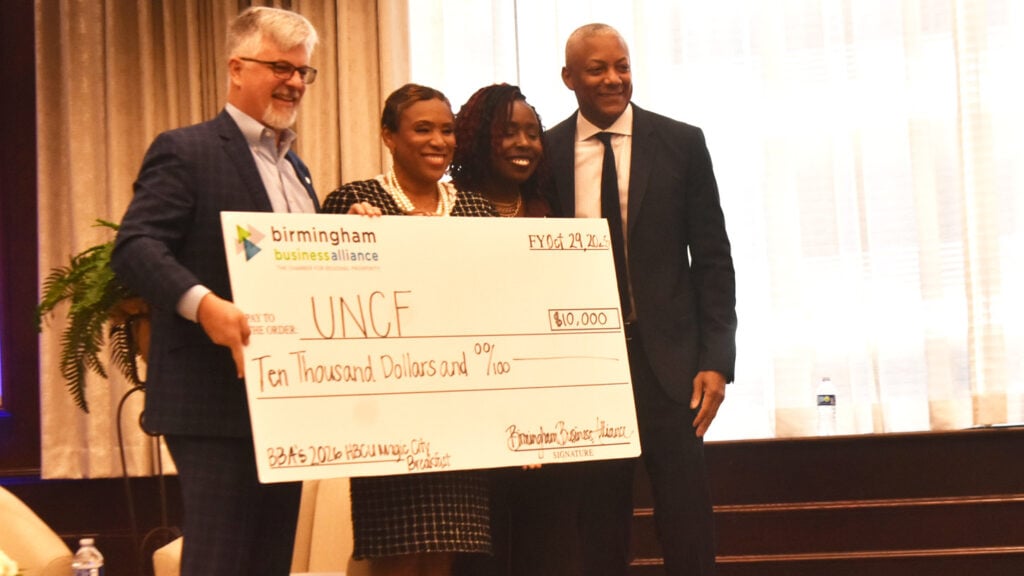
But A&M and State shared the spotlight Thursday morning with their fellow historically Black colleges and universities, and historically Black community colleges during the Birmingham Business Alliance’s Magic City HBCU Breakfast.
The State of Alabama is unique, serving as the home of 14 HBCUs, the most in the nation. And those institutions make a measurable difference in the economy of the state.
“That is something to be proud of,” Birmingham Mayor Randall Woodfin said.
According to the United Negro College Fund’s 2024 Economic Impact, those institutions produced a total economic impact of $1.4 billion for its local and regional economies. This estimate includes direct spending by the state on faculty, employees, academic programs and operations and by students, as well as the follow-on effects of that spending.
The report states every dollar spent by Alabama and its students produces positive economic benefits, generating $1.2 in total spending for its local and regional economies. Communities and regions hoping to foster a more robust and diversified economic climate find HBCU-connected spending a critical component of that effort, the report read.
Those institutions account for 13,434 jobs for local and regional economies. Of that total, 5,542 are on-campus jobs and 7,892 are off-campus jobs. For each job created on campus, another 1.4 public- and private-sector jobs are created off campus. In other words, each $1 million initially spent by Alabama and its students creates 11 jobs.
The total lifetime earnings of 2021 HBCU graduates is $15.7 billion, the report read. Alabama plays a major role in the economic success of its graduates by enhancing their education, training and leadership skills. A college degree opens the door to economic prosperity through greater employment and earnings potential. In fact, the 6,571 graduates in 2021 can expect total earnings of $15.7 billion. That’s 42% more than they could expect to earn without their college credentials. Viewed individually, an Alabama college graduate working full-time throughout his or her working life can expect to earn $712,872 in additional income due to college credentials.
Jermaine “Funny Maine” Johnson hosted the BBA breakfast and moderated a panel that discussed how businesses can help to keep the talent that is nurtured at HBCUs in the state. Woodfin summarized the panel’s talking points.
“What’s the number one thing we can be doing for our graduates to keep them in this state?” the Birmingham mayor asked. “One word: jobs. As a synonym, use opportunity, but that’s the same thing.
“What we do for our young people, what we do for our next generation, what we do for our current college students at our 14 historically Black colleges and universities in this state, is we got to give them two things,” Woodfin said. “We’ve got to give them exposure; we’ve got to give them opportunity. I got my first internship in politics, in public service after my freshman year (at Morehouse College). It was easy for me to be exposed to and get an opportunity when I walked across the stage.”
Speaking directly to employers in the Harbert Center’s Beeson Hall, Woodfin said being intentional about building that pipeline with colleges and universities in the state to provide internships, apprenticeships and opportunities as early as the summer between their freshman and sophomore year is the key to them securing their future employee, their future team member, their future workforce.
“Thank you,” he said, “for supporting our HBCUs.”