Donate today to help Birmingham stay informed.
The Central Alabama Water board on Friday voted to raise water bills for hundreds of thousands of customers in two fee increases.
The base rate for water and the charge for volume of water used each will be increased by 3.4% as of the first of the year.
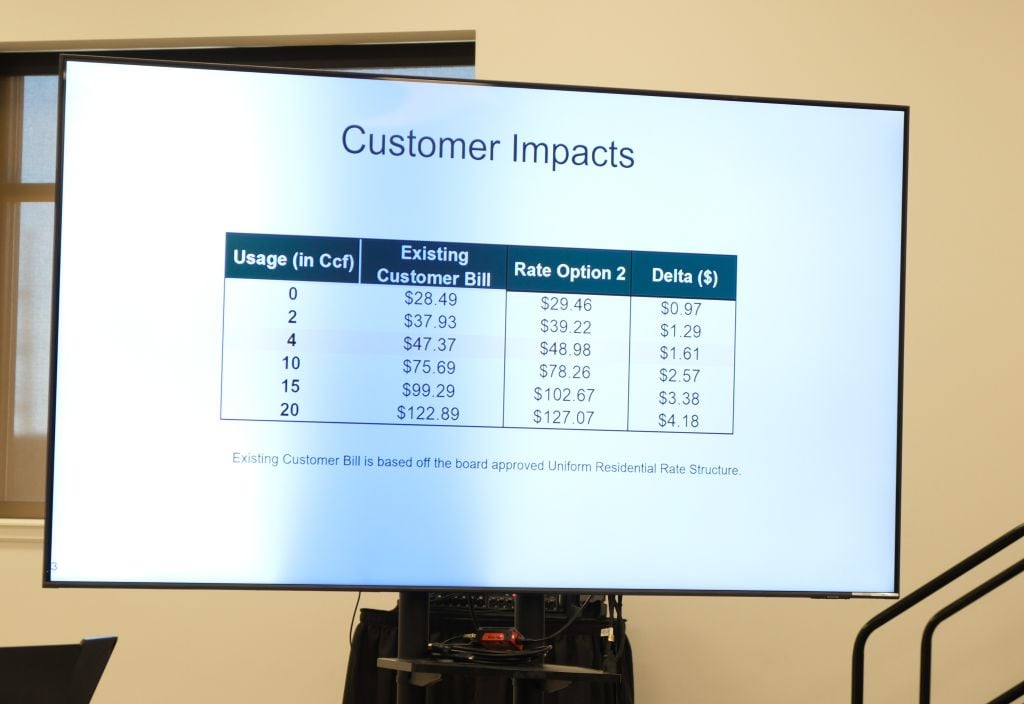
For an average residential customer using about 4 CCF of water per month, the increase will be about $1.61 per month in their bill, or about $19.32 annually. CCF, or a hundred cubic feet, is a standard measure for water, representing about 748 gallons.
The board is facing the need for major repairs to the aging system, including replacing leaking lines. Staff briefed board members in May that, without significant revenue growth, CAW would have to cancel or delay major repair projects, or it would have to rase rates.
In its October meeting, the board was presented with a proposal for the largest rate hike in a decade of 6.5%. On Friday, that was worked down to 3.4%.
“It’s a little bit of pay me now or pay me later,” said board Vice Chairman Phillip Wiedmeyer. “If we delay, the cost of doing those projects in the future are going to be more expensive than it would be to do them now.”
The new rates will go into effect Jan. 1 and will be reviewed again in May.
Ray Sloan, chief reliability officer for CAW, told the board that, despite recent progress on pipe replacement, 53% of the system’s water revenue is lost, with about 58.3 million gallons of water that is unbilled or leaks from the system’s 4,100 miles of water mains every day.
“It’s not good,” Sloan said. “It is not indicative of a system that can make it a little bit longer. It is not indicative of a system where the pipe is reaching the end of life; it is indicative that our system has reached the end of life in so many areas. It’s crumbling.”
After the rate increases, CAW’s proposed FY2027 Operations and Maintenance budget totals $126.7 million, slightly below the revised FY2026 spending plan the board approved in March. Meanwhile, the gross FY2027 capital budget stands at $49.7 million, following a steep 54% cut to its 2026 capital budget, which was slashed from $75.8 million to $35 million.
The proposed FY2027 capital projects budget would allocate no funding to repair Lake Purdy Dam, which is at risk of failing since the project to stabilize it was canceled.
CAW board member Jarvis Patton Jr. said it is unfair that ratepayers — some of whom can barely afford their water bills now — should be made to bear the brunt for the utility’s financial mismanagement.
“That’s just wrong. If you got to delay a plan or cut the plan for three months so you won’t have to spend that much money, what’s wrong with that? If you haven’t fixed the pipes in 20 years, all of a sudden you want to fix them in 30 days.”
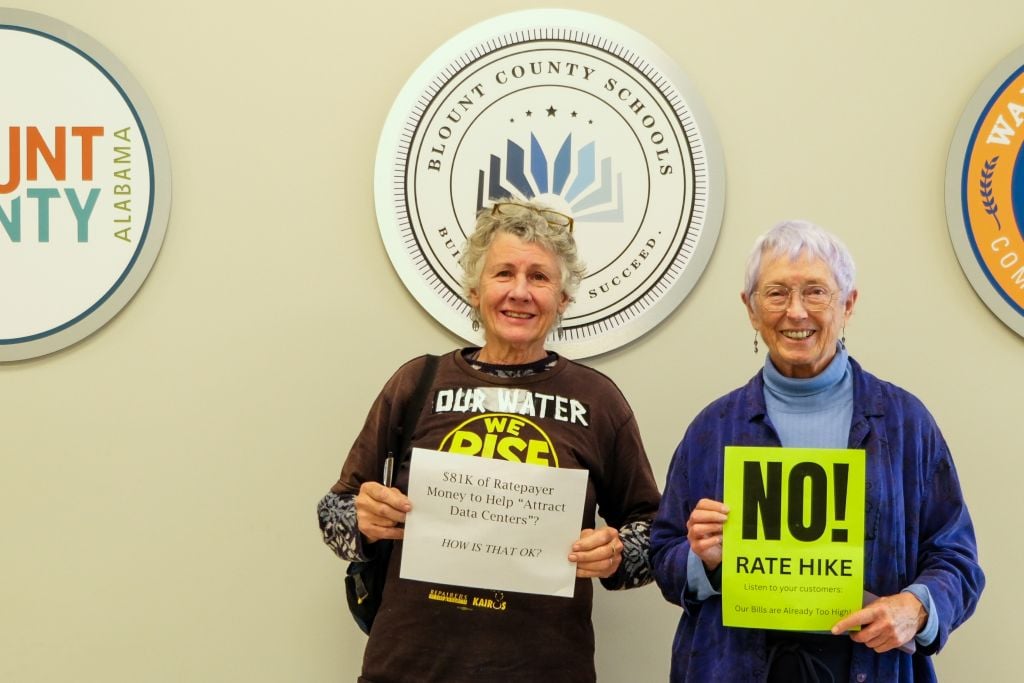
Residents frustrated by silence, meeting in Blount County
Several ratepayers attended the water board meeting but were frustrated by their inability to speak about the rate increase — and the distance they had to drive to attend the meeting. CAW approved the increase during a meeting held in Cleveland, in Blount County. The City of Birmingham Regional Water Works, which operates as CAW, served the five-county region of Jefferson, Shelby, Blount, St. Clair and Walker counties.
“I did come prepared to give comments, and I naively believed they would have already worked that into the agenda,” said the Rev. Julie Conrady, minister of the Unitarian Universalist churches of Birmingham and Tuscaloosa. The board’s speaking policy limits comments and requires pre-registration.
Friday was the first time Conrady had attended a water works board meeting. After hearing rumors of a rate increase, she made the trip a priority on her day off.
“I don’t know anyone who pays the rates that they had on that screen,” Conrady said. Even though she and her two small children try to be mindful of their water usage, her bill is already over $300 before the proposed increases, she said.
“It wasn’t (that) the people are being wasteful; it was that the system has not been upkept and taken care of,” she said.
Terri Michal, a former Board of Education member, said she did not expect she would be allowed to speak but felt obligated to be at the meeting.
“If they’re going to (raise rates), they need to look us in the eyes … . It’s just them moving it out here (to Cleveland) and doing it like they did really incensed me — and it told me that they know what they’re doing is wrong.”
“I came to be a kind of sit-in,” said Sabrina McClain, a resident of Talladega County. She is not a ratepayer but attended to be a “voice” for her friends who could not make it to Blount County, “even if that voice is just sitting in a chair.”
Terri Wright, a retired nurse, said the meeting was made to fail. “They made it so that it’s far away. It’s on Friday. It’s in the morning, and then they went three hours … nor did they hear from us, the people.”