Donate today to help Birmingham stay informed.
Two of downtown Birmingham’s prominent addresses greeted Monday’s commuters with new names on their rooftops after a weekend of sign swaps that required helicopter lifts.
The changes in signage reflecting the changing face of the Birmingham economy in recent years, particularly as it continues to evolve into a scene focused on technology.
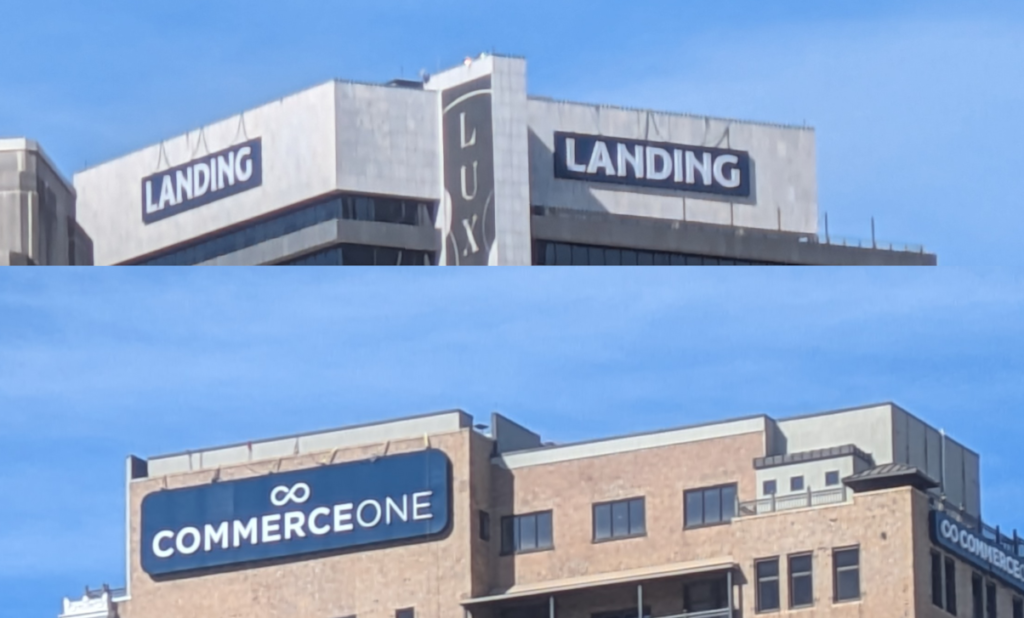
The John Hand Building, part of the Heaviest Corner on Earth, now displays CommerceOne Bank’s logo, visible from the south and east. Crews removed the Landing signs, which had been up since the company moved its headquarters from San Francisco in 2022, earlier in the weekend and a helicopter lifted the signs into place by Sunday morning.
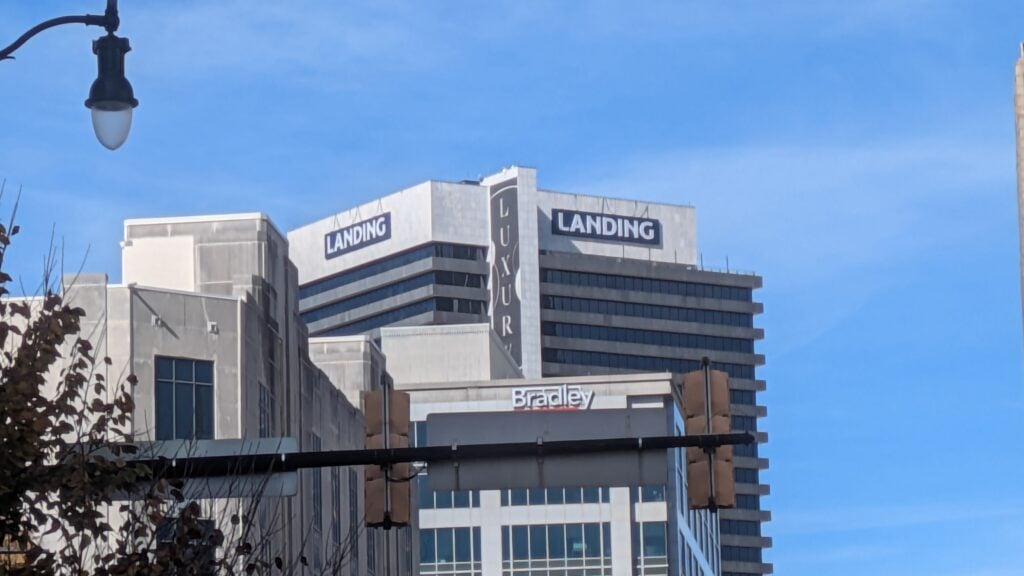
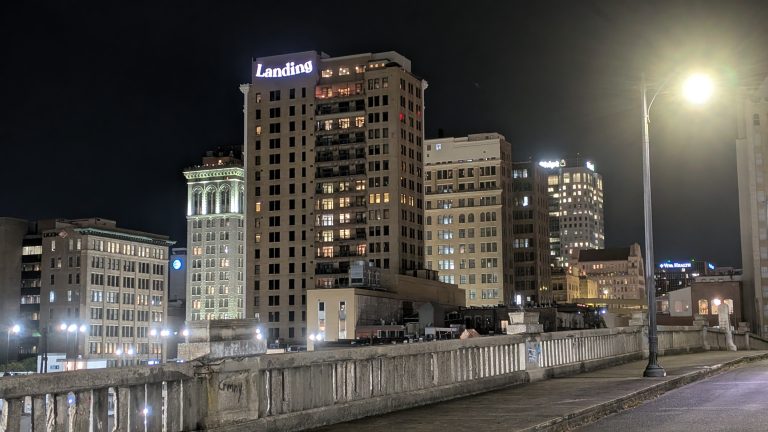
Landing’s new signs went up on the top of the former Bell South Central Building, now called Landing at the 600. The 55-year-old building, formerly the city’s largest office building and now on the National Register of Historic Places, was converted to luxury apartments in 2023. The new Landing signs are a departure stylistically from the ones that were on the John Hand Building with the font going from serif to sans serif and now placed on top of a blue background.
The installation, performed by helicopter, took place over several hours on Saturday, Nov. 14, leading to several street closures around the vicinity of the Landing at 600, including along Fifth and Sixth avenues, 19th and 20th streets and Park Place.
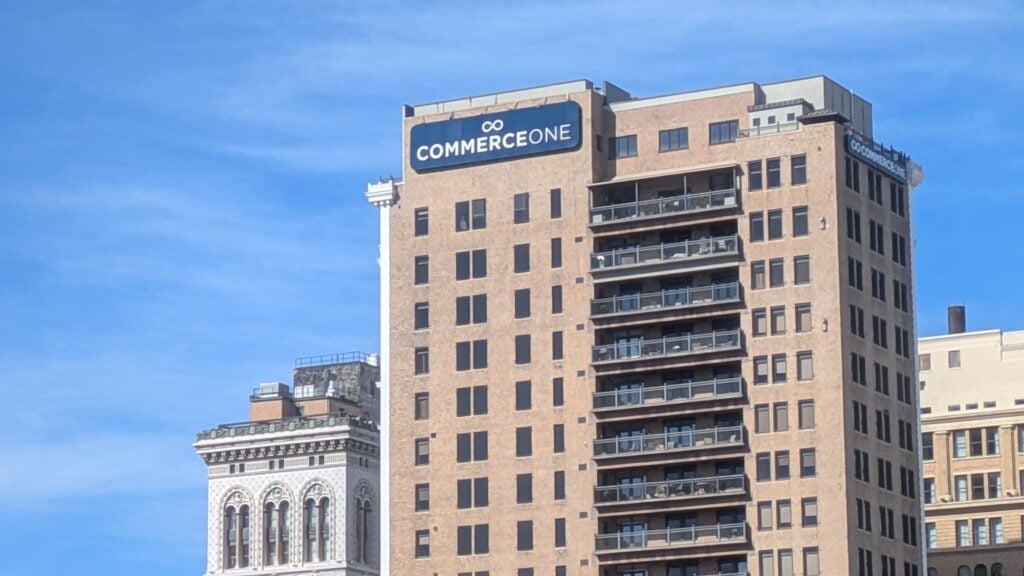
CommerceOne announced plans to relocate downtown in February 2025. A request for approval of the sign was withdrawn by the applicant shortly before it was scheduled to go before the city’s Design Review Committee in September 2025. The bank opened its corporate offices in the building in October, and the committee approved the sign, with conditions, in mid-December.
Landing and Shipt founder Bill Smith was present for the December meeting where the committee approved the signage. He is a founding board member of the bank and part of the John Hand Building’s ownership group. As BirminghamWatch reported in December, the committee worked with Smith and his team to minimize the signage’s impact on the historic building’s exterior.