Glenn Stephens, Author at BirminghamWatch - Page 88 of 89

Glenn Stephens

Robert Mosley, Nov. 4, 1894, Dolomite

Date: November 14th, 1890 Alleged Crime: Assault of white woman Place: Dolomite Detail: Mosley was being sought by a mob after an accusation of assaulting a white woman, but it’s unclear whether he was caught and whether he was killed.   Adamantia Dia Stathakes  University of Alabama at Birmingham    Selected Sources  “Scouring the Swamps

James Thomas, July 3, 1897, Blossburg

The lynching of James Thomas occurred on July 3, 1897, in the Jefferson County mining town of Blossburg. The Birmingham News reported that his body was found “in Pickney branch, a mile or two above Blossburg, riddled with bullets and very much dead.” A group of white men lynched Mr. Thomas because he said he had information about a white woman who was assaulted in Blossburg. Unlike most cases of racial violence, a trial ensued against these men. The black population of Blossburg raised a fund to prosecute four men: Sam Jones, Charles Clark, Joe Williams and Jack Hollins. The Birmingham News wrote, “The negroes held that the summary death of Thomas was an outrage … there was no extraneous evidence to tend to show that he was connected with it. They argued that if he was suspected, there ought to have been some examination into the facts.” They were granted this examination, albeit posthumously, and the hearing was covered in full detail in the papers. There was great local interest in the case, with 20 black folks and 40 white folks attending the public hearing, and 50 witnesses slated to be heard. The hearing took place over three days. Read more.

O.D. Henderson, May 9, 1940, Fairfield

O.D. Henderson, a 25-year-old African-American man from Fairfield, worked at the Tennessee Coal and Railroad Iron Company. Mr. Henderson was not married and had no children, but he had two parents, Ben and Lillie Henderson. On May 9, 1940, Mr. Henderson was walking to work when a coworker, M.M. Hagood, accused Mr. Henderson of bumping into him and knocking him down. Mr. Hagood called a nearby officer, named Glenn, over. Officer Glenn allowed Mr. Hagood to beat Mr. Henderson on the street. Officer Glenn then dragged Mr. Henderson to the local Fairfield police station where he, Mr. Hagood, and another police officer, Thomas Nelson, continued to beat him. Mr. Henderson’s face became swollen, bruised, and unrecognizable. Other officers watched and did nothing to stop the beating. A police officer who was a witness reported hearing Mr. Henderson say, “let me explain,” and “have mercy on me.” Mr. Nelson shot Mr. Henderson three times in the chest, killing him. The town coroner labeled the death an “unjustifiable homicide.” Read more.

A Friendly Homecoming for Activist Angela Davis

Civil right activist Angela Davis’ life and work took center stage at Boutwell Auditorium in Birmingham Saturday evening. The receptive crowd frequently applauded and cheered Davis. Some audience members raised their fists. But the celebration of the Birmingham native is not the one many anticipated just six weeks ago. Last fall, the Birmingham Civil Rights Institute awarded Davis the 2018 Fred Shuttlesworth Human Rights Award, but then revoked it January 3rd, saying Davis did not “meet all of the criteria on which the award is based.” The statement did not specify any criteria. Birmingham Mayor Randall Woodfin, an ex-officio member of the institute’s board, said in a statement at the time the decision was made “after protests from some members of the community, Jewish and otherwise.” Davis is a vocal critic of the Israeli government’s policies toward Palestinians and supports the movement to boycott Israel. The move provoked a wave of public criticism. Three board members resigned. Less than two weeks later, the board reversed its decision and re-extended the award to Davis. She has not said if she would accept it. Read more.

Alabama’s Teacher Shortages Reach ‘Crisis’ Level

Alabama’s teacher shortages are reaching crisis level, education leaders say. In the 2017-2018 school year, there were more than 1,700 teachers in grades seven through 12 who were not certified to teach the English, math, social studies, science or special education classes they were assigned, said Ryan Hollingsworth, executive director of School Superintendents of Alabama. Some of those teachers may have a one-year emergency certificates or are “teaching out of field,” meaning they’re certified in other subjects. “I would call it a crisis that today we’re sending children to schools where 1,700 teachers aren’t certified in the subject they’re teaching,” Hollingsworth told BirminghamWatch recently. There aren’t enough new teachers in the pipeline, Hollingsworth said. The state’s education colleges recently graduated just more than 500 new educators to teach the core subjects that are being taught by more than 1,700 uncertified teachers. “We’re seeing fewer people go into education for various reason,” he said. “It’s a crisis.” Read more.

Federal shutdown affects employees, programs in Alabama

Feeling like a “political pawn,” Takara Shelton reported to work Friday at the Federal Correctional Institution at Talladega. “We’re upset, frustrated,” said Shelton, a cook foreman at the federal lockup. “We are coming to work, putting gas in our cars, keeping the public and the inmates safe, and we are not getting paid for it and don’t know when we will.” Shelton is among more than 700 Alabama residents who are employees of the Federal Bureau of Prisons, which operates three prisons in the state, and were supposed to be paid this weekend. But no pay is in sight for them because of the partial federal shutdown that began Dec. 22. Alabama has about 50,000 federal workers, including post office employees, and an estimated 5,500 of them are on unpaid status because of the partial federal shutdown. Among the unpaid are employees of the departments of Agriculture, Commerce, Interior, Transportation and Homeland Security, plus a dozen smaller agencies. Most of those who are not being paid are on furlough, meaning they are not working. These include 2,200 NASA employees in Huntsville and most of the employees of departments of Agriculture (1,028), Commerce (318) and Interior (149). But the prison workers are among employees who are required to continue working – even though they are not being paid during the shutdown – in jobs that are deemed essential because they are safety and security related. These include employees of Transportation Security Administration, Federal Bureau of Prisons,and Department of Homeland Security. The partial shutdown has shuttered a number of federal offices around the state. It also threatens federally funded programs for home loans, low-income housing and SNAP, the food-assistance program used by more than 800,000 Alabama residents. Read more.

Scales Voices Concern Over Cancelation of Angela Davis Honor

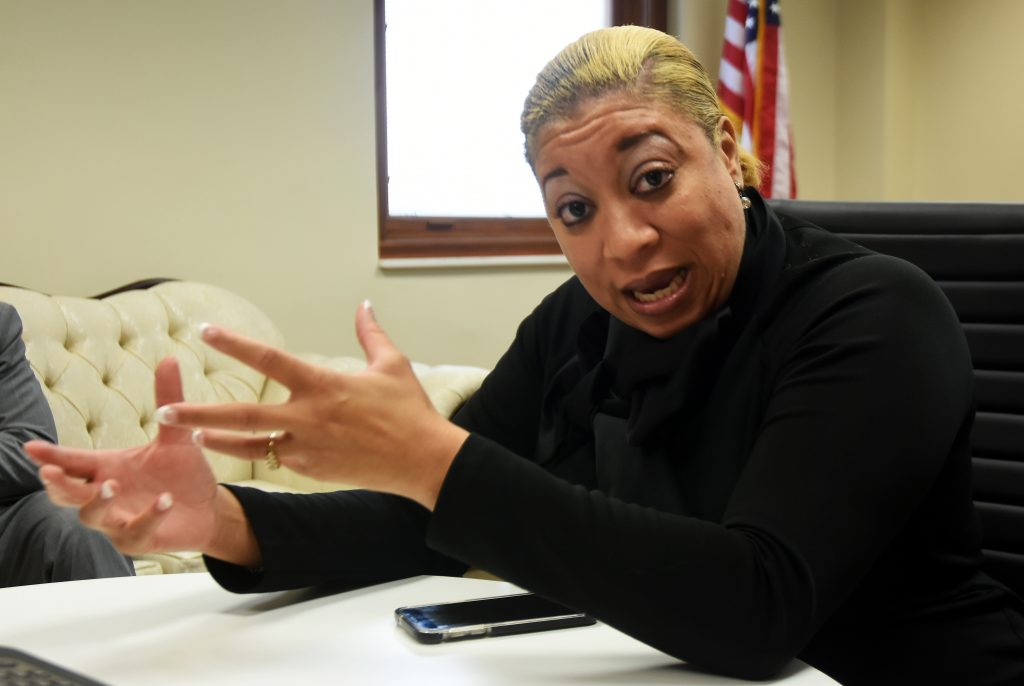
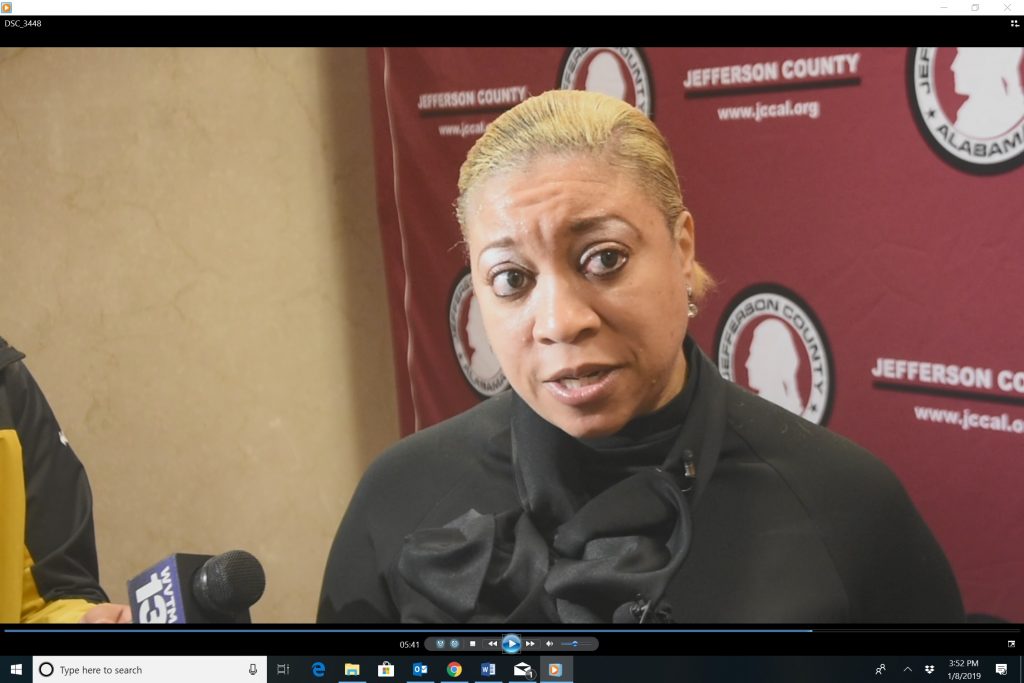
Jefferson County Commissioner Lashunda Scales expressed concern Tuesday about the Birmingham Civil Rights Institute cancelling its plans to honor Birmingham native and Civil Rights icon Angela Davis. BCRI was to have given Davis its Fred Shuttlesworth Human Rights Award at its annual gala next month. That event has been cancelled, and plans to give the award to Davis have been rescinded. “I believe that (BCRI) board members … need to be very cautious that we’re not trying to rewrite the American history according to African Americans, or blacks or the Negro experience,” Scales said. “We all want to embrace diversity, but diversity should not come at the expense of telling the history that makes us uncomfortable.” by Solomon Crenshaw Jr.

Scales Wants More Money for ClasTran

Commissioner Lashunda Scales wasn’t content to simply talk about approving fiscal 2019 funding for ClasTran. The president pro tem broached the subject of Jefferson County providing more funding to the company charged with providing transportation to many area senior citizens. “ClasTran, to me, has always been underfunded,” Scales said as she chaired the committee meeting of the Jefferson County Commission. “Not just necessarily with the county but even with the municipal government I just came from. ClasTran provides a very critical part of our transportation that meets the needs of our seniors (and) those individuals who have disabilities. “We need to try to get to as many of those cities within our county that we can provide this service to,” she continued. “That was my ultimate concern. Those cities that can’t afford it, can we help offset the cost.” Read more.

Birmingham City Council Approves Resolution of Concern Over Mayor-Council Act Changes

The Birmingham City Council formally expressed “concerns” Tuesday about recent changes to the Mayor-Council Act of 1955. In a resolution it passed unanimously, the council called on the state Legislature to repeal changes, made to the act in 2016 at the behest of then-Rep. Oliver Robinson, which transferred significant powers from the council to the mayor’s office. Though the resolution passed with little discussion, the Mayor-Council Act has been a recent focus for the council. Robinson’s changes were a key part of last month’s interviews with candidates for the District 1 and District 6 council seats, with councilors telling applicants that undoing those changes would be a priority in 2019. Those changes moved budgeting and appointment powers from the council to the mayor, shortened the terms of the council president and president pro tempore from four years to two, and gave the mayor the ability to “retain the services of outside counsel and other professional services” without oversight from the council. Council President Valerie Abbott has described the changes as “an irritant” to the council. Read more.

Cities, counties disagree on how to share possible gas tax increase

Alabama county and municipal leaders will push the Alabama Legislature this year to approve a statewide gasoline tax increase to fund road improvements, but they disagree about how any new money should be split among local governments. The distribution of funds is one of several possible sticking points for the gas tax legislation that is expected to be a major issue of the 2019 legislative session. While many lawmakers recognize the need for the first gas-tax increase since 1992, some also want more “skin in the game” from the majority of counties that haven’t enacted their own gas taxes to fund their local road needs. Meanwhile, there is the issue of the transfer of existing money from the gas tax to other state agencies. More than $63 million of existing money from the tax is pulled from the Alabama Department of Transportation each year and transferred to other agencies. Read more.