Author: Virginia Martin
Ketanji Brown Jackson’s Supreme Court Nomination Sparks Black Girl Magic in Local Judges

Jackson is the first Black woman to be nominated to the high court. But in Jefferson County, Black women already hold many judgeships in the court system. Read more.
JeffCo Commission Again Stalls Food Assistance Funding for Questions

Sheila Tyson took another swing Thursday at getting federal funding to three organizations with sights set on feeding people.
Once again, her swing came up empty as her fellow Jefferson County commissioners couldn’t agree unanimously to bring the matter up as new business during their morning meeting.
Tyson admitted after the meeting that she held little hope that the matter would come up for discussion and possibly a vote.
“No, I did not,” she said, recounting that she talked to her fellow commissioners before the meeting. Read more.
Food Program Funds Delayed by JeffCo Commission Questions
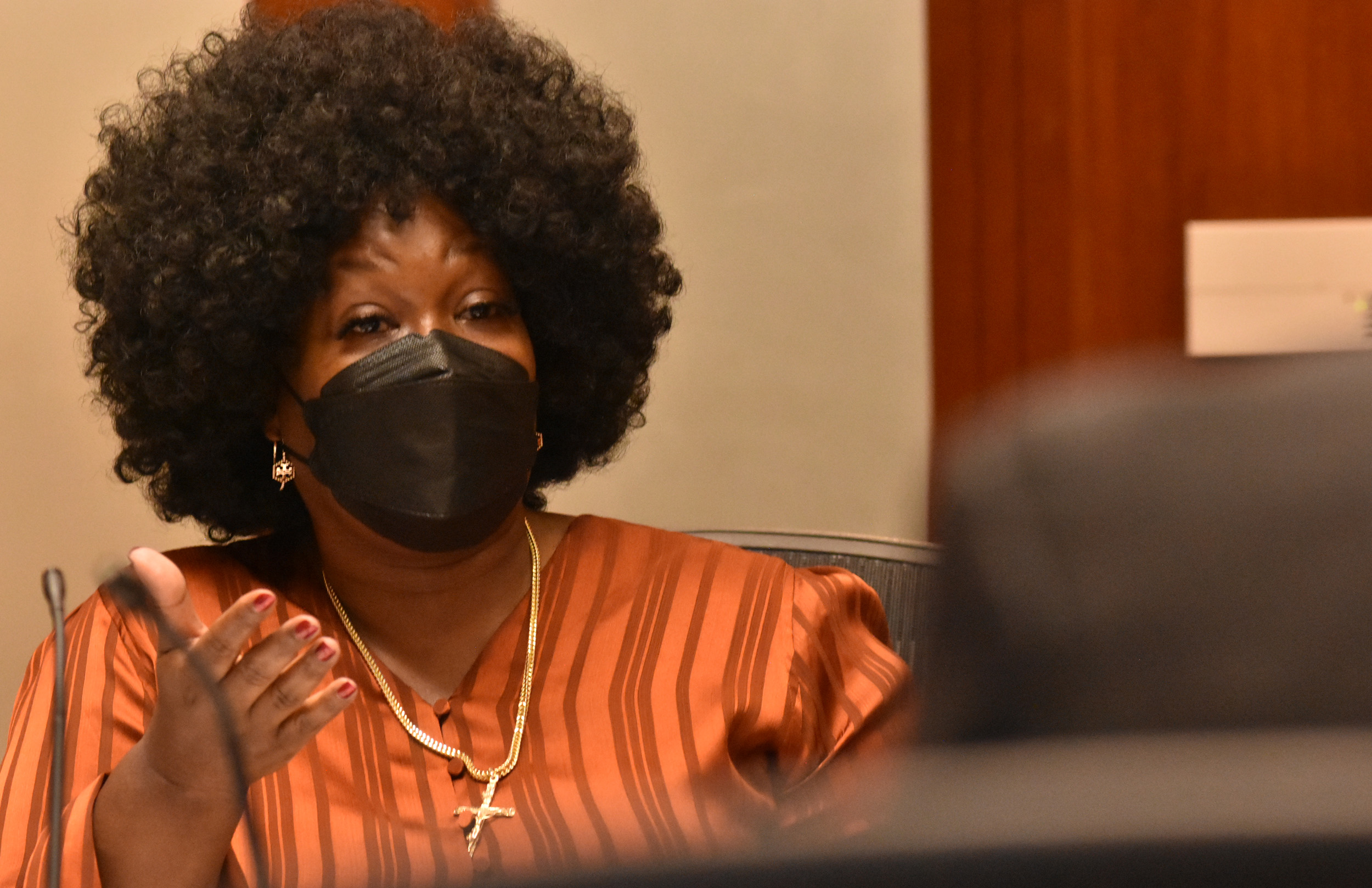
Jefferson County Commissioners on Tuesday put the brakes on doling out federal money to COVID-prompted food programs.
The agenda for the commission’s committee meeting had three entities that were being considered for awards of American Rescue Plan Act funds. Some commissioners said they wanted more information on how and where each organization is distributing food and their policies for doing so.
Sheila Tyson cast the lone “no” vote. “So let me get a full understanding,” Tyson said. “We’re getting ready to pull these off of the agenda, these programs that will be feeding hungry senior citizens, for our lack of understanding?” Read more.
JeffCo, Birmingham Spend Federal Money on Housing Assistance, Other Needs

More than $359 million in federal dollars flowed through the hands of Jefferson County and Birmingham city officials in the past two years to help the area get through and get past the pandemic, and more money is yet to come this spring.
Related:
JeffCo Commissioners Pivot to Handle Unfamiliar Challenges; Birmingham Grappled With Budget as COVID-19 Slowed Economy
Birmingham Grappled With Budget as COVID-19 Slowed Economy

At first, Birmingham officials predicted that COVID-19 would have a dire impact on city coffers.
Though officials had immediately responded to the pandemic by allocating $1.2 million to a loan program for small businesses that had been affected, by June 2020, business tax revenue had fallen by nearly 20%, leading Mayor Randall Woodfin to call the situation an “economic crisis” that would result in “painful” budget cuts. Read more.
Jefferson County Commissioners Pivot to Handle Unfamiliar Challenges

Tony Petelos brought a lot of government experience when he took the job as Jefferson County’s first county manager. He had been a state representative, a commissioner of the Alabama Department of Human Resources and mayor of Hoover.
But Petelos – like nearly everyone else – didn’t have much preparation for dealing with a pandemic
“We had almost none,” said Petelos, who recently retired. “When the governor in March of 2020 shut everything down and then we decided to open back up in May, it was, ‘OK, how do we handle this?’ And not just us. Everybody was flying by the seat of their pants as far as, ‘What do we do?’ ‘How do we do it?’ and getting it done. Read more.
Fewer Cars on the Road but Traffic Deaths Rise

COVID had more than one way to kill people.
Fatalities on state and national roadways that began to rise during 2020 has reached “an unacceptable crisis,” U.S. Transportation Secretary Pete Buttigieg said earlier this year. Federal traffic analysts say the number of highway deaths began to increase in 2020 during the first stages of the pandemic and continued to rise through the first nine months of 2021. Read more.
Educators, Psychologists Say Attending School at Home Hampers Students’ Development

A mental health specialist says it will take years to determine whether students will recover from the effects of COVID-19 on their education.
“I don’t think that we have seen the full effects of COVID on a generation,” said Malissa Galliher, clinical director of the Jefferson, Blount, St. Clair Mental Health Authority. Read more.
It’s Been a Long Time Since the World Learned of COVID on New Year’s Eve 2019

December 31, 2019: The Chinese office of the World Health Organization reported pneumonia cases with an unknown origin in victims who had connections to a fish market in Wuhan.
January 7, 2020: Chinese health officials isolate and identify the coronavirus as the cause of the Wuhan illnesses. Read more.
COVID Pandemic Closed Down Businesses, Schools and Sports and Brought a Sea Change for Health Care

Two years ago Sunday – the morning of Friday, March 13 – the first case of COVID-19 was diagnosed in Alabama, and by the end of the day the state had a total of six positive cases.
Schools that day announced they would be closing for what they thought would be 2½ weeks to let the virus pass by. Nursing homes closed to all visitors and the first drive-thru testing location in the county opened in Vestavia Hills.
That was just two days after the World Health Organization declared that the spread of what then was called the novel coronavirus had reached pandemic levels, a declaration that came three months after the first cases were reported in the city of Wuhan, China. It would grow into a global health crisis on a scale not seen by the world in more than 100 years.
In other countries, people already were on mandatory shelter-in-place orders, but the change that would catch the attention of a broad swath of Americans wasn’t that. It was a change in a basketball game.
The National Basketball Association hastily called off a game after officials found out that Utah Jazz player Rudy Gobert had tested positive for the coronavirus, setting off a chain of events that resulted in the suspension of all NBA play.
As COVID spread in early 2020, health officials in Alabama had to move quickly to try to stop the outbreak.
Nursing homes were among the first institutions to close down, and for months no visitors were allowed as America’s elderly became the first sacrifices to the pandemic.
At first, health officials moved to limit public gatherings to fewer than 500 people, then days later the limit was reduced to 25. Gov. Kay Ivey put in place orders that shut down most nonessential businesses, and schools followed suit; classrooms via online broadcasts such as Zoom became the norm. Entire families stayed under the same roof day in and out as children attended class remotely and their parents either worked from home or had no job to go to.
High school sports were shut down for the rest of the 2020 spring sports season, and the football season was affected later in the year. Some schools opted out of play entirely, while weekly lists of scores regularly noted numerous games forfeited because of COVID outbreaks.
Places of worship were forced to cancel in-person services, and attending church via online video became the norm.
As of now, the U.S. has endured three distinct surges over the past two years. Vaccinations have helped curb cases, but the threat is not yet over. Read more.