Education Archives - Page 34 of 43 - BirminghamWatch

Education

How They Did It: College Students Were Trained in Research Techniques to Tell the Stories of Jefferson County’s Lynching Victims

Before college students recruited to research lynchings for the Jefferson County Memorial Project could start their work, they had to go through training on finding information and interpreting it. As their work began in earnest, students gathered at the Linn-Henley Research Library in downtown Birmingham for a primer in archival research. “It’s hard to uncover information about people from a long time ago,” said Devyne Troy, a student at Miles College. “(The JCMP) taught us the best avenues to find birth certificates and death certificates. They gave us an outline of what public records you could possibly obtain and what records would be more strenuous to get. And they taught us about microfilm.” Read more.

Researching Lynchings was Disturbing, Eye-Opening for Students Who Took on the Project

“My whole life, I knew there was segregation,” Jimena Ortiz-Perez said. “I knew (lynching) happened. But I only knew the surface.” Ortiz-Perez, a student at Lawson State Community College, is one of 21 college and graduate student fellows who wrote the Jefferson County Memorial Project’s “30 Victims” report, which provides an in-depth look at each of the county’s lynching victims from 1883 to 1940. It was a process that students said was equally harrowing and revelatory. “Just the things that happened here in Birmingham, not too far from where I currently live, it’s like, ‘Whoa, this actually happened?’” Ortiz-Perez said. “It makes you look at the progress we have made, but at the same time, have we actually progressed enough? ... It’s like a wake-up call for me.” As the JCMP began its work on the report, it reached out to all six colleges in Jefferson County for student volunteers. “We were really intentional about making sure that this was an intergenerational, interfaith, interracial organization, because that’s really important, we think, to changing the historical memory of a county and having the grassroots cohesiveness to really advocate for change,” project director Abigail Schneider said. Some students say they joined the project because they were already interested in studying inequality. Amber Somma, a biology major at UAB, said she found out about the project through a mass email mistakenly sent to her department — but she found herself drawn to help anyway. “I’m someone who is into these social justice-type things. … So that’s why I decided to do this. I just wanted to get that story out.” Read more.

“This Report Will Be Hard to Read:” Jefferson County Memorial Project Puts the Spotlight on Lynchings, and There’s More to Come.

Updated – Thirty people were lynched in Jefferson County between 1883 and 1940, victims of racial terror in the segregated, postwar South. Now, a new report will tells the story of each of those victims, with the goal of fostering dialogue about racial violence and its connection to present-day injustice. The “Jefferson County’s 30 Residents” report, released Wednesday night, was compiled by the Jefferson County Memorial Project, a citizen-led cooperative working to spark conversation around the county’s history of racial violence. The project was sparked by the Equal Justice Initiative’s National Memorial for Peace and Justice, which opened in Montgomery in April with the stated goal of placing America face-to-face with its history of injustice. JCMP organizers said that their report will place Jefferson County at the forefront of a national movement sparked by the EJI’s monument, making the county a model for others looking to create a dialogue and advocate for change. Read more.

Read more stories in the package

Researching Birmingham’s Lynchings was Disturbing, Eye-Opening for College Students Who Took on the Project

How They Did It: College Students Were Trained in Research Techniques to Tell the Stories of Jefferson County’s Lynching Victims

Jefferson County’s 30 Victims

This map links to a live interactive map on the JCMP’s website.

Unknown, Nov. 17, 1890, Location Unknown

On November 16, 1890, a mob of white men lynched Henry Smith. The following day, an unknown black man created a protest against this act of racial terror. That night, on November 17, 1890, a group of men lynched this unknown man. No more is known about his age, family, or occupation or about where the incident occurred.

Behind Teacher Shortage: Fewer New Educators Graduating From Alabama Schools

The number of new teachers coming out of education colleges and programs in Alabama fell by about 40 percent comparing 2010-2011 and 2015-2016, according to the latest available federal data. The decrease could be worse nearly three years later. “What bothers me most is that I don’t think this has bottomed out yet,” said Peter Hlebowitsh, dean of the University of Alabama’s College of Education. “It’s basically a decline everywhere with the possible exception of elementary education,” he said. As education leaders and elected officials look at the state’s teacher shortages, its pipeline of new teachers is a major concern. “I have 100 certified teachers,” Roanoke City Schools Superintendent Chuck Marcum told BirminghamWatch. “Fifteen have 25 or more years’ experience, meaning they could retire now. I hope they don’t. I don’t know what we’d do.” Marcum is leading a task force of educators and education groups studying the shortage’s causes and potential solutions. He said a shotgun approach will be needed, including getting more students into colleges of education. “Even if we increase enrollment, it’s three, four years down the road (that we see results), but it needs to be done. Something has to change.” A 2015 federal report said 17 percent of new teachers leave the profession within their first five years. Read more. More Stories on the Teacher Shortage

Alabama’s Teacher Shortages Reach ‘Crisis’ Level

Lawmakers, Advocates Discussing Increases to Teachers’ Retirement Benefits to Battle Teacher Shortage

Lawmakers, Advocates Discussing Increases to Teachers’ Retirement Benefits to Battle Teacher Shortage

Education leaders cite changes to teachers’ retirement benefits six years ago as a factor in Alabama’s worsening statewide teacher shortage. Now, they’re asking lawmakers to make adjustments to what’s known as Tier 2 benefits, including allowing retirement after 30 years of service and slightly increasing the benefit amount. Legislators say they’re listening but aren’t convinced retirement changes alone will fix classroom staffing. “Do I think modifying Tier 2 is going to solve our teacher shortage issues? No,” Rep. Bill Poole, R-Tuscaloosa said this week. “But we do want to make sure we are competitive on benefits.” Poole is chairman of the House education budget committee. Evidence of the teacher shortages around the state is plentiful, but concrete numbers are not. A task force set up to study the shortages, the causes and possible solutions hopes to have some recommendations to lawmakers this spring. Last week, BirminghamWatch reported that there recently were more than 1,700 educators in Alabama classrooms who were not certified in the core subjects they were teaching. “Our superintendents identify the current Tier 2 retirement plan as a contributing issue in the shortage of teachers we are facing today,” Ryan Hollingsworth, executive director of Alabama School Superintendents, said this week. “It is a fact that we have teachers graduating from colleges of education in Alabama but going to work in other states strictly due to our current Tier 2 retirement plan." Read more.

Alabama’s Teacher Shortages Reach ‘Crisis’ Level

Alabama’s teacher shortages are reaching crisis level, education leaders say. In the 2017-2018 school year, there were more than 1,700 teachers in grades seven through 12 who were not certified to teach the English, math, social studies, science or special education classes they were assigned, said Ryan Hollingsworth, executive director of School Superintendents of Alabama. Some of those teachers may have a one-year emergency certificates or are “teaching out of field,” meaning they’re certified in other subjects. “I would call it a crisis that today we’re sending children to schools where 1,700 teachers aren’t certified in the subject they’re teaching,” Hollingsworth told BirminghamWatch recently. There aren’t enough new teachers in the pipeline, Hollingsworth said. The state’s education colleges recently graduated just more than 500 new educators to teach the core subjects that are being taught by more than 1,700 uncertified teachers. “We’re seeing fewer people go into education for various reason,” he said. “It’s a crisis.” Read more.

Doug Jones Plans Summit to Explore HBCU Challenges

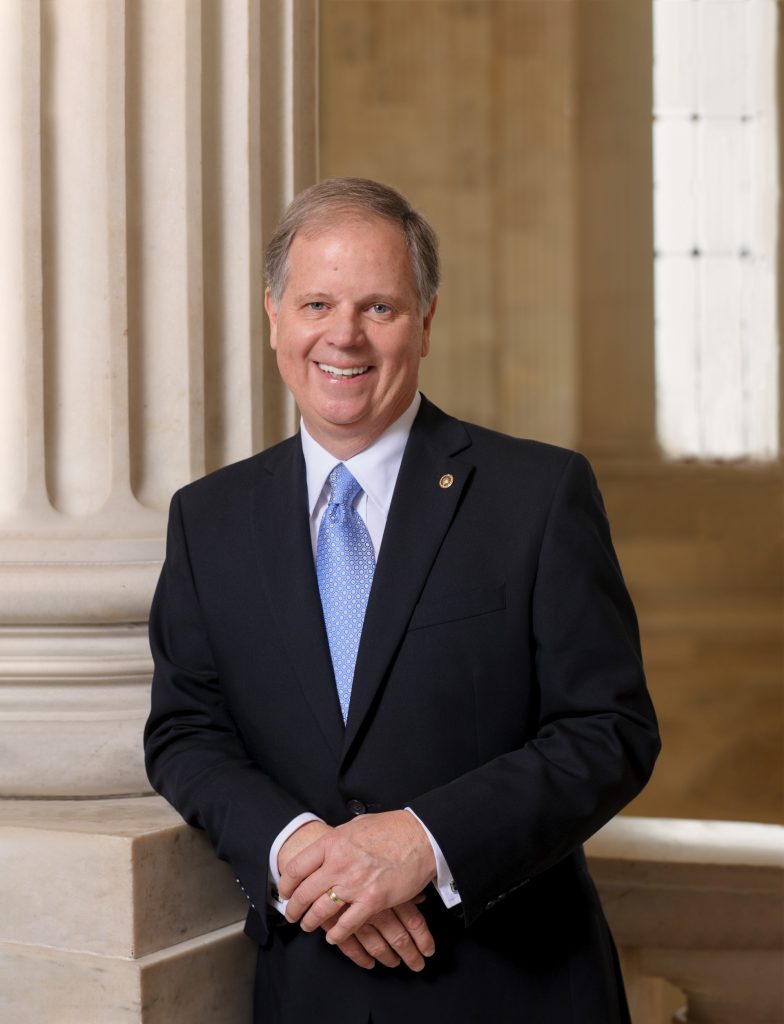
By WBHM, 90.3 U.S. Sen. Doug Jones will host the first annual Historically Black Colleges and Universities (HBCU) Summit Friday at Lawson State Community College. There, Jones says, educators, administrators, and students will discuss factors that pose the greatest threat to HBCUs, and opportunities ahead, specifically in terms of funding. Read more.

Mea Culpa: BCRI Apologizes, Offers Davis Award as New Group Moves Forward With Alternate Plans

The Birmingham Civil Rights Institute is “taking things day by day” as it awaits a response from civil rights icon Angela Davis to its offer to give her its highest award – an offer it made earlier then rescinded. Meanwhile, the grassroots organization that formed after the institute rescinded its invitation to honor Davis announced its plans for her to come to town. The Rev. Thomas Wilder, interim chairman of the BCRI board of directors, is awaiting an answer from Davis to the institute’s renewed wish to present its Reverend Fred L. Shuttlesworth Human Rights Award to her. “Right now the most immediate issue is to let Dr. Davis know how apologetic we are for whatever we've done that caused any disparaging remarks to her name or to her character,” Wilder said. “We think the right thing to do is to ask her to accept the award and then after that we'll move forward.” Read more.