
‘Lean’ $451 Million Birmingham City Budget Passes After Debates Over School, Discretionary Funding
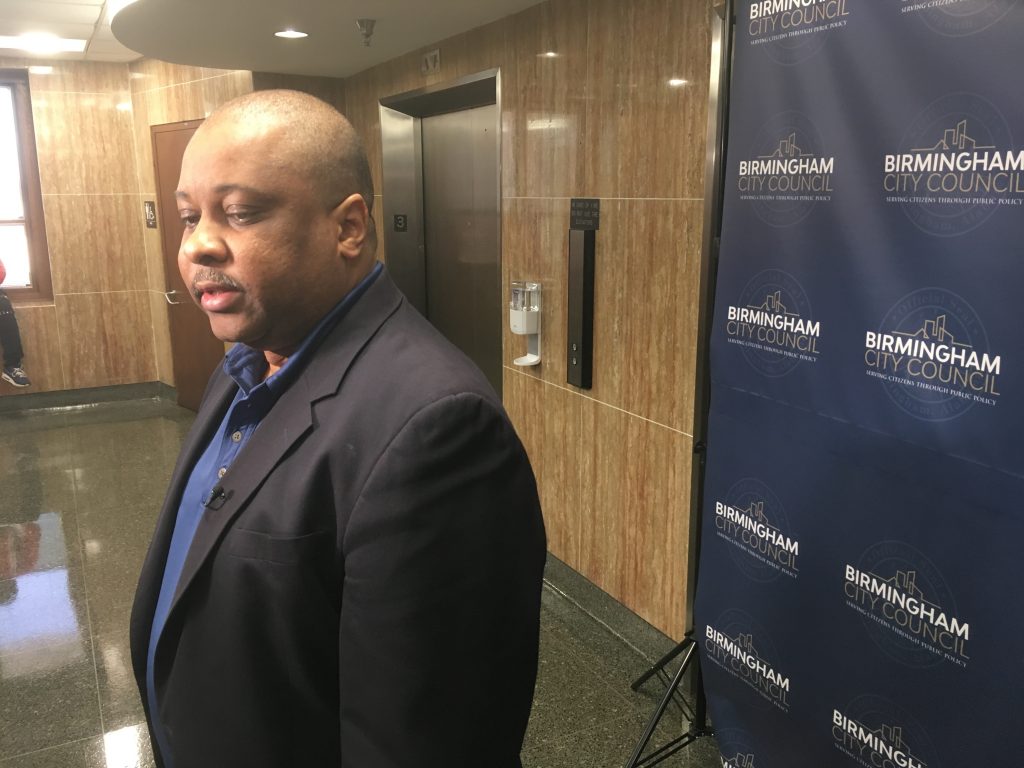
Minutes after the Birmingham City Council voted 7-1 to pass the city’s budget for the 2020 fiscal year, Mayor Randall Woodfin stepped out onto City Hall’s third-floor terrace with a smile on his face.
“Did it take longer than I wanted it to?” he asked. “Yes. But am I glad it passed? Yes.”
Woodfin presented his original $451 million budget proposal to the council May 14, calling it a “fundamental shift” for the city’s budgeting process. “It’s as lean as they come,” he said then, arguing that the budget reflected his administration’s “moral obligations’ to prioritize neighborhood revitalization and city employees’ pension fund.
“During my (mayoral) campaign, I said we’d engage councilors on shared priorities and aligning our priorities, and then focus on finding money to support those priorities,” he said Tuesday. “Each councilor told me their top three, and I’m happy to say that for each councilor, at a minimum two of their priorities are in this budget. It wasn’t just what the mayor’s office wanted, it was collectively what the 10 of us, the mayor and council, wanted.”
But the budget process proved difficult, largely due to controversies over its’ cutting a slew of line items and instead giving each councilor an additional $50,000 in discretionary funding. Woodfin’s plan to reallocate $2 million from Birmingham City Schools to his new Birmingham Promise apprenticeship program also garnered debate, despite the support of BCS Superintendent Lisa Herring and a majority of the city’s school board.
But the budget was passed relatively smoothly at Tuesday’s council meeting, with only one dissenting vote: District 8 Councilor Steven Hoyt. District 9 Councilor John Hilliard was absent. Read more.
Previous budget stories: