Category: Environment

Hurricane Michael Not on Route to Threaten Mobile Bay, Coal Ash Basin

Hurricane Michael is not expected to score a direct hit on Mobile Bay, relieving concern that the coal ash basin at Alabama Power Company’s Plant Barry could be threatened, according to Cade Kistler, program director for Mobile Baykeeper, an environmental organization.

Kistler and Casi Callaway, Mobile Baykeeper’s executive director, citing a report issued by Baykeeper, earlier raised questions about a hurricane’s effect on safety of the coal ash storage basin.

Alabama Power spokesman Michael Sznajderman said in an email that the company is prepared for the storm. The coal ash stored next to Plant Barry is virtually surrounded by the Mobile River 25 miles upstream from where it enters the bay. Baykeeper officials say they worry that the earthen dams holding back the river could be breached.
Read more.

For more on coal ash concerns:

An Alabama Scenario: Hurricane Florence Raises Questions About Coal Ash and Mobile Bay.

An Alabama Scenario: Hurricane Florence Raises Questions About Coal Ash and Mobile Bay

Is Alabama ready for an environmental disaster worse than the BP Deepwater Horizon oil spill and more difficult to clean up?

If Hurricane Florence had hit Alabama instead of the Carolinas, that might well have occurred, according to leaders of Mobile Baykeeper, an organization intent on protecting the ecology of the bay.

The damage they see as a risk would come from flooding or collapse of an almost 600-acre pond that stores toxic residue of coal burned for power generation at Alabama Power Company’s 60-year-old Plant Barry, 25 miles from the mouth of Mobile Bay.

Casi Callaway, the baykeeper’s executive director, and Cade Kistler, its program director, base their views on a report that Mobile Baykeeper issued earlier this year, “Mobile Baykeeper Pollution Report: Coal Ash at Alabama Power’s Plant Barry.”

The Waterkeeper Alliance and Southern Environmental Law Center were also involved in preparing the report.

Callaway and Kistler said a slow-moving, rain-heavy hurricane such as the recent Hurricane Florence could produce flooding that breaches or overflows the earthen dam protecting what they call the state’s most vulnerable coal ash storage basin. Plant Barry’s 21 tons of coal ash containing toxic levels of arsenic, lead, mercury, selenium and other pollutants is 20 times greater in volume than the oil spill in the Gulf of Mexico. Read more.

NAACP Suspends Birmingham President Hezekiah Jackson

WBHM
The national office of the NAACP has suspended the organization’s local Birmingham president, Hezekiah Jackson IV.

The NAACP issued a statement Wednesday evening saying it is investigating whether Jackson advised residents not to have their soil tested for potentially damaging toxins and whether he received payment for those activities.

Jackson, who has been president of the NAACP, Metro Birmingham Branch for about 20 years, says he has done nothing wrong and will be exonerated by the investigation. Read more.

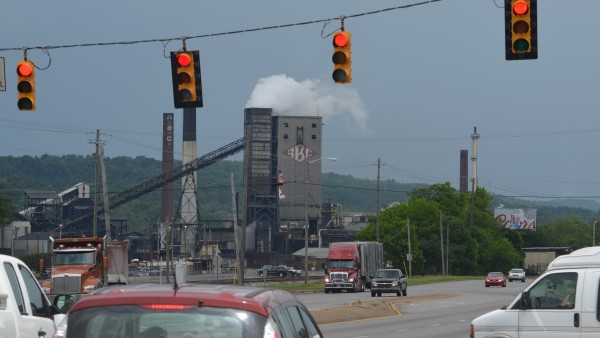
Health Department Gives More Time for North Birmingham Residents to Weigh in on Air Quality

The Jefferson County Department of Health has extended the deadline for comments on the proposed renewal of the air emissions permit for ABC Coke. The move comes at the request of residents and environmental groups.

Concerns about the permit heightened following a federal corruption trial where an executive with ABC Coke’s parent, Drummond Company, and a lawyer were convicted in a scheme to thwart testing for pollution near the Tarrant plant. Read more.

Same Week: Alabama Power Seeks Authority for Harris Dam on Tallapoosa as It Loses License for Seven Dams on Coosa River

Alabama Power Company is beginning efforts to get a new license for its R.L. Harris hydroelectric dam on the Tallapoosa River.

The long process involving the Tallapoosa River dam starts as the company faces an unfamiliar road elsewhere. A court decision took away its 2013 license to operate seven Coosa River dams on Aug. 27.

Never before has a federal dam license been vacated by a court after it has been in service for years. The company is awaiting direction from the Federal Energy Regulatory Commission on how to proceed.

Alabama Power’s license for the Harris hydroelectric dam on the Tallapoosa expires in 2023.
The Federal Energy Regulatory Commission, known as FERC, this week led the first public meetings in the complicated, years-long process toward approval for the Harris Dam. Alabama Power has set up a website, containing documents, meeting dates and other information on the project.

Alabama Power spokesman Michael Szjnaderman said the Coosa finding isn’t expected to affect the Harris Dam. “Every relicensing and license application is different and is determined on its own merit,” he said. Read more.

Read more about the court’s decision:

Coosa River Gets Help: Federal Court Overturns Alabama Power’s License to Operate 7 Dams, Orders New Look at Waterway’s Environment

Alabama Power Awaiting Federal Guidance After Court Strips Its License to Operate 7 Coosa River Dams

Alabama Power Awaiting Federal Guidance After Court Strips Its License to Operate 7 Coosa River Dams

It’s now official. Monday, Alabama Power Co.’s license to operate its seven Coosa River dams was taken away under terms of a federal court order issued a month ago. The power company will now operate under its prior license.

A power company spokesperson said customers are not affected in any way by the legal issue and no operational changes will take place as it awaits direction from the federal agency that issued the license, the Federal Energy Regulatory Commission.

The unprecedented decision by the U.S. Court of Appeals in Washington, D.C., was a surprise victory for environmentalists and is being followed closely by the hydropower-relicensing industry.

Read more about the court’s decision:

Coosa River Gets Help: Federal Court Overturns Alabama Power’s License to Operate 7 Dams, Orders New Look at Waterway’s Environment

Officials Want More Contamination Testing in North Birmingham

More than 500 properties in North Birmingham have not been tested for contamination, Congresswoman Terri Sewell said Wednesday while touring Collegeville with city, state and EPA officials. She’s encouraging people who have rejected soil testing to allow EPA to check for contaminants.

“We understand some of the citizens may be distrustful, but it’s important for us in order to truly have cleanup that is comprehensive for us to get those sites that have not been tested, tested,” Sewell says. Read more.

County’s Major Air Polluters Concentrated in Low-Income, Minority Neighborhoods

BirminghamWatch Graphic: Clay Carey


The Oliver Robinson bribery trial, in which guilty verdicts were issued for officials of Drummond Coal Co. and its law firm, Balch & Bingham, revealed a gritty episode about avoiding environmental cleanup in North Birmingham. But there’s a bigger dirty picture.

The vast majority of Jefferson County’s 31 major sources of pollution – those emitting enough pollution to require a permit under Title V of the Clean Air Act – are located in low-income areas, a BirminghamWatch analysis found.

The findings show 71 percent of the major pollution sources are in areas with incomes below the median income for the county.

Only one primary source of pollution is in a neighborhood with a median household income greater than 110 percent of the county median.

Residents of the same low-income areas also often are largely African American. Research has shown that economically depressed populations can be more heavily affected by the negative health effects of air pollution.

Poor air does not equally strike everyone in the Birmingham area, raising issues of environmental justice. Read more.