
Donate today to help Birmingham stay informed.
In the late 1980s, blocks of buildings south of Birmingham’s main railroad tracks were vacant, sad remnants from their heyday decades earlier as active warehouses and manufacturing plants.
The old Martin Biscuit building off Third Avenue South was used to store hospital beds. On the other side of 29th Street, the former Dr Pepper bottling plant had been empty since 1971.
Renovated over the years since by Sloss Real Estate, those buildings and nearby structures are now filled with restaurants, design stores, a premium coffee shop, a butcher shop and numerous other businesses in what is now a thriving Pepper Place Entertainment District. A 2019 study by the University of Alabama estimated its overall annual economic impact was $102.5 million.
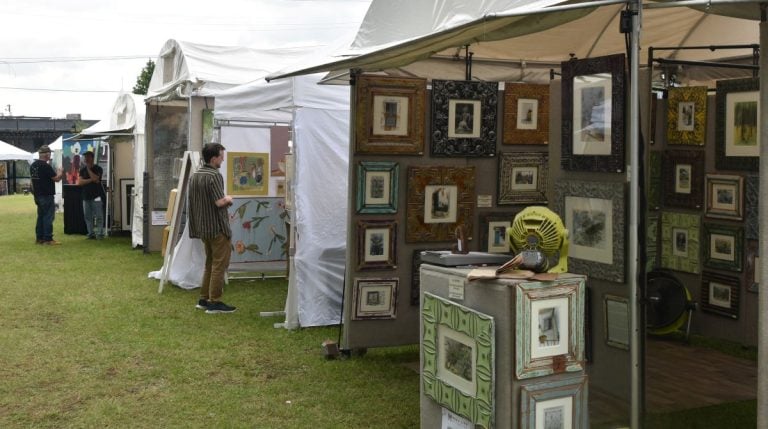
The district’s biggest draw is the pop-up Market at Pepper Place, where up to 12,000 people shop Saturday mornings among dozens of tents with farmers, food-makers and crafts people selling goods grown or made nearby. For much of the year the market spreads to 29th Street; the block between Second and Third avenues closes for the event.

Celebrating its 25th anniversary this year, The Market at Pepper Place has been an effective tool for revitalizing urban spaces, saving small family farms, building community and strengthening local economies, said Cathy Sloss Jones, market co-founder and until recently board chair of its nonprofit foundation.
“It’s a beloved institution for the city,” she said. “I don’t think you can be unhappy at the farmers market. And we all eat really well.”
When Pepper Place premiered the Saturday after Memorial Day in 2000, only 17 other farmers markets operated in Alabama, said Don Wambles, director of the state farmers market authority and 30-year veteran of the department of agriculture and industries. Today, the number has grown tenfold.
Not only is Pepper Place a one-stop shop for prepared foods, pastured meat and just-harvested vegetables and fruit, the dog-friendly outdoor gathering is a prime spot to watch people and pets.
“The market is like a very gentle, living river,” said Leigh Sloss-Corra, Cathy’s sister and longtime market manager. “It’s flowing. It will be different in five minutes. It will be different next week. There’s something magical and mystical and marvelous about it all. I love the vibrancy, the beauty – and the joy.”

The 2019 UA study reported that Pepper Place farmers market drew more than 360,000 people over the 48 weeks a year it operates, numbers that are being updated this year.
The market brings money into Birmingham. In a survey for the study, more than half of respondents said they drive 10 miles or more to get to Pepper Place. Most reported making other stops while in the city, at least for a meal and perhaps to shop at a few stores. Many visited attractions such as the Birmingham Botanical Gardens or Zoo.
Out-of-town market patrons and vendors spend roughly $20 million per year, the study estimated. Because all vendors are homegrown, mostly from central and north Alabama, more of the money they earn stays in the region and circulates among other local businesses.
The ripple effect of redevelopment spreads south to Lakeview with new businesses, housing and, of course restaurants. The entrance at Automatic Seafood and Oysters, James Beard Award-winning chef Adam Evans’ 6-year-old flagship restaurant, is less than three blocks up 29th Street from Pepper Place.
The idea for the Saturday market was rooted in the 1990s farm-to-table localvore movement that helped inspire Birmingham’s lauded restaurant scene. Chefs such as market co-founders Frank Stitt and Franklin Biggs realized that, to ensure a supply of locally grown seasonal food for their restaurants, the small farmers who grew it needed other economic outlets to survive.
“Everyone recognized there was a real crisis,” Sloss Jones said. “Small family farms were disappearing. The chefs became their champions, putting a spotlight on the farmers.”
Today, a mural towering over the market urges shoppers to “Know thy farmer.”
Pepper Place and other markets like it work because food is a universal language, Wambles said. “Even more importantly, we’re building relationships between the community and the farmer who grew that food,” he said. “You’re putting a face on the food you eat.”
Troy Spinks has sold his namesake farm’s produce, jarred preserves and eggs at Pepper Place from the beginning. Not only is it crucial to his business’ bottom line, he said he especially loves the atmosphere and appreciates his ability to forge lasting relationships with customers.
“It’s just more enjoyable coming to this kind of environment,” the Blount County farmer said on a crowded spring market Saturday. “We’ve had people from here come up to buy stuff at our house. They live in Birmingham but drive all the way up there to buy stuff from us.”

Pepper Place also has been a springboard for entrepreneurs, who find a ready audience to test their products and provide feedback. Dozens have gone on to open brick-and-mortar shops.
Big Spoon Creamery, Bandit Patisserie and dog-treat makers CahaBones all built expansive fanbases at Pepper Place. Since its early days at the Saturday market, Hero Doughnuts has grown to seven stores in three states.
Another market success story, Emily’s Heirloom Pound Cakes, now ships nationwide from its Pelham headquarters and sells at Walmarts throughout the South. The company still sets up at a handful of metro-Birmingham farmers markets.

Pepper Place has inspired dozens of one-day farmers markets throughout Jefferson and Shelby counties, both big and small. At least one operates every day of the week, except Sunday.
When people throughout the state approach Wambles about opening a farmers market, he suggests they adapt the method Pepper Place has perfected over the last quarter-century.
“We recommend they scale it to fit the individual situation and the community,” Wambles said. “Pepper Place will forever have a place in history as a model, the torchbearer if you will, for how a farmers market is to be run and what it looks like.”