Donate today to help Birmingham stay informed.
The city of Birmingham has released its plan for allocating millions of dollars in federal funding over the next five years to bolster its affordable housing inventory, reduce homelessness and poverty and ramp up community development.
The city also released a breakdown of how it intends to spend approximately $9.3 million it expects to receive from the U.S. Department of Housing and Urban Development for the first year of the plan, which began July 1.
“The city of Birmingham has long placed a high priority on affordable housing and community services because they reflect essential community values and are articulated by our robust citizen participation plan and community engagement process,” said Meghan Venable-Thomas, director of the city’s Department of Community Development. “Such prioritization will continue from 2025 to 2029.”
Birmingham’s Community Development Department and mayor’s office drafted the city’s first citizen participation plan in 1973 and 1974 to meet requirements for receiving federal funding through HUD’s new Community Development Block Grants. Those requirements also launched Birmingham’s neighborhood associations.
Today, HUD provides state and local governments with annual block grants from the HOME Investment Partnerships Program, Emergency Solutions Grant program and Housing Opportunities for Persons with AIDS program, in addition to the Community Development Block Grants program. While HUD outlines eligible activities, local governments decide which ones best serve their communities, and HUD requires them to develop “consolidated plans” outlining needs and strategies.
A public hearing about the plan was held Tuesday, and members of the public can comment on the proposal via email or postal mail through Oct. 3.
Venable-Thomas said the city will focus its resources on the following five activities, which are detailed in the plan.
Increasing Affordable Housing Supply and Quality
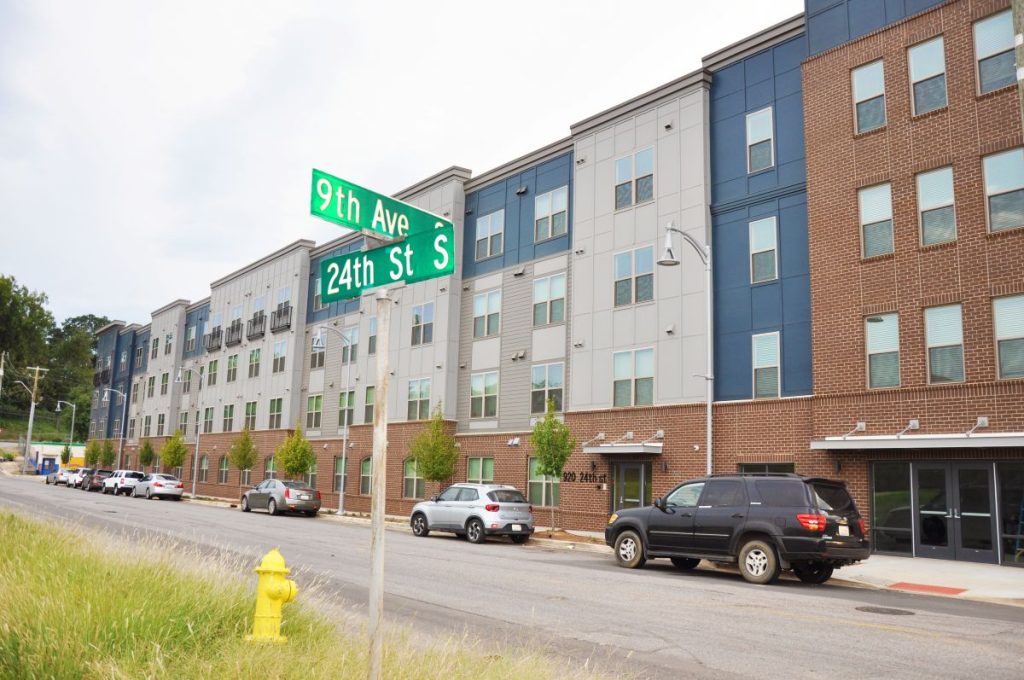
Creating and preserving affordable housing is a key objective of the plan. Proposed activities include the acquisition and rehabilitation of housing units, new construction of multi-family housing, and single-family housing improvement programs.
Housing costs have risen significantly in Birmingham, with the median home value increasing 61% and median rent increasing 53% between 2010 and 2023, while median household income grew by only 39%, the plan states. Jefferson County faces a shortage of about 17,000 affordable rental units for extremely low-income individuals, according to the plan.
It states a goal of providing affordable housing to 500 households over the next five years, with 70% serving extremely low-income households.
Providing Services and Shelter for Unhoused Residents
On any given night, about 1,000 individuals in central Alabama experience homelessness, the plan states, citing 2024 data.
The city proposes using HUD funds to support homelessness-prevention activities and rapid re-housing after residents experience housing crises. Projects include emergency shelter operations, short- to medium-term rental assistance, housing search support and case management.
The plan notes Black individuals are disproportionately affected by homelessness, and service gaps exist for populations including unaccompanied youth, families with children, veterans and chronically homeless individuals.
Serving Special-Needs Populations
The city plans to provide housing, health and support services to address the needs of vulnerable groups, including the elderly, victims of domestic violence and people with HIV/AIDS; physical, mental or developmental disabilities; and alcohol or drug addictions.
The plan outlines providing housing options such as age-restricted affordable housing for the elderly, housing units with modifications that remove architectural and systemic barriers for the disabled, and development of residential treatment programs and housing for individuals in substance-abuse recovery. For those with HIV/AIDS, the plan allocates funding to AIDS Alabama to provide rental assistance and support services.
Investing in Businesses and Creating Jobs
Economic development activities the plan proposes include giving technical and financial assistance to entrepreneurs who commit to creating or retaining jobs.
Bridging gaps between workforce skills and employer needs through training and marketing is also a priority. Data indicate a mismatch between available jobs in the Birmingham area and the workforce in terms of skills and pathways to employment, according to the plan. For example, the education and healthcare sectors have more open jobs than available employees to fill them, it states.
Developing and Implementing Public Services
The city aims to invest in public services related to employment, public safety, child care, homelessness, health, drug abuse, education and the needs of seniors.
In addition, projects include improving public facilities and infrastructure and expanding broadband internet access. Community feedback through public forums, neighborhood meetings and surveys has highlighted a need for more community amenities and improved physical spaces, the plan states.
The program year 2025 budget earmarks approximately $89,000 for the design, repair and improvement of public infrastructure and community facilities in low- to moderate-income neighborhoods. Those projects could include street repaving, sidewalk installation/repair, stormwater drainage upgrades, street lighting, accessible curb ramps, park enhancements and improvements to public buildings.