Donate today to help Birmingham stay informed.
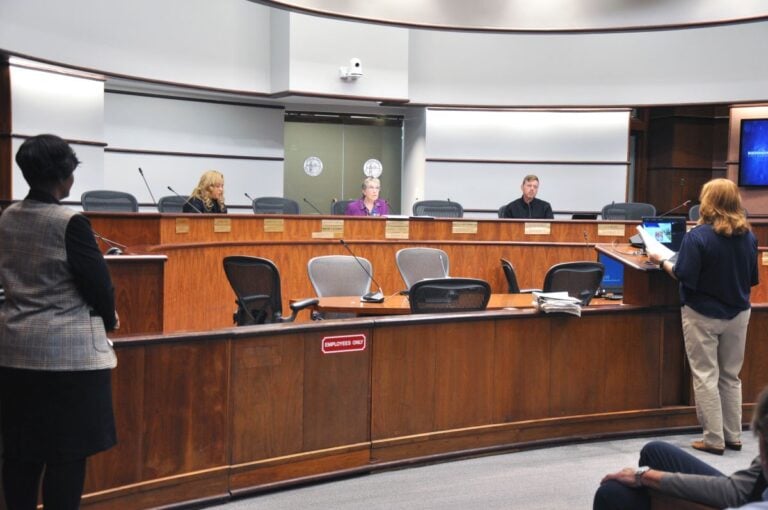
Birmingham leaders on Tuesday outlined a wishlist for the Alabama Legislature’s upcoming session that focused on policies strengthening housing in the Magic City, particularly in enforcing blighted and tax-delinquent properties.
“These are shared values influenced by ongoing conversations with the residents of our 99 neighborhoods,” Mayor Randall L. Woodfin was quoted in a release as saying. “I thank the council for its collaboration and support of this agenda as we continue to improve each neighborhood that makes up our city — while also positioning Birmingham as a city that is open for business, welcoming to new residents, and committed to smart, inclusive growth.”
The council unanimously passed the resolution, which councilors said serves as a joint statement with the mayor’s office. The priorities of the session include:
- Changing the Alabama Land Bank Act to allow local land bank authorities to acquire tax-delinquent properties more quickly, helping move vacant and abandoned properties back into productive use.
- Granting Birmingham the authority to create a vacant property registry, establish a registration fee and enforce basic maintenance standards to address long-term neglect by absentee property owners.
- Creating the Birmingham Housing Trust Fund, as well as legislation allowing municipalities to establish Community Land Trusts to promote community development and expand access to affordable housing.
- Seeking legislative review of a potential constitutional amendment that could allow Birmingham to impose blight remediation assessments on certain properties.
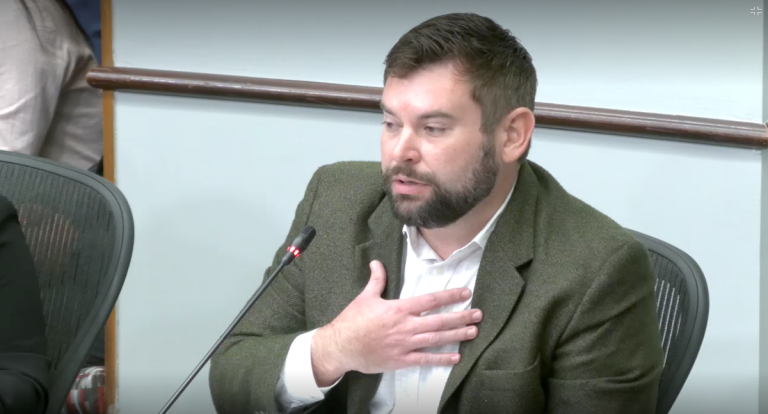
Councilor Clinton Woods said such a constitutional amendment would allow Birmingham officials to increase taxes on landowners of nuisance properties and put that revenue toward redevelopment in the community.
“It goes in line with what we’re doing in building an ecosystem where we can hold people accountable,” Woods said. “I think on this side, with complaints from residents, we get a lot of calls to ‘come cut this grass,’ ‘come tear this down,’ these are all private properties. We put that much money into those things and we’re not getting that benefit back. So, we really need to put the responsibility on the appropriate party, and in this case that’s the landlords. … Once you start holding people accountable, you have some real teeth — a stick to swing, so to speak — you start to see the behavior change.”
Dealing with nuisance properties has been a top policy priority for city leaders recently. In September, for example, the council approved an ordinance that allows city officials to petition judges to foreclose on certain derelict properties to recover any nuisance abatement costs.
Mayor-Council Act Raised
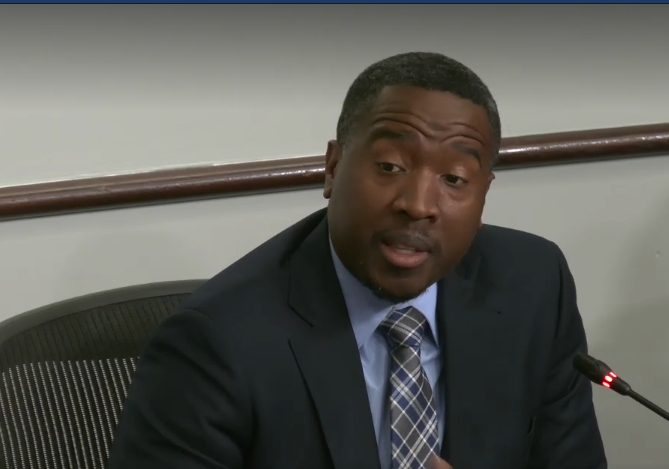
Before the council approved the agenda Tuesday, Councilor Crystal Smitherman said she would like to see a change to the Mayor-Council Act on the city’s wishlist. That often-criticized law, passed in 2016, put the budgeting process under the control of the mayor.
“It’s not even about our current mayor,” she said. “Mayor Woodfin won’t always be in office, as much as we would love that to happen. We can’t put him in a bubble and keep him as mayor for 100 years. But currently, it doesn’t matter who is sitting now, it’s imbalanced.”
Smitherman later added, “I just hope that in the future the mayor and the council can come to some resolution to put it on there. I really hope that people will consider it this term as well.”
Councilor Hunter Williams agreed with Smitherman and said the council could propose a legislative agenda of its own in addition to the joint statement with the mayor’s office approved Tuesday.
The 2026 Regular Session of the Alabama Legislature begins Tuesday, January 13.
The Star Uptown Plans Tweaked
In other business, the council approved an extension to the redevelopment agreement for the former Carraway Hospital campus. Corporate Realty, doing business as Northside Redevelopment, is building a mixed-use development, The Star Uptown, which will include residential, retail, office and dining spaces. Birmingham’s new Coca-Cola Amphitheater is part of the redevelopment project.
Brian Wolfe, chief development officer for Corporate Realty, said his company needs the extension because of what he called an “antiquated regulation” from the U.S. Department of Housing and Urban Development. Wolfe said Corporate Realty was in the process of applying for a loan with HUD, but applicants can’t go through the underwriting process for such loans while their projects have ongoing demolition — which is the case for The Star Uptown.
“We have since abandoned that application and we have picked back up the demolition process,” Wolfe told the council Tuesday.
He said the firm expects to complete demolition by the end of May. Phase one of the development includes 64 residences stretching from 17th Avenue to 19th Avenue along Carraway Boulevard, according to city leaders. The entire 45-acre project will likely take between five and seven years to complete, Wolfe told the council Tuesday.
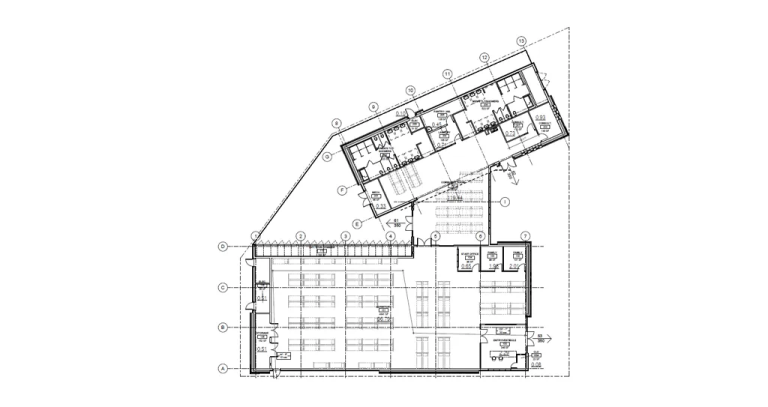
Councilors also set a public hearing for Feb. 10 to consider a rezoning that would allow the construction of a motorcycle training facility at 1700 31st Avenue N. and 1701 32nd Avenue N. “This facility will provide professional motorcycle training to individuals who want to learn how to operate their motorcycles safely,” Councilor Darrell O’Quinn said. The public hearing is set for 9:30 a.m., during the council meeting on the third floor at City Hall.