
Donate today to help Birmingham stay informed.
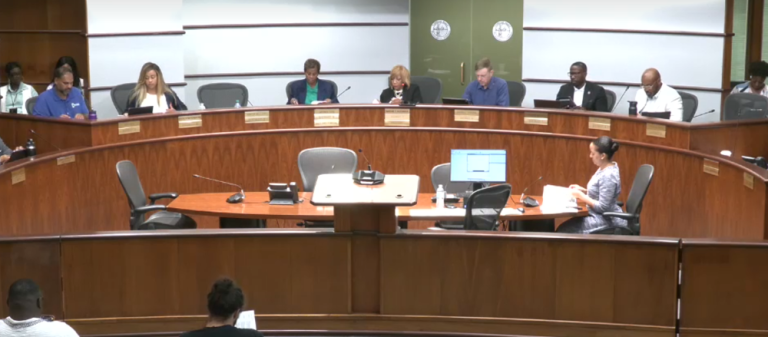
The Birmingham City Council on Tuesday voted to provide $1.15 million to continue a popular violence-intervention program.
The agreement will allow the Offender Alumni Association to continue its work with the Jefferson County Board of Health for the Hospital-Linked Violence Intervention Program, in which patients who have survived gunshot injuries engage with violence intervention specialists while still in the hospital.
Council President Pro Tem LaTonya Tate said the program has played a pivotal role in reducing violent crime and preventing cycles of violence.
“This partnership has shown us what’s possible when we work in collaboration. There has been essentially zero recidivism with individuals who have completed this program,” Tate said. “We’ve reframed gun violence as a public health crisis. We’re down 73% in homicides from this time last year, and I think connecting community-based organizations to resources is a big reason for that.”
The program targets residents aged 19 to 39 who are recovering from non-self-inflicted gunshot wounds. The intervention begins at the patient’s bedside, where staff from the University of Alabama at Birmingham’s Division of Trauma and Acute Care Surgery identify willing patients and refer them directly to the HVIP.
Once a patient is connected to the program, OAA outreach workers and “violence interrupters” step in to work with victims and their families, focusing on defusing immediate tensions and preventing retaliatory violence, according to a statement from the city. To help permanently break the cycle of violence, the initiative also provides long-term support by linking survivors to resources such as mental health care, housing assistance and job training.
Since it began, the program has assisted more than 250 individuals, achieving success rates in preventing retaliation and reinjury that surpass national standards for similar hospital-based initiatives, according to the city’s statement.
Councilor Crystal Smitherman also spoke highly of the program and said she’d like the city to consider expanding it in the future, including to serve more hospitals.
According to the agreement approved Tuesday, the $1.15 million will go toward case management, education, employment support, housing, food, utility payments and transportation services to program participants.
According to a news release from UAB, where the HVIP pilot program started in Birmingham, OAA received a $1.1 million grant in 2022 awarded through the Jefferson County Department of Health Public Health Advised Fund at the Community Foundation of Greater Birmingham. The city of also committed $2.1 million for years two and three of the program.
Village Creek Flooding

The council also approved applying for a $2.6 million Federal Emergency Management Agency grant for the floodplain restoration of Village Creek.
Tracy Hayes deputy director of the city’s Historic Preservation and Urban Design Division, said Village Creek was targeted in congressionally approved funding because of repetitive loss and severe flooding.
The long-term strategy is to transform vulnerable areas into permanent, natural public spaces, like W.C. Patton Park and the Village Creek Linear Park, according to a statement from the council.
Hayes said the overall budget for the project is $3.2 million, which includes a 25% match from the city. The project is estimated to take three years for completion.
The council approved the application unanimously, with Councilor Hunter Williams absent.
“This funding will help us address a long-standing challenge with flooding,” Tate said in a statement from the city. “Implementing up-to-date flood mitigation strategies and infrastructure is essential for public safety, and I look forward to working with our local officials to ensure these resources are deployed effectively.”
In other business, the council:
- Approved appropriating $239,929 for the Northside Spark Project, which involves rights-of-way work to improve walkability in the Fountain Heights, Druid Hills and Norwood neighborhoods, which were affected by the Interstate 20/59 downtown bridge replacement project of 2019.
- Approved the mayor’s applying for a grant of up to $250,000 from legislatively approved funding for maintenance of City Walk BHAM. The 10-block space beneath the I-20/59 bridge through downtown is owned by the state and managed by the Birmingham Jefferson Convention Complex but has faced funding challenges to maintain the space.