Donate today to help Birmingham stay informed.
Mark Mayfield has read and respected The New York Times his entire adult life. Taught its journalistic standards in all of his media ethics courses at the University of Alabama. Yet in a federal courtroom in Tuscaloosa on Aug. 13, the recently retired UA journalism professor was ripping a Times story to shreds for its stunning sloppiness.
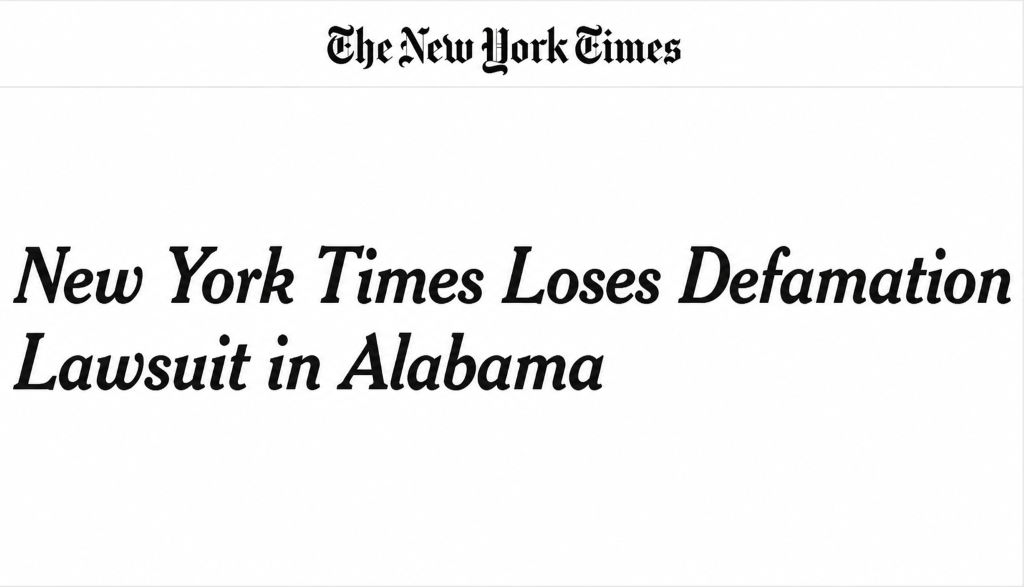
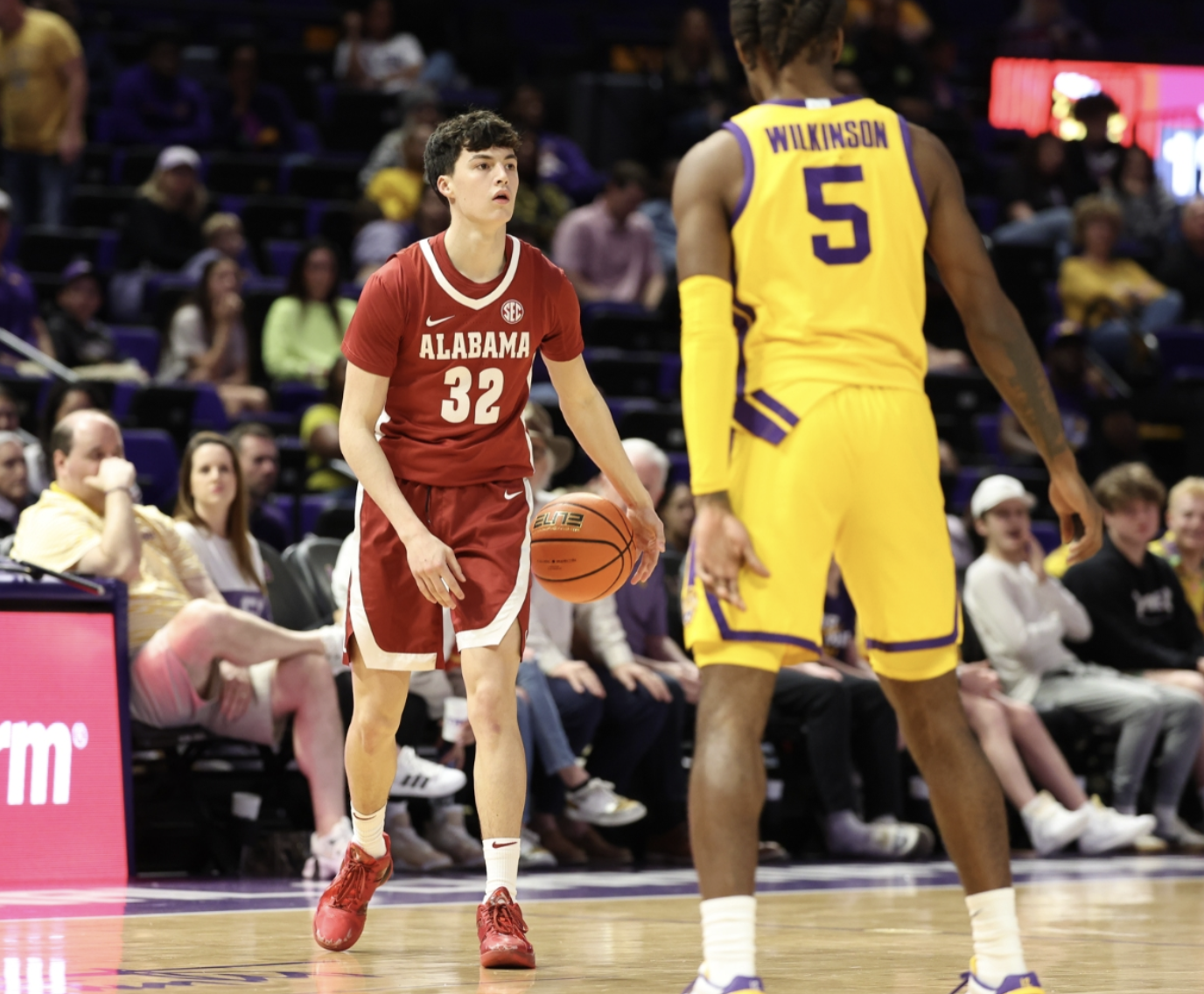
Mayfield* was sought out as an expert witness by the family of Kai Spears, a former UA walk-on basketball player who sued The Times for libel and false light invasion of privacy over a March 2023 story that incorrectly placed Spears at the scene of a fatal shooting in Tuscaloosa. Mayfield’s testimony about The Times’ deviations from customary journalistic practices — and from its own standards — helped persuade the jury to award Spears $9.25 million, including $7.5 million in punitive damages. The Times hadn’t lost a defamation case over an article in the U.S. in more than 50 years. (For the best coverage of the case and the trial, see Ryan Phillips’ work for Tuscaloosa Patch.)
“Even the New York Times has to be called out if they make such an egregious error,” Mayfield said in an interview.
Mayfield, also a former magazine editor and news reporter, knows that some people in journalism might not approve of a journalism professor testifying against a credible news organization in a libel case. He said that when he started his consulting for the plaintiffs in January 2024, his goal wasn’t a courtroom loss for The Times. But as he reviewed thousands of pages of documents in the case, such as story drafts, reporter notes, texts, emails and depositions, he concluded not only that “there was something very wrong about how this story was reported and published” but also that The Times showed “an attitude of indifference” to the reputational harm it had caused to Spears.
“I understand my fellow journalist colleagues might disagree about whether they would have done this or not,” Mayfield said. (My view is that an occasional libel loss, if warranted, isn’t a bad thing because it helps to blunt claims by powerful people that libel standards need loosening.)
Mayfield, who was paid $300 per hour for what will end up being more than 200 hours of work, outlined what he saw as multiple failings by The Times in his testimony and his Arenblog interview:
- The erroneous reporting that Spears was in star player Brandon Miller’s car at the moment of the shooting was based on a single, unidentified, second-hand source who provided Spears’ name on the morning of the day of publication. Typical industry policy for using unattributed information requires multiple sources with as close to first-hand knowledge as possible, that the information is important to the story, and that it can’t be obtained any other way.
- On the day of publication, the reporter spoke briefly with Spears in the locker room and phrased a question that presented Spears’ presence in Miller’s car as fact, rather than asking Spears whether he was in the car or not. (Conceivably, even the first form of the question could have been a red alert to Spears that the reporter had reached a wrong conclusion but Mayfield said the player followed earlier instructions from the Athletics Department not to comment about the criminal case.)
- The first sentence of the story said the shooting “involved” members of the UA men’s basketball. That was true even if Spears wasn’t in the story. But Mayfield believes the word “involved” ascribed some kind of criminal or negative behavior to Spears that wasn’t justified.
- The Times rushed publication. It talked to its key source that morning and published the story online that night. It published less than three hours after submitting a list of questions, including about Spears, to UA Athletics Communications and did not state a deadline for a response, which the university was in the process of providing. Mayfield said wanting to publish prior to UA’s NCAA tournament game the next day was an insufficient reason to rush. “This story was not breaking news. There was no imminent public need to know.”
- In the aftermath of publication, The Times showed “indifference” to complaints. It immediately published denials from UA and Spears’ father about the player’s actions but Mayfield said those denials were “buried” in an updated story and no previous reporting was corrected. Alabama law allows a defendant to avoid punitive damages if it publishes a retraction within 10 days. The Times did so 79 days later, after Spears filed his suit.
Mayfield had never testified as an expert witness before. Because he graduated from UA, worked at UA and roots for Crimson Tide sports teams, he knew opposing counsel would try to present him to the jury as a “Bama homer.” But “I’m a journalist and I can check that at the door,” he said. One opposing lawyer started yelling at him at one point of cross examination, causing the judge to tell the lawyer: “You may not treat a witness like that in my courtroom again.” The attorney apologized to Mayfield.
Mayfield didn’t care for some of the arguments offered by the defense. It claimed the legal principle of “substantial truth,” which means that even though some facts were wrong, the essence of the story was right. That claim was based mainly on the fact that Spears was in Miller’s car earlier that night. But at the moment of the shooting, he was two blocks away in another car, heading home. “It was one of the worst arguments I’ve ever heard a journalism outfit make,” Mayfield said.
His assessment of The Times’ remarkable negligence is right on target. But negligence is only one piece of proving defamation. Kai Spears certainly went through considerable and legitimate mental anguish in the wake of the story, but I can imagine the company arguing on appeal that it didn’t pin any negative behavior on Spears and that The Times is not substantially the cause of Spears’ harassers misinterpreting or exaggerating the story. (Mayfield says the use of “involved” blows that argument up.)
Regardless, The Times faces some accountability at the moment. That, not money or publicity, was Mayfield’s motive, he said. “I’m not sure, till that verdict was read, that they knew the seriousness of what they did. I think they do now. I’m not gloating about it.”
*Disclosure: A former colleague and friend of mine.

Tom Arenberg is an instructor of news media at the University of Alabama. He worked for The Birmingham News and the Alabama Media Group for 30 years. He published this commentary originally as a post on his blog, The Arenblog.
About News is a BirminghamWatch feature that publishes commentary by those who teach the craft and think about the values and performance of today’s journalism. BW shares links to About News columns on Facebook and invites readers to join the conversation there.