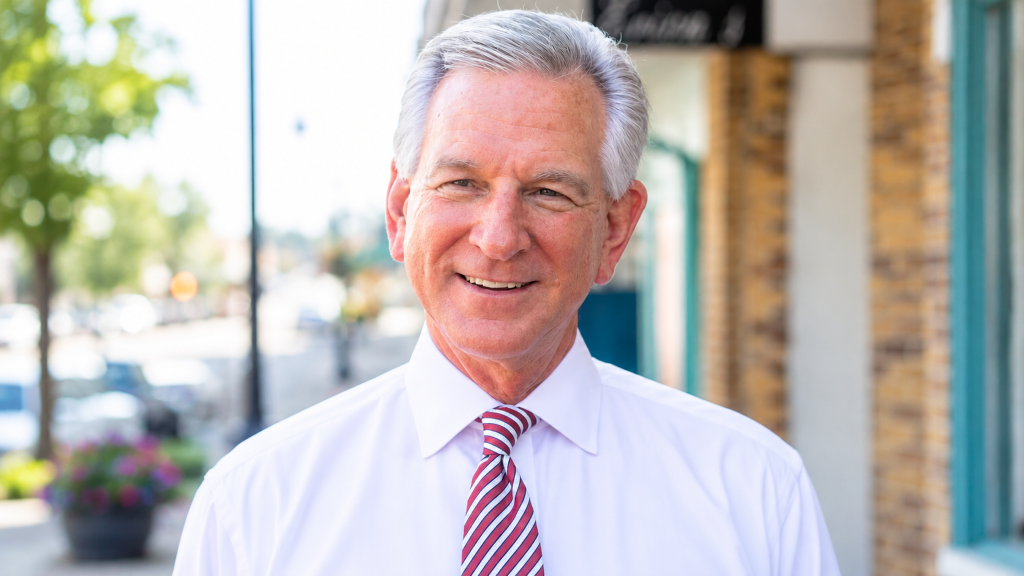
Alabama governor-elect Tommy Tuberville treats political reporters a lot worse than he treated sports reporters when he was Auburn University’s head football coach. He regaled the sports guys in his office, shared his cellphone number with a few of them, and presumably felt some appreciation that they helped to save his job by uncovering the infamous Jetgate.
I guess the battlefield of politics, and age, can change a person.
Multiple state political journalists posted on social media last week about their treatment at Tuberville’s election victory party at The Hotel at Auburn University. They were kept in a conference room for four hours and not allowed to enter the party to do interviews with Tuberville supporters. They got two minutes of video from a connecting hallway. They were allowed into the party only to hear the candidate’s victory speech.
The pre-event media advisory indicated that this was the plan. That doesn’t negate that it was a silly and manipulative idea. A valid story focusing on key people who helped Tuberville get elected was lost, and those folks would have been fully capable of dealing with mingling media however they wished without overprotection from the campaign.*
Nonetheless, it’s more important to focus on whether Tuberville and his campaign staff allowed the state press to serve its purpose of informing voters over the course of the campaign, especially knowing that degree of openness on the election trail might indicate future degree of openness in the governorship. In reviewing events and communicating with multiple journalists who reported on Tuberville, I saw much to worry about:
- Reporters rarely got what they considered satisfactory answers – or any answers – to questions sent to campaign staff. One reporter** estimated getting replies to 25% of email inquiries. Another got frequent email responses but said answers were rarely specific.
- Tuberville told campaign staff to remove a reporter for Lagniappe from a public campaign event in Mobile on Oct. 20 when the reporter began to ask a question. The campaign had decided that, unlike many other campaign stops, this one would not have time for media questions. The reporter was seeking an answer to the long-lingering issue of whether Tuberville had fulfilled his pledge to donate his congressional salary to Alabama veterans. A campaign staff member summoned sheriff’s deputies, and the reporter left without further incident. Faced with multiple ways to handle the situation, Tuberville chose a bully tactic as his immediate response. Two weeks later, at the victory party, a campaign staff member and a police officer escorted a Gulf States Newsroom reporter out of the hotel lobby.
- In June, a lawyer for Tuberville’s campaign threatened a lawsuit and told Lagniappe to remove an online article reporting selected income and residency information in the senator’s personal tax returns. The campaign released the returns in redacted form to help resolve a candidate eligibility challenge, but an inadvertent bar code allowed access to an array of unredacted personal data. Lagniappe did not remove the article.
- Tuberville often disparaged state (and national) news media as “fake” or “woke” and out to get him with “witch hunts.” This is an alarming reflection of his mindset. Still, I think journalists can mostly ignore this. Yes, rhetoric like this can poison public perception of credible journalism, but it’s not a direct obstacle to reporting. It’s hot air.
- One-on-one candidate interviews that allow for probing were hard to come by during the campaign, at least for outlets without a marked Republican bent on their opinion pages. For instance, here’s a line from an Oct. 29 Alabama Reflector article: “Multiple messages seeking an interview with Tuberville, or a member of his staff, were left unanswered over the last two weeks.” One reporter said in early November that his newsroom hadn’t been able to get in touch with Tuberville for a month.
The campaign points to examples of openness with the state’s media. Although no one replied to my email questions over a period of four days, communications director Hannah Eddins told the journalists at the victory party that Tuberville is the “most accessible senator you guys have dealt with.” She pointed to 200 weekly press calls over the past six years and noted that the press has been invited to recent campaign events. She posted on X that Tuberville will continue to be “incredibly accessible” as governor.
The press calls are commendable, but not every significant outlet in the state gets invited.
AL.com’s Kyle Whitmire, who wrote frequently about the candidacy but is a columnist rather than a straight-news reporter like the ones I talked to, said he came to expect “no comment” to his questions. He sees a reason that greater responsiveness to reporters would benefit the upcoming Tuberville administration: “One day, something will happen and you will need the benefit of the doubt of all those folks in that media room, and now they (the administration) will be much less likely to get that. It’s a self-defeating approach.”
The obligation of openness is even greater for a government administration than for a political campaign. It’s not only good civics but also in many cases a legal obligation. Administrations of all kinds have trouble understanding that the expectation of accountability does not fluctuate based on whether a person of power likes the news coverage or not. Ignoring the press, for all its faults, still means ignoring the public.
* A New Jersey congressman went even further by banning media from his watch party, presumably because he didn’t want the world to see unhappy faces if he lost, which he did.
** I agreed to requests for anonymity to encourage candid assessments. Multiple reporters said that despite frustrations, their outlets are committed to fair and objective coverage.
Tom Arenberg is an instructor of news media at the University of Alabama. He worked for The Birmingham News and the Alabama Media Group for 30 years. He published this commentary originally as a post on his blog, The Arenblog.
About News is a BirminghamWatch feature that publishes commentary by those who teach the craft and think about the values and performance of today’s journalism. BW shares links to About News columns on Facebook and invites readers to join the conversation there.