
Donate today to help Birmingham stay informed.
A lawyer for Oxmoor Neighborhood President Madelyn Greene alleges in a letter to the city of Birmingham that she was subjected to “retaliatory police harassment” tied to her role in the Nebius data center lawsuit.
Mark Parnell sent a letter dated May 17 to City Attorney Nicole King characterizing a police stop of Greene as “pretextual harassment.” He alleges it was a deliberate effort to intimidate Greene after she and fellow Oxmoor resident David Butler initiated a class action lawsuit against the city and Nebius Group four days prior.
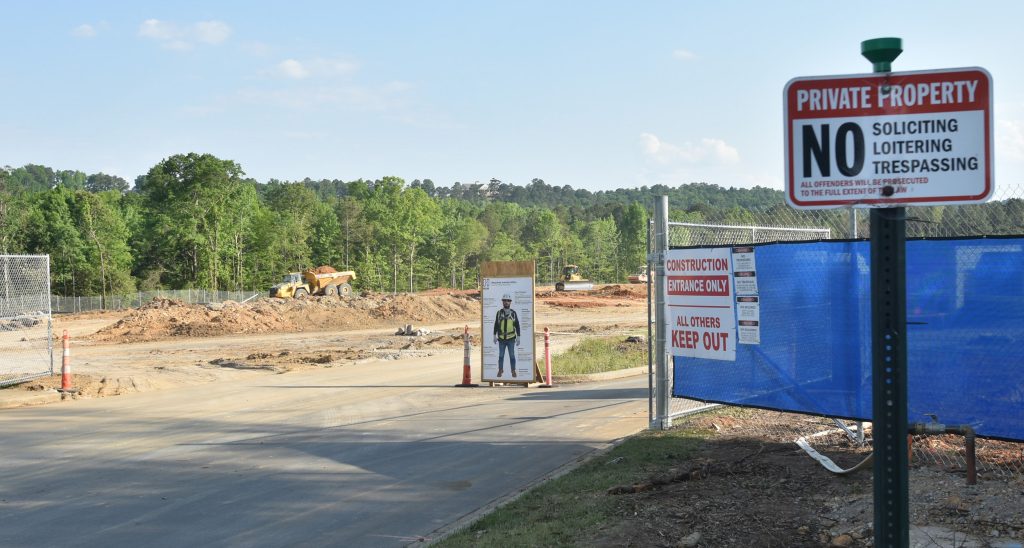
According to the letter, Greene was driving home from church Sunday morning along the same route she has for 22 years taken, through the Oxmoor Valley Corporate park, now the construction site for the 300-megawatt data center BHM01. Two Birmingham police officers stopped her. The letter claims that Greene did not commit any traffic infraction or observable violation and officers didn’t identify one when stopping her.
According to the letter, officers claimed there had been complaints in the area of harassment against police, hence their reason for stopping Greene. When Greene attempted to record the encounter on her phone, the officers left the scene without providing names or badge numbers. Police did not write a ticket or issue a warning.
“Citizens of Birmingham have an absolute right to petition the courts and to oppose city development projects without becoming targets of police harassment,” Parnell said.
The Public Information Unit for the Birmingham Police Department was not available for comment. City spokesperson Rick Journey responded that the city could not comment, citing pending legislation.
The letter requests a litigation hold on all potentially relevant evidence, including radio and electronic communications, body camera footage and any related reports or internal write-ups. Parnell also has asked for the identities of the two officers and any disciplinary records on them, if they exist.
Should a similar incident occur in the future, Parnell notified, plaintiffs and any class members will file a temporary restraining order against the city, the Birmingham Police Department, the individual officers, the chief of police and the mayor.
Legal Claims Pending Over Data Center
This incident comes after months of deliberation over the BHM01 hyperscale data center, conflicting votes and a temporary moratorium on data center construction. Despite intense public outcry, the city determined the Nebius project can proceed.
The Greater Birmingham Humane Society sued the city on April 24, contesting this determination.
Now, plaintiffs have introduced a broader class action lawsuit targeting the proposed BHM01 hyperscale data center and the city itself.
“Filing this lawsuit was never our first choice,” Greene said, “but it now feels like our last resort and the only remaining way for our community to be heard.”
The defendants named include Nebius group, the Amsterdam-based company developing the data center off Lakeshore Drive; Alabama ADC Holdings, the real estate entity that acquired roughly 80 acres for the project on Oct. 1st of last year; Hoar Construction, which holds a $7 million permit for demolition and construction there; and the city of Birmingham, which the lawsuit contends improperly issued a permit for the project and encroached on the authority of the Zoning Board of Adjustment.
Greene and Butler, on behalf of themselves and the class members, seek damages for loss of property value, loss of use and enjoyment, and nuisance, for which they have requested a trial by jury.
They have requested two other primary forms of relief: a ruling that the project violates zoning laws and an immediate and permanent cessation of BHM01 unless it complies with the law.
Alongside the complaint, they have filed an expedited schedule for injunctive relief. Every day the project advances, they argue, surrounding residents suffer irreparable harm.
Moratorium, ‘Grandfathering’ and the City’s Choice
The lawsuit situates the legal dispute within broader confusion around the March 3 moratorium on data centers larger than 20 megawatts, namely why the city excluded the 300-megawatt BHM01 from the moratorium.
The city has said that because Nebius’ approval process was already underway when the moratorium was declared, BHM01 was ‘grandfathered’ in. Legally, city officials have said, their hands were tied.
Mayor Randall Woodfin has said that blocking the project would expose the city to legal liability from the developers, all on the taxpayers dime.
Plaintiffs argue this is a misinterpretation, that Nebius has not completed the review process necessary to satisfy the law and therefore has no vested rights. In their view, the city made a “discretionary policy choice” to exclude BHM01 from the moratorium, not a legally compelled one.
“The Project is not a 300-megawatt hyperscale facility that has been duly approved,” as the complaint puts it, “it is a 300-megawatt hyperscale facility that has been allowed to continue an as-yet-unfinished review while every other applicant is barred from filing for the same use.”
The complaint alleges several deficiencies, stating that Nebius had not obtained special exceptions for the utility substations to power the facility, leaving the application incomplete, and no conceptual plan amendment had been adopted authorizing the site’s use.
Plaintiffs argue that an April 9 memo from King, the city attorney, provided key legal interpretation that enabled the project to proceed without securing special exceptions. They argue the memo violated the law and was an attempt by the city to undermine public input.
Echoing arguments in a related lawsuit filed by GBHS, plaintiffs claim that the memo undermined the ZBA’s authority and that the city’s draft ordinance is an attempt to strip away the public hearing requirements the special exception process provides. The lawsuit emphasizes that ZBA appeals may be reversed only by appeal to the ZBA itself or by judicial review in circuit court — not by internal legal memoranda.
According to the lawsuit, that April 9 memo conferred a temporary legal favor to Nebius — a sort of governmental permission slip — rather than permanent entitlement. If that memo were determined to be procedurally or legally defective, if it were reversed, plaintiffs argue, that ‘permission slip’ could be withdrawn and BHM01 would be out of compliance with city regulations.
Plaintiffs further object to proposed changes in a proposed new data center ordinance that would diminish or remove the special exception requirement, a concern raised previously by a Southern Environmental Law Center open letter and the GBHS.
If the mayor’s interpretation prevails, the plaintiffs warn, “no Birmingham resident — including Plaintiffs and the members of the Class — will ever have meaningful, public, quasi-judicial opportunity to be heard before a 300-megawatt hyperscale facility is sited adjacent to their homes.”
For some residents, these fears may be realized.
In the new version of the data center ordinance draft, the special exception language requirement has been struck for hyperscale data centers, which would take away one of the ways the public has to comment on future data center projects.
Because the proposed ordinance must be publicly available for at least four weeks before a vote, the soonest the council could approve regulations would be in June.
Next Steps
Despite months of attention, plaintiffs contend many details about the Nebius project —whether precise emissions profiles for the onsite generators or effects on the power grid — remain opaque.
As a routine litigation step, plaintiffs have served interrogatories and document requests to the city and the developer defendants. They have asked for ‘any and all’ permits, certificates, approvals and licenses related to building, demolition, land disturbance, stormwater use, water, sewer, electrical, mechanical and related categories.
Under standard court rules, defendants must respond to these discovery requests in writing within a set timeframe, in this case, within 45 days.
Journey said Tuesday that the city had not yet been formally served.
Beyond the specifics of the case, to the plaintiffs, the issue is equity, the even enforcement of the zoning ordinance.
“If the city is willing to allow a massive AI center to be pushed into our community despite overwhelming (opposition) from residents,” plaintiff Butler said, “then every neighborhood in Birmingham should be asking themselves what could stop the same thing from happening in theirs.”