Government
Birmingham Council Weighs $600K for Park Amid Scrutiny of Homeless Services
Donate today to help Birmingham stay informed.
The Birmingham City Council could soon vote on using $600,000 in opioid settlement money to build a park that will serve as a resource for residents experiencing homelessness.
However, during a recent meeting, two council members expressed concerns that the nonprofit group currently providing homeless services to the city, which would oversee the park, isn’t doing enough, considering the money it’s being paid.
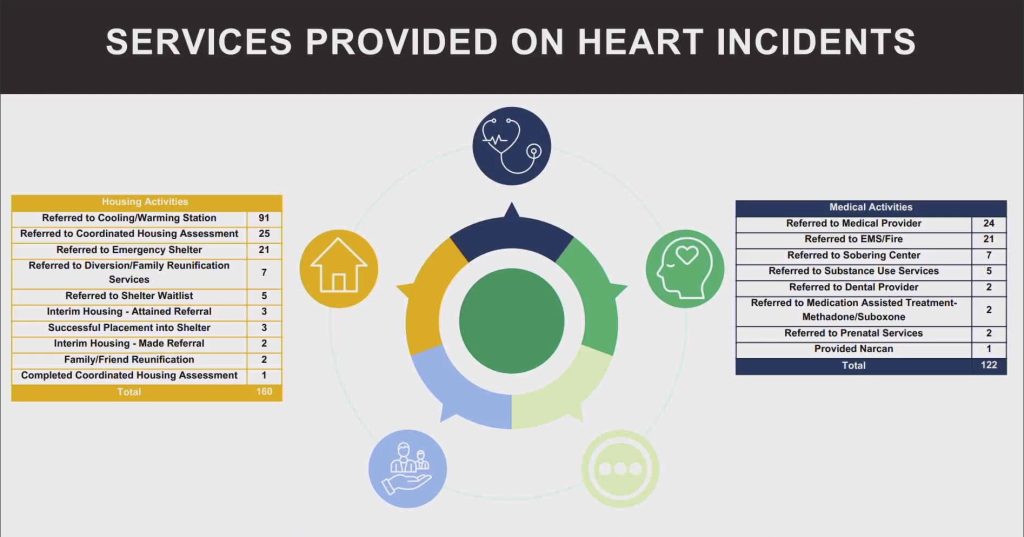
The discussion came during a council meeting last week in which the city’s director of special projects, Alanah Melton, presented data on the services provided by Urban Alchemy so far this year.
 The city is paying the California-based Urban Alchemy $1.7 million to lead a new program focused on serving the city’s unhoused residents in crisis. Called the Homeless Engagement Assistance Response Team program, or Heart, these workers answer calls from the community for issues such as loitering, mental health crises and public disturbances. They provide assistance by connecting residents in crisis to other resources and service providers.
Melton said that the Urban Alchemy team has resolved more than 3,000 incidents so far this year, with an average of nine resolved daily.
During the meeting, Councilor Hunter Williams called attention to one statistic: from the beginning of the year through September, Urban Alchemy placed four people in shelters.
“We spent a lot of funding on it, and the interactions look just a little slim,” Williams said.
Melton said choosing the single metric of residents being referred to shelters isn’t a good gauge of Urban Alchemy’s impact in the community.
“Of the 80% of people who say, ‘Yes, I want housing,’ all of them, single-handedly, said, ‘I don’t want to go to a shelter.’ … We’re seeing across the nation that the emergency shelter model does not work,” she said.
Melton said emergency shelters often make people feel institutionalized, which is why other forms of housing are growing in popularity across the nation. In February, for example, Urban Alchemy received $1.5 million to construct and operate up to 60 micro shelters at two sites in the city.
Councilor Crystal Smitherman said she was not criticizing the administration, but feedback she receives from the community indicates outreach efforts such as Urban Alchemy’s aren’t working.
“When I have business owners tell me there are homeless people doing crack in front of the window of their business, or a person comes into their restaurant and pees in the chair, or there is drug dealing going on. Like, it just feels like — I’m with Councilor Williams. Like, what, what are we doing?” she said.
Mayor Randall Woodfin told the council, “Let’s be honest about the moment. We can’t put all this on Heart. They’re the newbies in town.”
“But they’re getting a lot of money, though,” Smitherman said.
“They do, but they are honoring the contract,” the mayor said.
Responding to a request for comment, a local Urban Alchemy official provided a fact sheet detailing the agency’s outreach efforts in Birmingham.
Williams also expressed concerns about the proposed park. If the measure is approved, the project will be modeled after Urban Alchemy’s Oasis Parks program. These sites offer dog parks, fitness centers and community gardens and have on-site staff who can direct homeless residents to services.
As the measure currently stands, the project would be paid for by $600,000 the city received as part of a suit brought against opioid manufacturers. Williams asked officials about the controls in place to ensure the park doesn’t become “an open- air drug market.”
The mayor told the council his administration “would never even recommend to you the Oasis if we didn’t think what they’re currently doing is working. Is it new? Yes. Can they build upon it? Absolutely. Will they continue to improve? Without a doubt. Will we hold them accountable? Absolutely. Because you’re my co-accountability partners.”
Councilor Josh Vasa also asked about a September news story in which the city of Austin did not renew a contract with Urban Alchemy after city leaders learned that five employees of the nonprofit had misrepresented data about services provided.
The city attorney advised the council to enter into an executive session to discuss potential litigation. Upon return, the council voted to move the park measure to the council’s agenda for a vote. The measure passed with Williams voting no.