
Donate today to help Birmingham stay informed.
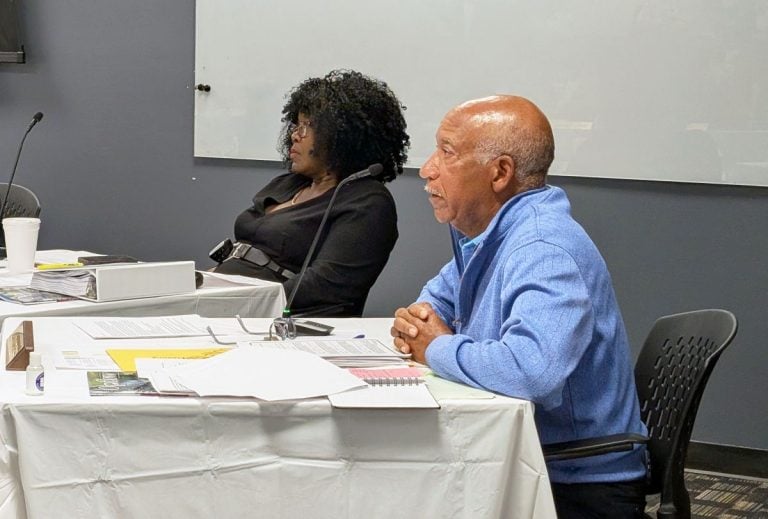
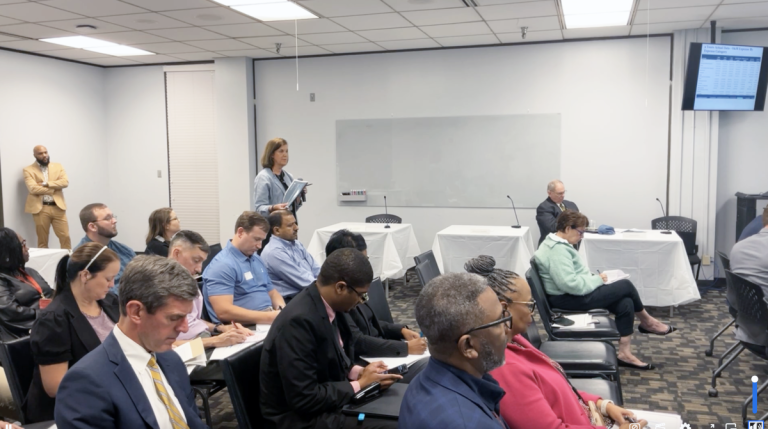
After Central Alabama Water’s board of directors heard conflicting expert opinions Monday on best ways to stabilize Lake Purdy Dam, the board’s vice chair said he believes the utility will be sticking with the original design plan for safeguarding the dam against failure in the event of a major flood.
“I don’t think that there’s going to be any reconsideration of an alternative design,” Phillip Wiedmeyer said of the ongoing project that began late last year. “We have a contract for the complete rehabilitation of this dam, and were we to consider an alternative design at this point, it would mean canceling that contract at considerable cost, designing and then rebidding for the alternative design.”
He said such an about-face would likely add two years to a four-year project engineers have said is needed to strengthen the 115-year-old structure the failure of which would threaten lives and thousands of homes. A major driver of the project was a study showing the dam wouldn’t be stable in an extreme flood.
Three independent experts examined the dam on Nov. 5 and met the following day with engineers involved in the stabilization project. During Monday’s meeting, two of those experts endorsed the current plan to add buttresses to the dam while the third said the board should consider a different design option that would allow water to overflow the dam.
Board members said it was the first time they had heard about this option.
“How’re we going to solve this mess we’re in — whether or not we should go one way or another way — and how much money is it going to cost us?” asked board member Jarvis Patton Sr. during the meeting.
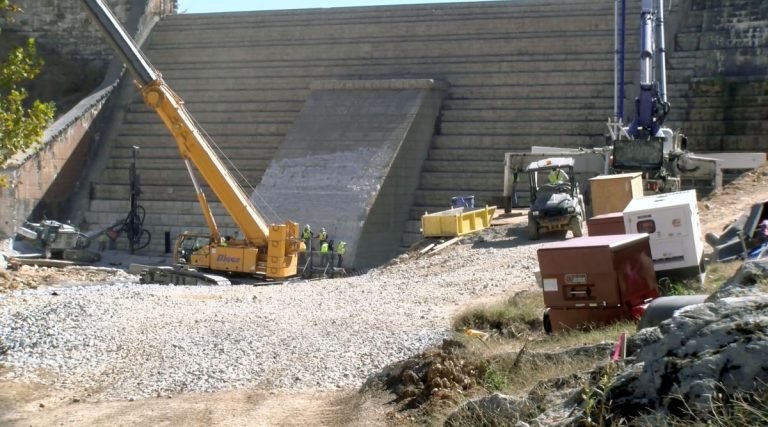
The current design plan for an $88 million project calls for construction of concrete buttresses to reinforce the downstream face of the dam. Last month, the board learned engineers had discovered the foundation on one side of the dam was not strong enough to support the increased weight of those buttresses. Engineering firms working on the project proposed adding deep foundation supports called micropiles so work on that side of the dam could proceed.
The board, which met for the first time in May after a state law effectively dissolved the previous board, approved on Oct. 29 resolutions to hire the three independent experts to give their opinions on the overall design plan and the proposal to install micropiles. The experts are Donald Bruce, who specializes in geotechnical-construction, David Campbell, a professional engineer with expertise in dams, and Eugene Bentley Sorrell, who in 2020 retired as chief engineer for Birmingham Water Works, now called Central Alabama Water.
All three experts joined Monday’s meeting virtually and agreed the micropiles and a grout curtain, which would fill voids in the limestone rock beneath the dam and reduce water seepage, need to be installed to continue the project as planned. They also agreed the current project design meets high engineering standards and would make the dam strong enough to contain a “probable maximum flood” — a term used by engineers and government agencies to describe an event that could be expected from the most severe combination of conditions that are reasonably possible in a particular area.

Sorrell, however, offered a different overall strategy — adding “overtopping protection” — that he said could be significantly less expensive and would require fewer micropiles.
“The design concept was one of the first things I started talking about out in the field,” Sorrell said. “That’s what we have — design choices.”
Containing a probable maximum flood likely would be the most expensive option, he continued. “Current practice, in some instances, has been, ‘We’re not going to contain that flood. We’re going to let it pass over,’” Sorrell said. “Overtopping protection for dams is a popular option nowadays because it is the lower-cost alternative.”
If a dam is not designed for overtopping — and Lake Purdy Dam currently isn’t — water flowing over it can cause it to fail by eroding earthen structures and destabilizing the foundation. Overtopping protection is a system of structures designed to protect the dam from such erosion and structural stress.
Wiedmeyer said the time for Sorrell to have brought up other design choices was in 2019, when he was chief engineer for the water works and the current design plan was presented to the previous board that accepted it.
“It may have been cheaper if it was considered initially, but to consider it and implement it at this point in the project, it will not be cheaper,” said Wiedmeyer, a retired engineer whose work with Alabama Power involved dam-safety inspections. “It will be more costly to do that, and we don’t have any characterization of what the downstream impacts of that design would be.”
To further discuss matters related to the dam project, the board entered an executive session that was closed to the public. When they emerged, board members voted unanimously to allow engineering firms to move forward with designing and overseeing installation of the micropile deep foundation in accordance with the current plan of stabilizing the dam by adding concrete buttresses.
Patton said information provided during the executive session gave him the confidence to vote on that step of the project.
“When we got into the meeting, there was more clarity given to me, and that’s why I supported it,” he said.
Lake Purdy Dam, located in north Shelby County, has a capacity of 5.6 billion gallons and is a major drinking water source for much of Central Alabama Water’s service area, including Birmingham, Homewood, Hoover, Mountain Brook and Vestavia Hills.
Last year, the previous board approved the dam rehabilitation project. After stopping the project briefly in July, the new board decided to complete phase one at a cost of $28 million and then make a determination about continuing the project. The board learned Monday during a presentation by engineering firm Arcadis North America that the total cost of phase one is actually $44 million.
Phase one is expected to be complete in April. Wiedmeyer said the board will need to decide soon whether it will continue with the project under the current design, which he favors.
“At some point, the board has got to give a green light,” he said.