
Donate today to help Birmingham stay informed.
After heated debate, the board that governs Alabama’s largest water utility Monday rescinded its historically underutilized business policy that encouraged companies owned by women, minorities and other disadvantaged groups to bid on contracts with the organization.
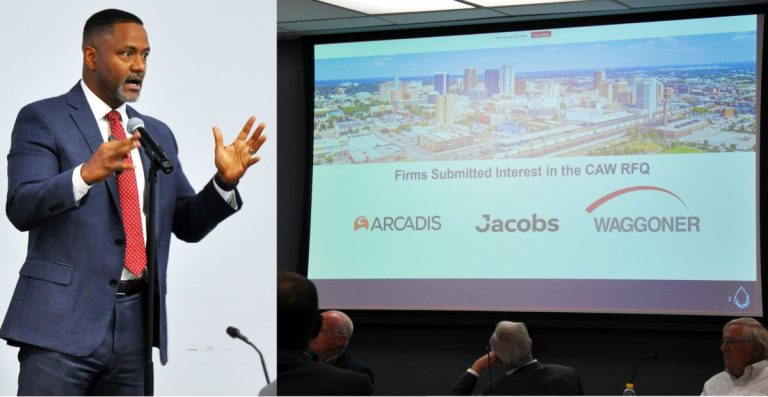
The program “created a lot of paperwork for potential applicants to come in and do work for Central Alabama Water,” said CAW Chief Executive Jeffrey Thompson after Monday’s board meeting. “We felt that it was an onerous burden on applicants to have to fill it all out, and we thought that limited competition.”
The board’s two Black members, Sheila Tyson and Jarvis Patton Sr., asked Thompson and other board members several questions about the policy and the reasoning for abandoning it.
“If it’s not to exclude, why is it here?” Patton asked, referring to the agenda item about the policy.
Board Chairman Tommy Hudson responded that the change would not exclude anyone. “It prevents showing a preference for anyone,” he said.
Patton asked if preference or equal opportunity were at stake.
“This resolution will restore equal opportunity,” Hudson said.
Patton disagreed. “All I’ve done for almost 40 years is work in employment discrimination,” he said. “Please don’t insult my intelligence. This is nothing but a train wreck getting ready to happen.”
Tyson asked Thompson how many of the 13 employees the utility hired in the past three weeks are Black. Hudson told her she was out of order.
In July, the new water works board, formed after a state law effectively dissolved the previous one, voted to end its partnership with a nonprofit organization that had been assisting with programs aimed at helping underutilized businesses qualify to bid on contracts to provide goods and services to the utility.
The board was to hire two employees in December 2024 to work to get more women- and minority-owned businesses qualified to provide services to the water works. CAW’s public information office had not yet responded to questions about whether those staff members are still employed in the same capacity.