
Donate today to help Birmingham stay informed.
Central Alabama Water’s board of directors on Wednesday approved a constrained 2026 budget that doesn’t include a customer rate increase and could be further reduced early next year.
The $215.6 million budget represents a 16.5% decrease compared to the $258.1 million 2025 budget, with the largest cuts affecting capital projects. The budget doesn’t fund continuation of an automated-meter-reading-infrastructure project that was expected to alleviate inaccurate billing or a project to stabilize Lake Purdy Dam beyond an initial construction phase now underway. Replacement of aged pipelines that are largely responsible for the utility losing 40% of its water to leaks also could slow.
“Our finances are not in tremendous shape right now, but we are working hard to get them back into shape,” said Jeffrey Thompson, who the board hired as chief executive officer on Nov. 20. “We’re working diligently to make sure that that everything is taken care of that needs to be taken care of and that our customers are getting the best service that they can get.”
The 2026 budget cuts spending on capital projects to $75.8 million from $115.6 million in 2025, a decrease of 34%.

Thompson said the budget the board approved is essentially the same as a draft budget previous managers presented at budget workshops in October, minus approximately $2 million in reductions achieved mainly through eliminating several items a financial consultant deemed illegal under a state law that went into effect in May.
That law restructured the old Birmingham Water Works, and it requires the new board to approve a 2026 budget by Dec. 15 as a stopgap to prevent the 2025 budget from rolling over into the new year, Thompson said. CAW’s new leadership team, made up of interim executives Thompson appointed after placing previous managers on paid leave, will continue working on the 2026 budget and will propose substantial changes to the board, likely in March, he said.
“We’re going to come back with some amendments that will be a smaller budget than this budget, not a larger budget,” Thompson said.
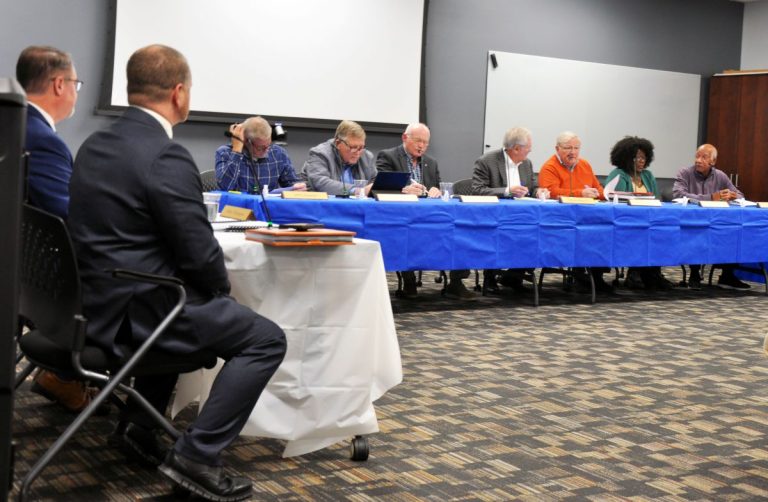
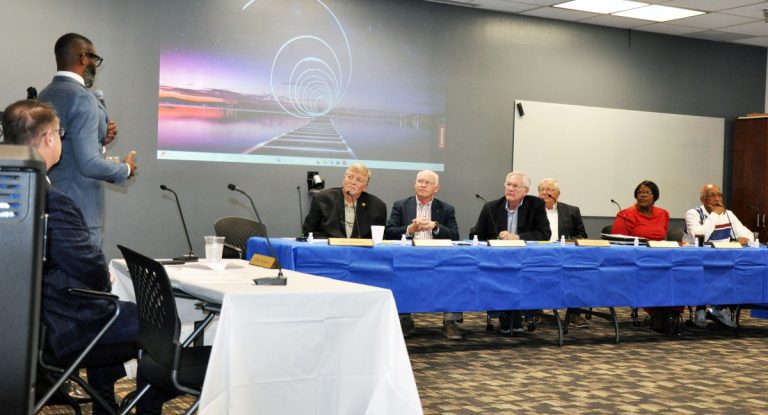
During a presentation on the 2026 budget at Wednesday’s meeting, board member Sheila Tyson asked presenter Carol Phillips with Warren Averett, an accounting firm for the water works, for a list of items that had been removed from the proposed budget due to provisions in the state law.
Phillips said she didn’t bring a complete list but gave as examples contributions to nonprofit organizations and funding for competition teams that participate in events such as those held by the American Water Works Association.
Tyson asked that a vote on the budget be delayed until Friday to give directors time to review the proposal. She said directors didn’t receive the budget they were asked to vote on until Wednesday’s special-called meeting, which was announced on Monday. Two board members — Jeffrey Brumlow and Jarvis Patton Sr. — were absent from the meeting.
Other directors seemed favorable to Tyson’s suggestion to postpone the vote, but the board ultimately voted 4-1 to approve the budget.
“You’ve got to be a mighty fast reader to read through a budget in 15 minutes,” said Tyson, who is also a Jefferson County commissioner. “I sit on plenty of boards. There’s no way to approve a budget the correct way in 15 minutes.”
No Funding for Automated-Meter-Reading Infrastructure
The automated-meter-reading infrastructure project that the previous board started and the current board paused had been slated for completion in 2028. Thompson said after the meeting that CAW plans to transition to automation at some point, but the timeline will be extended.
“AMI is something that we are certainly committed to doing,” he said. “It’s just we have to rank things by urgency, and it’s not as urgent as some of the other capital work.”
The AMI project had been touted as a solution to inaccurate, missing and estimated bills that customers of Alabama’s largest water utility have complained about for years.
Tyson said the budget includes “nothing to address the issues that we are having with the high rates. None of that has been addressed, not one meeting that I have attended since I’ve been on this board.”
She said she recently received a complaint from an 88-year-old woman with a $10,000 bill.
Lake Purdy Dam Stabilization to Stop After Phase 1
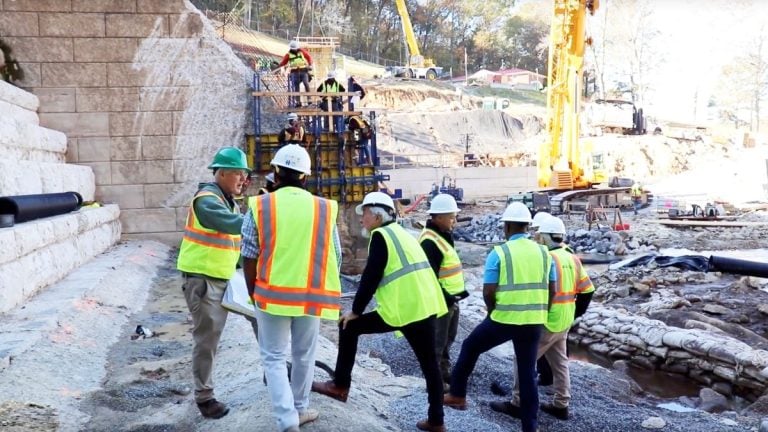
The budget includes $22 million to complete phase one of the Lake Purdy Dam rehabilitation project, which began in November 2024 and involves constructing concrete buttresses and installing a deep foundation to shore up part of the structure after engineers discovered it wasn’t strong enough to support the buttresses.
However, the budget does not include money to continue a planned four-year project to stabilize the 115-year-old dam. The Lake Purdy reservoir, in southeastern Jefferson County and northern Shelby County, is the largest single source of water for CAW customers. A major driver of the project was a study showing the dam wouldn’t be stable in an extreme flood. Engineers have said the dam’s failure could result in loss of life and would threaten thousands of homes.
Board Vice Chairman Phillip Wiedmeyer, a retired engineer whose work with Alabama Power involved dam-safety inspections, said last month he thinks the project should continue and he would push the board to discuss moving forward before phase one’s anticipated completion in April.
Thompson said CAW’s new leadership is going to look closely at Lake Purdy Dam, but completing phase one is the most they think can be done now.
“We are absolutely going to ensure that our customers are safe and protected and that there are no issues with the structural integrity of the dam, but at this point in time, we’re really looking at trying to mitigate our cost exposure for 2026,” he said.

Pipeline Replacement Could Slow
The water works began replacing main pipelines — the large pipes that run under roadways — on an accelerated schedule in 2020. Many of those pipelines have exceeded their life expectancy, with some more than a century old. Even on that sped-up timetable, replacing all the targeted pipelines, which previous managers said make of 14.1% of the system but account for 67% of leaks, would have taken 40 years.
For the past five years, CAW has been replacing 15 to 17 miles per year of unlined cast iron and galvanized pipes. Thompson said a utility of CAW’s size, with approximately 4,150 miles of pipe, should replace about 1%, or 41.5 miles, of pipe per year.
“Unfortunately, we do not have the funds in 2026 to replace that much pipe, so we’re going to be looking to do as much as we can do with the dollars that we have available,” he said. “We will then endeavor to catch up in following years.”
The $20.1 million set aside in the 2026 budget for main pipeline replacement projects is the same amount that’s in the 2025 budget, but Thompson suggested that spending could decrease nest year.
“There is some amount set aside for it, but again, that is in a state of reevaluation right now,” he said.
Little Change to Operating Budget
CAW’s annual budget is split into capital and operating segments, and the 2026 operating budget as written is only 2% less than 2025’s operating budget.
A significant difference in the 2026 budget is a 25% increase in executive labor costs. The utility is currently paying two sets of managers — the previous managers, including General Manager Mac Underwood, now on administrative leave, and the interim leaders as well as Thompson. Both Thompson and Underwood have salaries of $446,118.
The budget does not include merit or cost-of-living raises for employees and would freeze hiring for most vacant positions.
“We’re looking at the possibility of adding a small amount for merit increases in next year’s budget, if we can find enough savings to allow for that for our very top-performing employees,” Thompson said.
Phillips noted that operating expenses during the past six years have typically exceeded budget while capital expenditures have fallen short of projections for the past decade.
“I think it’s really important moving forward for there be strong mechanisms in place to make sure that the organization stays within its budget,” she said.
Cash Reserve to Dip
Under the approved 2026 budget, CAW’s cash reserve would fall from $48.3 million at the beginning of 2026 to about $32 million by the end of the year. That is assuming the utility has to pay $62 million in debt from the reserve rather than refinancing it, she said.
Thompson said refinancing won’t be possible as long as a federal lawsuit city of Birmingham officials filed is pending. The suit challenges the new state law that restructured the utility’s operations and shifted majority representation from the city to suburban areas.
According to Phillips’ presentation, the reserve balance would drop to about $24 million immediately after the debt payment was made. That would equate to 62 days of cash on hand for an organization that has a goal of 270 days of cash on hand, she said.
“We’re going to have to manage this budget incredibly carefully, given what it represents in terms of cash on hand,” Thompson said. “We don’t like to see the balance get down this low, but this is where we find ourselves.”