Government
Black Male Initiative Launched to Improve Lives of Area Youth
Donate today to help Birmingham stay informed.
Black boys are often the subject of the conversation, for all the wrong reasons.
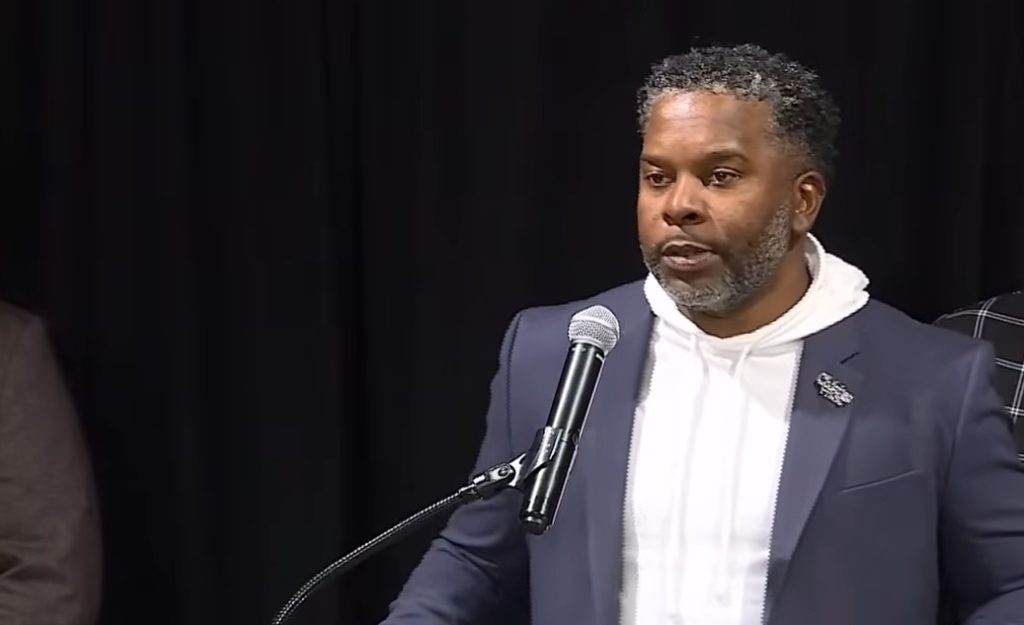
“From the White House, the church house to the outhouse, they have told us Black boys are the problem,” said Carnelle Howell, who was announced Tuesday as the leader of Birmingham’s new Black Male Initiative. “Their whispers are loud. I’m sure in a group chat somewhere, most of them have said, ‘What is wrong with these Black boys? Somewhere around the watercooler at work, they’ve said the same thing: ‘What’s going on with these Black boys?’
“Instead of asking or wondering what’s going on, the only question they should be asking (is), ‘What can we do?’” Howell said. “Most people have said, Black boys are the problem in our community. They’re always on the news. They’re committing crimes or be being killed. So, the mayor said, ‘Well, we’re going to fix it.’ He was bold, he was intentional and we’re doing something about it.”
During a press conference at City Hall, Mayor Randall Woodfin announced the launch of Birmingham’s Black Male Initiative, a community-driven strategy focused on improving lives and futures of Black boys and men by addressing root causes — not just symptoms — of disconnection and harm.
The initiative centers on early intervention, with a particular focus on boys ages 8 to 14, a critical developmental window during which research shows support can alter life outcomes. Between 2026 and 2030, the city aims to achieve measurable outcomes, including reductions in youth violent crime, improved school attendance and graduation rates, and expanded workforce placements for young men.
“Our Black boys, our young Black men — their future is in our hands,” Woodfin said. “We are dedicated and committed to getting them on the right path.”
Howell, a senior managing director at Howell Consulting, served on the Birmingham Crime Commission. He said the members worked for nearly four months and compiled a crime report for the city and the mayor’s office. Eighty-two recommendations were in that report, which provided the foundation of the initiative.
Howell said the commission talked to hundreds of boys and girls. “This program was built around their ask,” he said. “This is a call to action, but it’s theirs. Every program under the umbrella of this initiative was an idea of young Black boys.”
The goal, Howell said, is to not lose any more Black boys.
“Also, the ones we’ve lost (we want) to go and get them,” he said. “There’s a plethora of information, data out there to support — national and local — that speaks to the need to address some programs for Black boys. But we feel like if we can be proactive, well we won’t have to do a lot of reacting. We do understand there are boys that are 16, 17, 18 years old who have already made bad decisions, who’ve already been tied up in the system. They just need some assistance.
“We’re not leaving them out,” Howell said. “As a matter of fact, we have programs with them too. This is a proactive and reactive approach. We understand the need for property intervention, but we also understand the need to have some grace and to listen to those who are impacted the most.”
Several programs aimed at helping at-risk youth have begun in Birmingham since the crime commission’s report. The Black Male Initiative will work with existing organizations, Howell said, but is a new program, built from scratch.
Programs and supports will include:
- Mentorship and positive male role models.
- Parenting and fatherhood engagement.
- GED and educational support.
- Workforce development and apprenticeships.
- Mental health services.
- Community-based outreach in trusted spaces such as schools, faith institutions, public housing community rooms and barbershops.
“This is about prevention, not reaction,” Woodfin said. “When we invest in our young people and families early, we strengthen entire neighborhoods — and the future of Birmingham.”
The initiative officially begins Monday. Its website will give residents an opportunity engage through mentorship, partnerships, volunteer roles, according to a statement from the mayor’s office.
“Success for me is when more boys are going to school versus skipping school. Success for me is when boys come and say, ‘Hey, I no longer want to be part of a gang. I want to find a job. I want to find a good-paying job. I want to start my own business,’” Howell said. “We’re creating partnerships and what we call community engagement hubs, where we will have resources in the community for these young boys, spaces near places they live, even in school systems.”