Government
City Council Approves Development Plan for Eastern Birmingham
Donate today to help Birmingham stay informed.
The Birmingham City Council on Tuesday approved a major plan that will guide development in the eastern part of the city for decades to come.
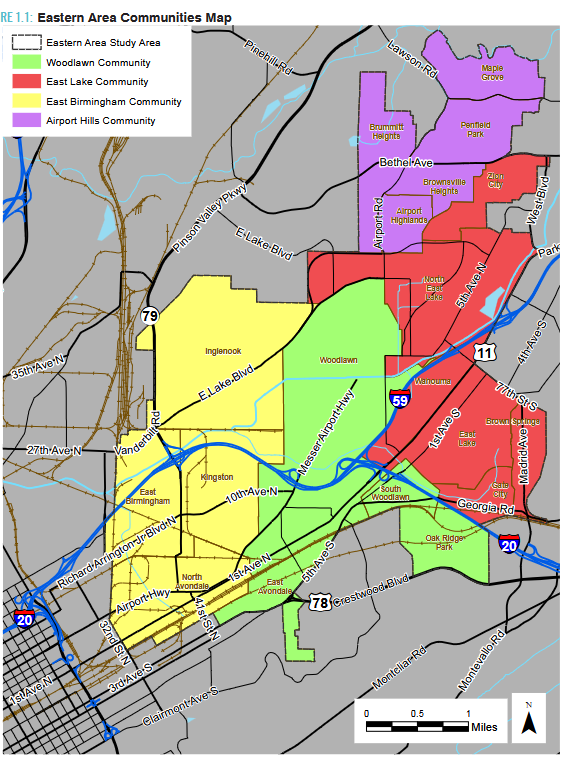
Local officials call it the Eastern Area Framework Rezoning Plan, and it includes 19 neighborhoods in the communities of East Birmingham, Airport Hills, East Lake and Woodlawn.
The framework was developed under the city’s 2013 Comprehensive Plan, and it “translates citywide goals into localized strategies for land use, housing, transportation, economic development and public space,” according to the city’s website.
One example of the policies called for in the plan is an effort to change the zoning of existing industrial sites that are no longer in use to allow for more development opportunities.
“We want to see more transit-oriented development. Where there are people, there will be transit lines, shops and growth,” said Councilor Josh Vasa, who co-chairs the council’s Planning and Zoning Committee. “So, from a planning and zoning standpoint, that’s one of the main focuses we had during this process, and I think this plan does a great job of accomplishing that to spur sustainable growth along those corridors.”
The council earlier this month approved the Northside-Southside Area Rezoning Plan, which includes the neighborhoods of Druid Hills, Fountain Heights and Norwood as well as Five Points South and Glen Iris. City staffers said then that the plan added more mixed-use residential areas and changed zoning on vacant industrial properties to lighter uses.
According to the City of Birmingham’s website, the city contracted with the Regional Planning Commission of Greater Birmingham to develop the 2013 Comprehensive Plan using the Building Communities Program, which uses a combination of funding from the U.S. Department of Transportation and a local match from the city.
This story has been edited to remove an item regarding a foreign trade zone. The proposal appeared to pass as part of the council’s consent agenda, but city officials on Wednesday said it had been removed from the agenda by the administration.