Donate today to help Birmingham stay informed.
Legal pressure against the city of Birmingham and Nebius grows as lawsuits against them progress, with a recent filing alleging that the two are engaged in a civil conspiracy to acquire, assemble and develop the 300-megawatt hyperscale data center in Oxmoor known as BHM01.
This recent filing submitted May 25 is an amendment to a class action initiated May 13 by two Oxmoor residents.
The amendment seeks to add three companies involved in buying and selling the property, which is off Lakeshore Parkway at the Oxmoor Corporate Park. It alleges that in a series of quick sales, the value of the land was inflated from $20 million to about $90 million, making Nebius’ financial exposure appear more severe.
It also adds details about the timing of applications for the project to bolster arguments that the project should be part of a moratorium the city declared on new data centers and it should have to follow new regulations on data centers once they are approved by the city.
Plaintiffs Madelyn Greene and David Butler, on behalf of themselves and other homeowners in the area, are seeking an injunction to stop the BHM01 project as well as damages.
The defendants initially named include Nebius group, the Amsterdam-based company developing the data center; Alabama ADC Holdings, the real estate entity that acquired roughly 80 acres for the project on Oct. 1, 2025; the City of Birmingham, which the lawsuit contends improperly issued a permit for the project and encroached on the authority of the Zoning Board of Adjustment; and Hoar Construction.
The amendment seeks to add three new defendants: Raeden LLC, a Delaware-based real estate and technology company; 201 Milan Birmingham LLC, a Delaware-based holding company affiliated with Raeden; and Lakeshore Data Center LLC, a Birmingham-based holding company affiliated with Hoar Construction.
The plaintiffs in this case also have asked to intervene as defendants in a suit Nebius filed against the ZBA.
Public opposition — voiced through neighborhood associations, council meetings and open letters — has been fierce and persistent.
Yet, despite months of opposition and widespread confusion for the public and the city administration, the resulting data center moratorium and new data center ordinance draft have yielded a contradictory outcome. Public hearing requirements would be diminished in the draft, and the data center moratorium doesn’t apply to BHM01 because the project was proposed before the moratorium was passed.
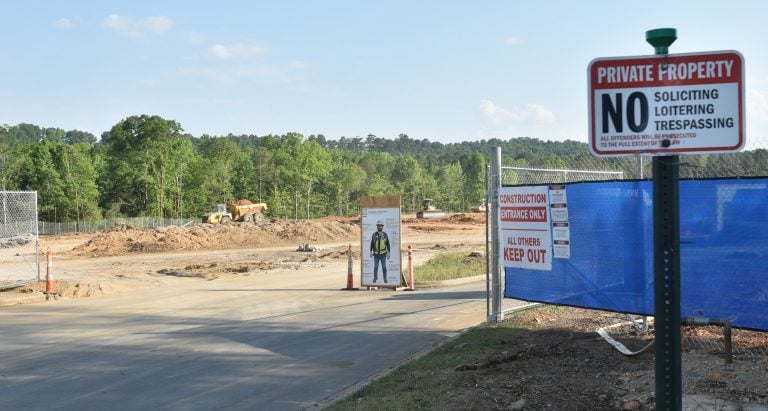
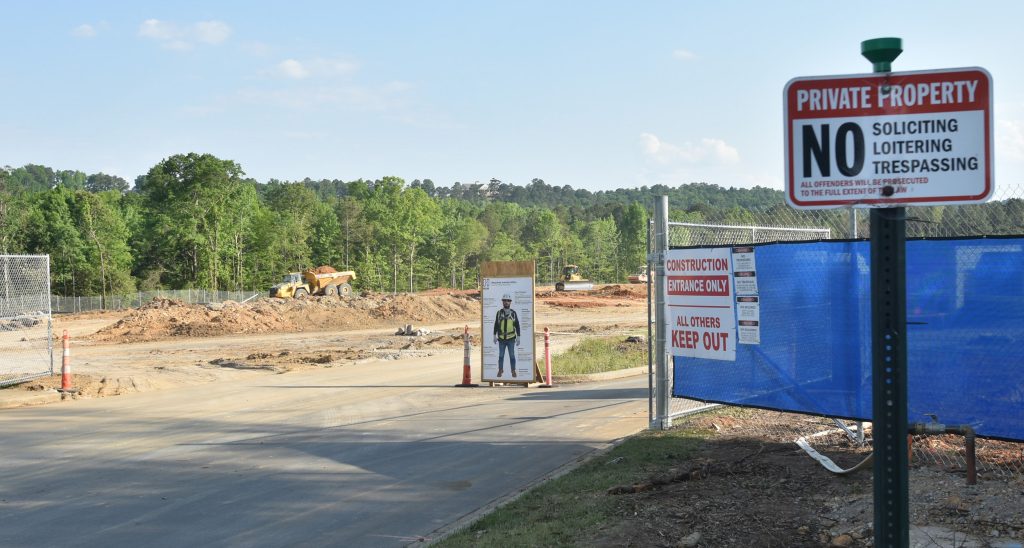
With demolition at BHM01 now complete, every week that construction continues makes reversing the development more difficult. Traditional windows for public input have closed; new legal windows are being opened.
The amendment avers that this outcome is not incidental, that city officials’ objectives align with project developers, not the residents whom they are to represent.
While the core substance of the complaint remains unchanged, the amendment introduces three new factual allegations and supporting counts.
First, it details the city’s moratorium process, highlighting the Dec. 16, 2025, public notice and the developers’ responses to outrun impending restrictions.
Second, it interrogates the permitting timeline by detailing six separate project-related permits with disclosed fees totaling $34,866,222.53, demonstrating an accelerated effort to vest rights after the moratorium notice was delivered.
Finally, it outlines the Sept. 30, 2025, acquisition cascade, exposing a single, highly coordinated land transaction involving six separate statutory warranty deeds, which the plaintiffs argue refutes any claim of an independent, arm’s-length investment.
Taking these allegations in tandem, plaintiffs have invoked the “unclean hands” doctrine to preempt the developers’ claims regarding Nebius’ potential loss if it cannot build the data center.
They argue that the land acquisition, accelerated permit filings and ongoing construction despite the moratorium were not independent acts but components of a single, coordinated scheme orchestrated by developers to outrun regulations.
Phase 2 Filed Too Late to Escape Moratorium and New Regs, Plaintiffs Allege
The city has said many times that because Nebius’ approval process was already underway when the moratorium was declared, BHM01 was “grandfathered” in. Legally, city officials have said, their hands are tied.
The lawsuit argues that this is untrue, citing the city’s own actions as evidence. Plaintiffs argue that officials actively assisted Nebius in bypassing the regulatory push while simultaneously executing it.
The moratorium could not have been a surprise to the developers. The city issued its first public notice on Dec. 16, 2025, indicating its intent to implement a data center ordinance and overhaul the applicable regulatory framework. The permit for the data center was requested three weeks later, on Jan. 7. The city approved the moratorium on March 3.
ZBA members thought they had rejected special exceptions to allow a switching station and a substation at the development on March 26, but a memo from the city attorney dated April 9 clarified that there had not been enough votes and said no exceptions were needed for those facilities, anyway. Plaintiffs argue in the suit that the developer defendants launched a coordinated, “post-denial permit-filing campaign.” This campaign has since expanded to a “permit-cascade” consisting of six separate project-related permits with disclosed fees totaling $34,866,222.53.
Some of those permits were filed after the moratorium, including Phase II building permits filed April 10 and demolition and electrical permits issued April 27-28. Plaintiffs argue that even if the initial application were considered grandfathered in under the old regulations, which they believe contradicts the law, that would not confer a perpetual exemption from zoning regulations.
The amended complaint seeks direct injunctive relief, stating, “The relief sought against the City is therefore not derivative of, and is not bootstrapped from, the conduct of any other Defendant; it arises directly from the City’s own administrative conduct.”
Property Value Inflated by ‘Cascade’ of Sales, Plaintiffs Say
The plaintiffs allege that Nebius has not invested as much capital into the project site as it has publicly stated, undermining claims regarding the severity of its financial exposure.
Property records filed with the Office of the Judge of Probate of Jefferson County, Alabama, show six deeds recorded within a 24-hour period, including three filed within 71 minutes on the morning of Oct. 1, 2025.
Combined with a secondary parcel purchase, the true initial third-party land acquisition from the original property owners — U.S. Steel and Regions Bank — cost a total of $20 million. The final roughly $90 million transfer to Nebius-affiliate Alabama ADC Holdings — the figure initially reported — means that Raeden captured approximately $67.5 million in intra-cascade mark-up, an approximate 385% increase from initial purchases.
They further argue that the entire sequence demonstrates bad-faith orchestration and inequitable conduct by the developers. The cash-outflows were not made to independent third parties but entities whose leadership and objectives were deeply aligned with Nebius’ and Hoar Construction’s, they argue.
The certificate of formation for Lakeshore Data Center, LLC identifies Robert O. Burton, a long-time Hoar Construction executive, as the initial registered agent, and the company’s address, Metroplex Drive, Suite 400, is in the same complex as Hoar’s corporate headquarters.
On the anchor parcel (Lot 1-A, the former Regions Lakeshore Operations Center), the properties transferred through three entities affiliated with the developers: Regions Bank sold Lot 1-A to Lakeshore Data Center LLC for $17.2 million; 16 minutes later, Lakeshore Data Center conveyed the same lot to 201 Milan Birmingham LLC for $27 million, before ultimately conveying all deeds to Nebius-affiliate Alabama ADC Holding.
Lakeshore Data Center captured $9.8 million of this intra-cascade markup, and Burton, as manager, signed those deeds. Three months later, Burton filed to dissolve Lakeshore Data Center.
“That convergence of address, agent, and senior management is probative of common control, common direction, and concerted conduct between Lakeshore Data Center and Hoar that exceeds any ordinary contractor-developer relationship and that bears directly on the joint-and-several liability of each,” the lawsuit alleges.
The amendment seeks to bring in the dissolved holding company as a defendant, asserting it remains liable to suit despite its dissolution.
Plaintiffs are asking the court to regard the initial $20 million acquisition as the only actual arm’s-length investment in the site. Should the court agree with the plaintiff’s claim, it could diminish the defense’s argument that defendants would have their investment and rights in the property taken away by new zoning regulations.
Plaintiffs have asked for formal interrogatories and copies of documents of the Hoar- and Raeden-affiliated holding companies to substantiate their claim of a single coordinated undertaking.
Nebius plans to begin construction this spring and finish full build-out by 2028. Phase I would deliver 100 megawatts of compute power, followed by an additional 200 megawatts in Phase II.
The City Council has set a public hearing for June 9 to hear comments on new data center regulations being considered. Greene and Butler recently filed comments on the plan with the council president suggesting a series of changes to the language, including increasing development setback requirements, requiring more environmental data before a project is developed, and requiring public notice if plans for a data center change midstream.
It also suggests noise limits, reinstating special exception requirements for data centers and requiring a guarantee that a project would not be allowed to increase power rates for other businesses and residents. It advises giving preference to data centers planned for old industrial brownfield properties, among other suggestions aimed at protecting other property owners.