Author: Virginia Martin
Birmingham Council Approves Money for New Stadium Despite Opponents’ Fears

March 27, 2018 — After more than four hours of debate, the Birmingham City Council voted Tuesday to approve funding for expansions and renovations to the BJCC, including the construction of an open-air stadium.
Mayor Randall Woodfin pushed for the council to approve the project, which will require the city to contribute $3 million a year for 30 years. But the project received major pushback from critics — most vocally District 1 Councilor Lashunda Scales — who questioned the city’s return on the investment as well as the necessity of a new stadium.
Other councilors said they had been given the detailed agreement just hours before the meeting and did not feel comfortable voting on it without more time to study it.
The council voted 6-3 to approve the project. Construction could start by the beginning of the year. Read more.
The Tyranny of Sales Tax: Alabama Cities Rely on It. Walmart is the Sought-After Retailer. But E-Commerce Threatens.

In Alabama, the big catch for the state’s economic development prospectors is a manufacturing plant and its hundreds, maybe thousands, of high-paying jobs. But individual cities go to great lengths to get big-box retailers to set up shop in their city limits, deploying consultants and dangling incentives. They’re following the money. Because of the state’s tax laws, the largest single source of municipal tax revenues is sales tax.
Big-box retailers come in several types and brand names. The biggest of them all, though, is Walmart. The largest private employer in the world, Walmart grew from its roots in Arkansas to be a major force in virtually every part of the United States. In Alabama alone, 38,000 people are employed by Walmart.
Tens of millions of customers across America walk through the doors of the company’s stores every day. In Alabama, cities that have a Walmart get taxes on sales to those customers, which helps pay for services such as police and fire protection. Walmart’s website states the company collected $684.6 million in sales taxes and fees in Alabama for the fiscal year ending in 2017 and paid another $92.1 million in its own additional taxes and fees.
Dependence on sales taxes is unusual compared to most other states and harkens back to Alabama’s early days as a state that was almost entirely rural and dependent on the production of cotton and timber. Property taxes are lower than in other states, in some cases much lower, especially on agricultural and forest lands. Read more.
A Tale of Two Jefferson County Cities: Sales Tax Comes and Sometimes Goes
By Robert Carter
Gardendale Mayor Stan Hogeland is one of the city officials who work to attract retailers of all shapes and sizes – and their sales taxes.
He said he spends time trying to bring in retailers “every single day.” According to figures provided by City Clerk Melissa Honeycutt, Gardendale derives 70 percent of its tax receipts from sales taxes.
It’s a different story in Fairfield, about 20 miles away. Fairfield was once a thriving city and home to a massive U.S. Steel factory complex and numerous shopping centers. After the factory closed, the stores followed. When the Walmart there closed, it took about a third of what was left of the city’s tax revenues, according to the mayor. Read more.
BW Expands Economic Development Coverage
Robert Carter covers economic development in Birmingham and Alabama, a new assignment in 2018. He is a veteran journalist, both with newspapers and in radio. A Kentucky native, Carter began working at his hometown Glasgow Daily Times straight out of high school. He also worked with Christian Family Radio in Bowling Green and with Western Kentucky University’s public radio service. In Alabama, Carter has worked at The Birmingham News and The North Jefferson News in Gardendale.
A Tale of Two Jefferson County Cities: Sales Tax Comes and Sometimes Goes

Gardendale Mayor Stan Hogeland is one of the city officials who work to attract retailers of all shapes and sizes – and their sales taxes.
He said he spends time trying to bring in retailers “every single day.” According to figures provided by City Clerk Melissa Honeycutt, Gardendale derives 70 percent of its tax receipts from sales taxes.
It’s a different story in Fairfield, about 20 miles away. Fairfield was once a thriving city and home to a massive U.S. Steel factory complex and numerous shopping centers. After the factory closed, the stores followed. When the Walmart there closed, it took about a third of what was left of the city’s tax revenues, according to the mayor. Read more.
Environmentalists See Loopholes in State’s Coal Ash Plan. Alabama Power Supports Federal Rules
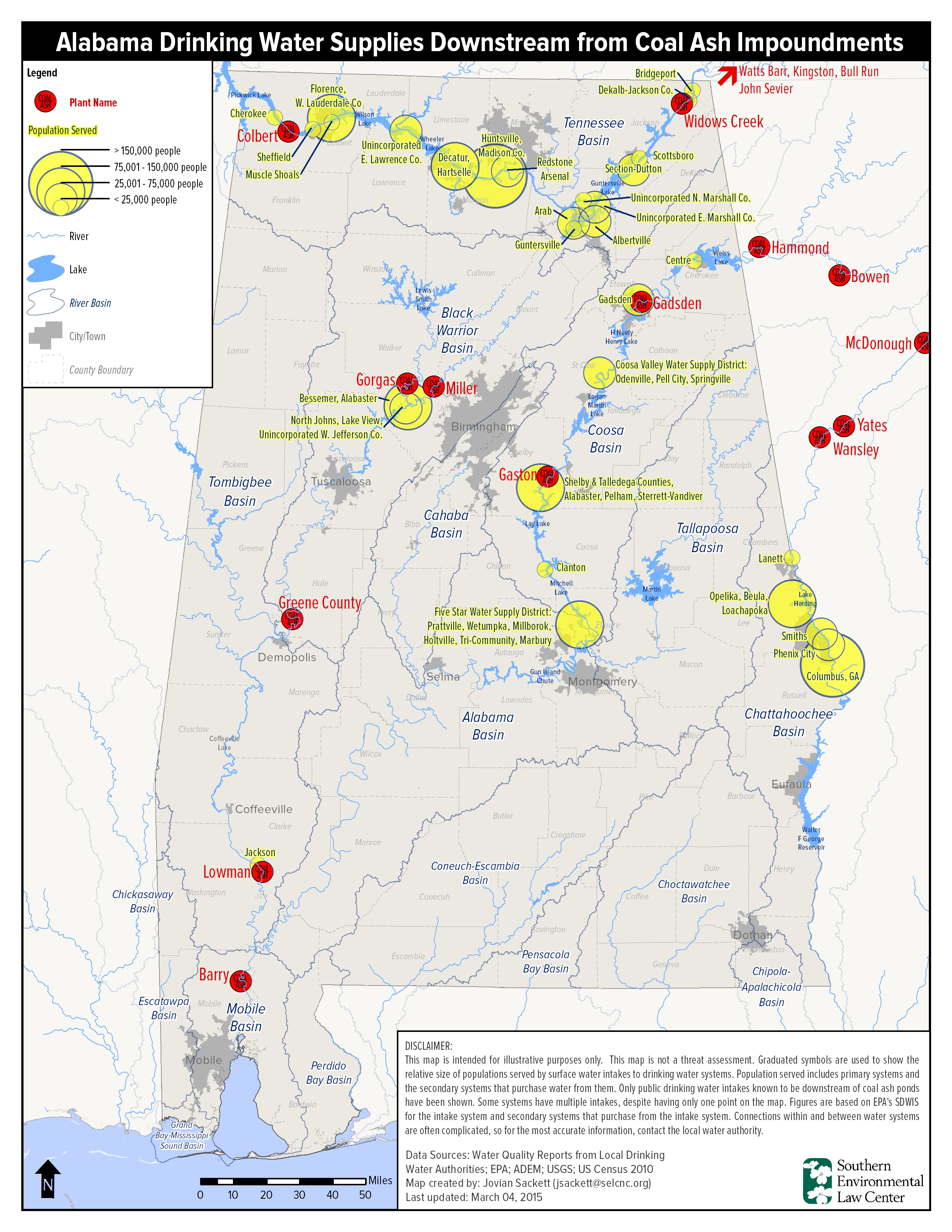
Too many loopholes disguised as “flexibilities.”
That’s what conservation groups and private citizens told the Alabama Department of Environmental Management about its proposed plan to develop a state permitting program to regulate toxic coal ash waste from power plants. The agency held its sole public hearing on the issue Wednesday in Montgomery.
Alabama’s major utility and source of coal ash, Alabama Power Co., said through a spokesman that it supports the current federal rule on coal ash. Environmentalists say the federal rule is more restrictive than the state’s proposed plan. Read more.
Let’s Try This Again: JefCoEd Superintendent Craig Pouncey Applies Once More for State Superintendent Job

Dr. Craig Pouncey does not easily take “no” for an answer.
The superintendent of the Jefferson County Schools has again applied for the vacant position of state superintendent, barely a year and a half after narrowly losing an election to the job by the Alabama State Board of Education. During that process, he become the subject of a smear campaign he contends involved a board member and a lawyer on the department’s staff. Read more.
Sen. Doug Jones Calls for Compromise to Lessen Gun Violence, Points to Youth Protests as the Tipping Point in the Debate

U.S. Sen. Doug Jones delivered his first speech on the Senate floor Wednesday, calling for a pragmatic conversation and compromise on the hot button issues surrounding gun control.
“We must acknowledge the deadly consequences that can follow when a gun is in the wrong hands, but also recognize and respect the freedom to own and enjoy guns by law-abiding citizens as guarantees by the Second Amendment to the Constitution. Those two concepts are not mutually exclusive,” said Jones, who won a special election against Roy Moore in December to become the first Democratic U.S. senator from Alabama in more than 20 years.
Jones pointed to the youth-led outcry for an end to gun violence in schools, sparked by last month’s deadly shooting at a Parkland, Florida, school, as the catalyst that could move conversations forward. He compared the current movement to the Children’s March in Birmingham in 1963 — a protest that became a turning point in the fight for desegregation in Birmingham.
In his speech, the senator called for a ban on manufacturing or possessing bump stocks, which are devices that enable semi-automatic weapons to fire more rapidly. He also called for passing legislation to close loopholes in the federal background check system currently in place, widen requirements for background checks and waiting periods to purchase guns, and raise the minimum age requirement for purchasing semi-automatic weapons. Read more.
A Work in Progress: Woodfin Assesses His First 100 Days

March 8 marked the 100th day of Randall Woodfin’s first term as mayor of Birmingham — a major benchmark for any newly elected politician. Woodfin spent much of last year’s campaign laying out his plan for this first stretch of his tenure in office, in opinion columns, on his website and along the campaign trail.
It was an ambitious slate of objectives to accomplish in just more than three months: conduct an audit, eliminate nepotism, increase neighborhoods’ input in the budgeting process and assess a wide variety of issues facing the city through a citizen-led transition team, among many others.
Now, nearly two weeks after the 100-day benchmark, those goals remain in various stages of realization. Some of them, such as the audit and the appointment of a LGBT liaison to the mayor’s staff, are nearing completion, with announcements, Woodfin said, coming soon. But others remain farther down the road, some dependent on the results of the audit, which is slated to be completed in early April, and others dependent on the slow-turning wheels of city government.
Woodfin spoke with BirminghamWatch on Wednesday about which campaign promises his administration has been able to meet, which ones it hasn’t, and his outlook on his term so far.
Read the Q&A.
Jefferson County Commission Revives Effort to Demolish Dilapidated Houses

Jefferson County is moving back into the demolition business.
Commissioners moved the matter of demolishing a structure at 526 Butler Avenue in the Bessemer area to the consent agenda of Thursday’s commission meeting.
“It’s something we haven’t had in our toolshed, our repertoire to work with,” Commission President Jimmie Stephens said. “When we have a dilapidated home that becomes a public nuisance, whether it’s been abandoned by a storm, tornado or whether it’s been abandoned for lack of use, we need to have the tools – and now we do – to go in and demolish that home and clean it up for the neighborhood.
“It’s long overdue,” Stephens said. “We want to put funds in the budget next year so we can do that in a meaningful way.” Read more.
Jeffco Commission Debates Giving Fultondale the Cold Shoulder Over Unpaid $15M Debt

March 20, 2018 — Jefferson County Commissioner David Carrington said Tuesday that continuing to do business with a city that hasn’t paid its bill to the county is not good business.
“It might be good politics but it’s not good business,” Carrington said. He was referring to Fultondale, which he said had not paid more than $15 million owed to the county.
Carrington made his point as commissioners in their Tuesday committee meeting discussed a through road agreement with Fultondale. He said Jefferson County participated with Fultondale on an economic development project in the city.
“We were supposed to be paid out of revenues from the development, and the city of Fultondale still owes the county north of $15 million and hasn’t paid anything since 2016,” Carrington said. Read more.
Birmingham Council Rejects License for Scrap Metal Processor, Cites Pollution of Black Neighborhoods

March 20, 2018 — Citing a need to change historical disenfranchisement and pollution of Birmingham’s black neighborhoods, the Birmingham City Council voted Tuesday to deny a scrap metal processors license to a company attempting to establish a scrap-processing yard in the Acipco-Finley neighborhood.
A group of citizens from that neighborhood appeared at the meeting’s public hearing to speak against the proposal from Jordan Industrial Services.
Jordan’s attorney, Mike Brown, argued that Jordan had worked to clean up the property, alleging that its previous tenant, Kimmerling Truck Parts and Equipment, had left “a pretty bad eyesore for the community.”
But residents argued that a new coat of paint and some cleaning wouldn’t address the larger issues of air pollution generated by the yard.
A 2012 report by the Houston Chronicle, found “dangerous levels” of hexavalent chromium — a highly carcinogenic pollutant also known as Chrome VI — in the areas surrounding five metal recycling operations in that city. Read more.