Tag: Alabama Legislature

Supreme Court Ruling on Online Sales Tax Could Benefit Schools Statewide

https://creativecommons.org/licenses/by-sa/3.0/deed.en

A recent Alabama Supreme Court ruling will mean millions of dollars in online sales tax revenue for Morgan County schools and is a win for schools statewide, supporters say.

Some expect more local legislation similar to the north Alabama county’s in the next legislative session.

The court earlier this month upheld the constitutionality of a 2019 local law, sponsored by Sen. Arthur Orr, R-Decatur, that directed the bulk of revenue from online sales tax, referred to as SSUT, received by the county commission to the county’s public schools.

Orr said the local bill mirrored that of the county’s existing bricks-and-mortar sales tax distribution — revenue that has dipped as more people shop online.
Read more.

State Lawmakers Expect Multiple Special Sessions

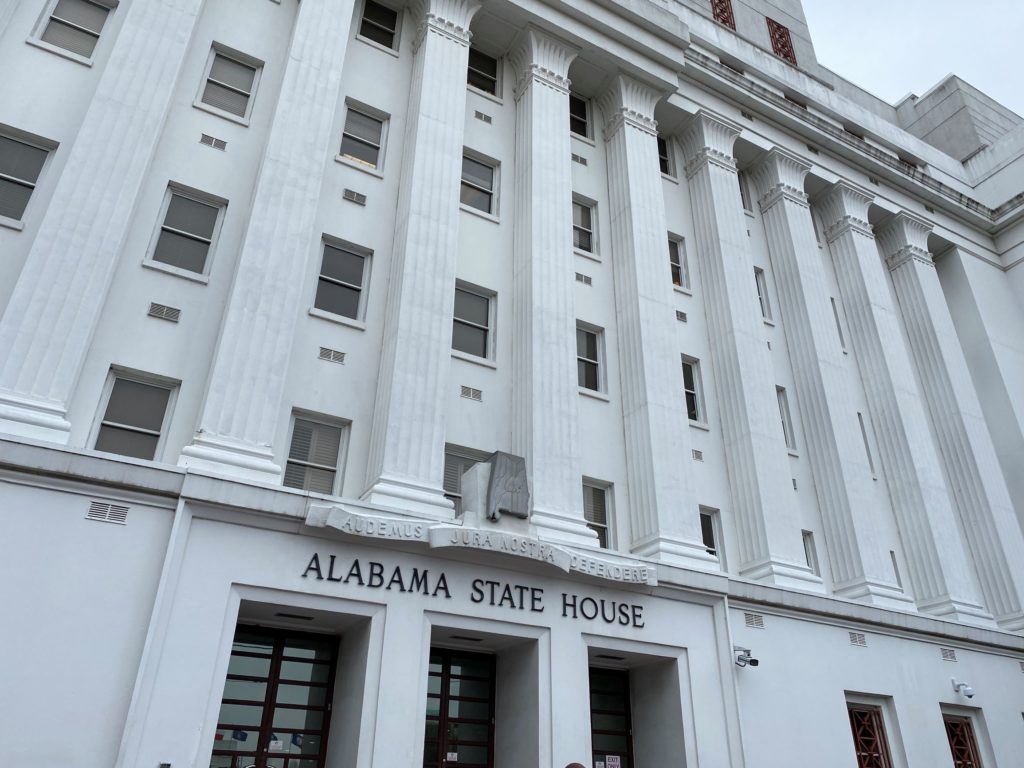
MONTGOMERY — Alabama lawmakers could be called back to the State House this year for multiple special sessions on various issues, but the likely first topic will be the distribution of billions of dollars in federal COVID-19 relief funds.

That American Rescue Plan Act money will start flowing to the state as soon as this month, but the state’s share can’t be distributed to agencies or dedicated to specific causes until it goes through an allocation process similar to the annual General Fund budgets. Alabama Daily News previously reported the state, including local governments, will receive more than $4 billion in this round of relief approved in March. Read more.

Legislative Briefs: Sexual Assault Survivor Rights, Yoga, Curbside Voting Bills Win Approval

The Alabama Legislature on Monday approved a bill setting out rights for victims of sexual assauts. Among the provisions of the Sexual Assault Survivor “Bill of Rights” are requirements on how long law enforcement must preserve evidence in sexual assault cases.

Lawmakers also approved a bill that would allow the practice of yoga n public schools, but limit the use of any changing and mantras and ban the teaching of the greeting “namaste.”

Other action by lawmakers on the final day of the 2021 regular session included approval of bills that would ban curbside voting in Alabama and delay the student holdback provision under the 2019 Literacy Act.
Read more.

Legislature Removes State Income Tax on Restaurants’ Federal Rescue Money

MONTGOMERY — In one of its final moves of the 2021 session, the Alabama Legislature Monday ensured that restaurant owners don’t have to pay state income taxes on the newest round of COVID-19 federal relief.

Sen. Dan Roberts, R-Mountain Brook, earlier in the session sponsored a bill to clarify the tax code to ensure restaurant grants in the Biden administration’s $1.9 trillion American Rescue Plan don’t raise the state income tax liability for owners. It also would have untaxed the plan’s enhanced child tax credit, earned income tax credit and child and dependent care tax credit.

But that bill didn’t move because legislative leaders said it could wait until a special session later this year, or even early in the 2022 session. Roberts instead got the restaurant language on the existing House Bill 227, which allows for an income tax credit for the construction of storm shelters.
Read more.

Bill to Change Governor’s Control of State of Emergency Orders Dies

MONTGOMERY — A bill that would have shortened state of emergency orders and given the Legislature a say in extending them died Monday, the final day of the legislative session.

Senate Bill 97 from Sen. Tom Whatley, R-Auburn, would have limited state of emergency orders, such as those issued since last spring in response to the Coronavirus, to 45 days, with a possible 120-day extension. But any extension after that would have had to be approved by a joint resolution from the Legislature.

Rep. Mike Holmes, R-Wetumpka, sponsored the bill in the House and told members on Monday that the bill was not about limiting the governor’s power but allowing Alabamians more say into wide, sweeping actions taken in state-of-emergency orders.
Read more.

‘Vaccine Passports’ Ban Passes Final Vote

MONTGOMERY — A bill that would prohibit the issuance of state or local government “vaccine passports” passed its final vote Thursday.

Senate Bill 267 from Sen. Arthur Orr, R-Decatur, and Rep. Paul Lee, R-Dothan, says state and local governments “may not require an individual to receive an immunization or present documentation of an immunization as a condition for receiving any government benefit or service or for entry into a government building.” The bill also says an entity or individual doing business in Alabama can’t refuse to provide goods or services or refuse admission or entry to anyone based on their immunization status or lack of documentation. Read more.

Ivey Signs Medical Marijuana Bill Into Law

Alabama will now allow medical marijuana usage for patients with specific conditions.

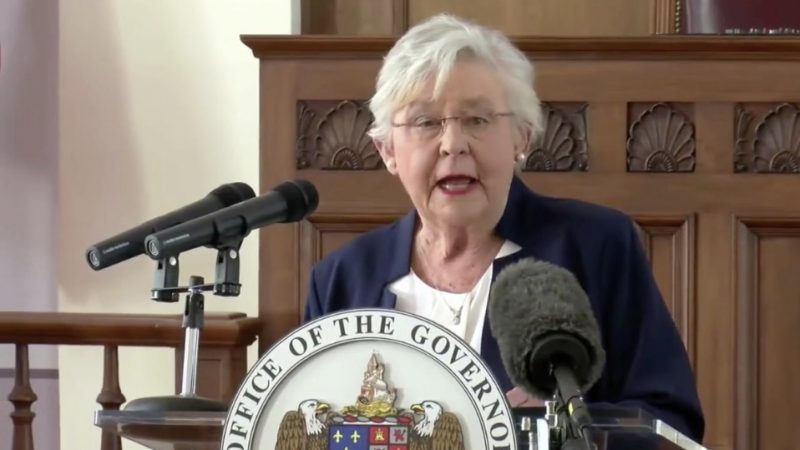
Gov. Kay Ivey on Monday signed Senate Bill 46, which outlines the usage of medical marijuana along with its regulation and distribution.

“This is certainly a sensitive and emotional issue and something that is continually being studied. … I am interested in the potential good medical cannabis can have for those with chronic illnesses or what it can do to improve the quality of life of those in their final days.” Ivey Signs Medical Marijuana Bill Into Law

Changes to Civil Asset Forfeiture Law Passes Final Vote

https://www.flickr.com/photos/tracy_olson/ https://creativecommons.org/licenses/by-sa/2.0/legalcode

MONTGOMERY — The Alabama Legislature on Monday approved a bill changing how law enforcement can seize and keep property from low-level drug offenders.

The House approved the bill unanimously and sent it back to the Senate with some minor changes that also were agreed upon unanimously. The bill now goes to Gov. Kay Ivey.

The bill is a compromise with law enforcement after several years of failed attempts by Sen. Arthur Orr, R-Decatur, and advocacy groups to change the law they said disproportionately hurts low-income individuals and minorities.

“This will put better boundaries around the property of people and raise the bar for the government seizing it and forfeiting it for low-level charges,” Orr told Alabama Daily News last month. Read more.