Donate today to help Birmingham stay informed.
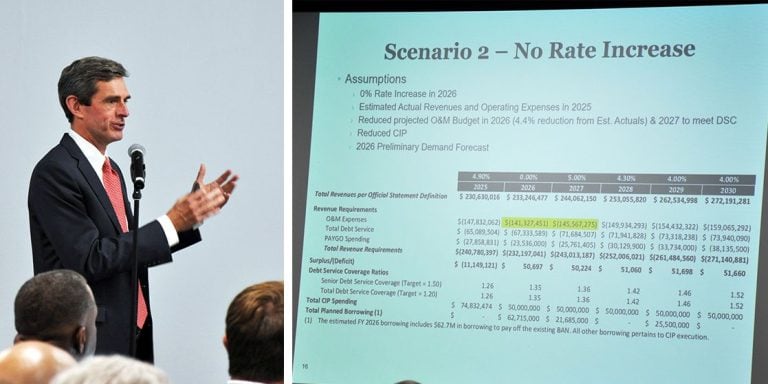
With a 2026 rate increase off the table, the City of Birmingham Regional Water Works is considering avenues for cutting costs — including by eliminating staff positions and employee raises — while budgeting for increased legal, billing and materials expenses.
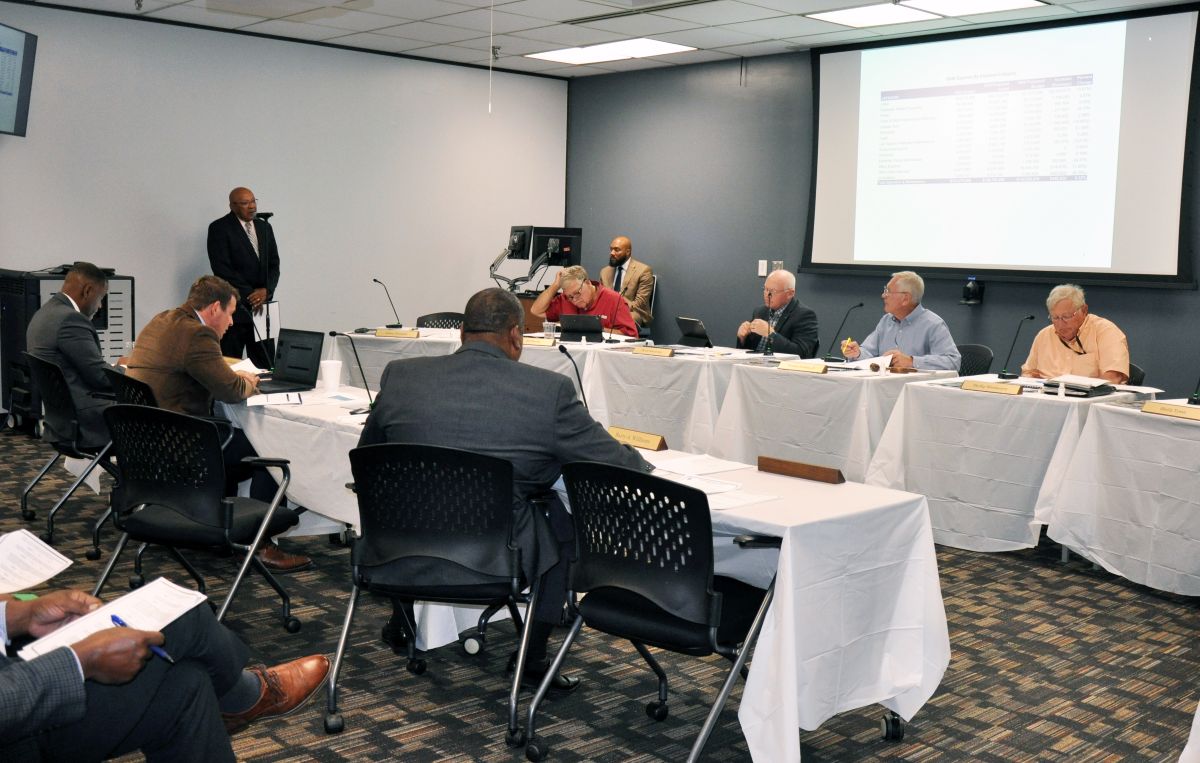
“We’ve been working on these numbers and trying to get these numbers down as much as possible,” Mac Underwood, general manager for Central Alabama Water, formerly Birmingham Water Works, told the utility’s board of directors Monday during a presentation on the preliminary 2026 operation and maintenance budget. “There’ll be no merit increase for the employees. There’ll be no cost-of-living increase for the employees.”
At the same time, employees’ health insurance premiums will increase by 4%. The board approved 2026 health insurance costs, including the 4% rise in employee premiums and a 4% increase in expenses for the utility, after seeing a presentation by a team from Insurance Office of America.
Additional labor-cost reductions could come from leaving unfilled 43 currently vacant staff positions, Underwood said.

During a Sept. 8 meeting, a financial adviser for the water works told the board budgets for operating and maintenance expenses and capital improvement projects such as automated meter-reading infrastructure and new pipelines would have to be reduced compared to the 2025 budget.
Derrick Murphy, assistant general manager for engineering and maintenance, told the board Monday that pipeline-replacement work would be reduced in 2026 compared to recent years because of budget constraints. Managers have reported that many pipelines in the utility’s system have exceeded their life expectancies, leading to costly leaks and repairs.
The $142.9 million preliminary operation and maintenance budget Underwood presented was slightly higher rather than lower than 2025’s $142.5 million budget. Reductions in the budget for labor, chemical and consulting costs were offset by projected increases in other areas, with the biggest percentage change being a 52% rise in legal fees.
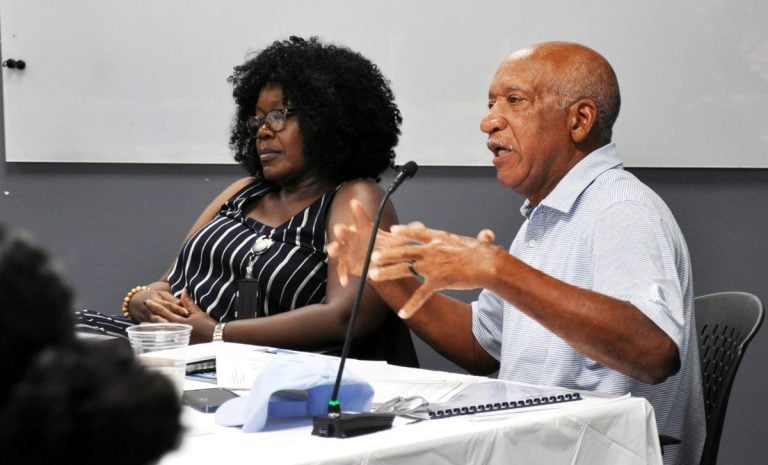
“That tells me we’re spending too much money in legal,” said board member Jarvis Patton Sr. “Now, if you’re going to tell me it’s because of court cases, I understand that, but I just, in good conscience, can’t see how you anticipate in advance you’re going to spend 51% more in legal.”
As a reason for increased legal fees, some board members have pointed to a pending federal lawsuit Birmingham city officials brought challenging a state law that restructured the water works board and some of its operations earlier this year.
Barry Williams, assistant general manager of finance and administration, answered Patton by saying actual legal expenses for the past few years have been over budget by $2 million to $3 million. Total legal expenses in the preliminary 2026 budget are $1.9 million compared to $1.6 million in the 2025 budget.
Board Chairman Tommy Hudson said a 14% increase in transportation, distribution and maintenance material costs is more substantial than legal cost increases in actual numbers.
“That 14% represents eight times as much increase as the legal, so of greater interest to me would be the larger numbers,” Hudson said.
Underwood responded that making more pipeline repairs means spending more on paving, which drives up that line item in the budget.
Council members and Underwood also talked about legal costs not being the only actual expenses that have been higher than predicted in recent years. The utility’s overall actual expenses have exceeded budgets in the past five years, often significantly. 2024 expenses were $17 million over budget, and 2025 expenses so far are $5 million above budget, Underwood said.
Patton questioned how the utility’s management could allow budget overages year after year.
“If you got people doing what they’re supposed to be doing, every three months, I’m sure you’re looking at something and seeing what the trend is,” Patton said. “How do you manage that? How do you manage your business like that?”
Williams noted current senior managers haven’t been in place for five years. Several were appointed in late 2024.
“We’re trying to control it now by holding our managers more accountable, making them justify why we’re having budget overages,” Williams said.
In responding to a question from Patton about where the extra money to cover those overages comes from, Underwood said the water works has a sizeable reserve.
The board and managers agreed to attend a budget workshop to further discuss the preliminary 2026 budget.
The reason a rate increase likely isn’t possible in 2026 is because a provision in the state law that restructured the board requires the utility to have a consulting engineer in place to analyze proposed rate increases.
The board formally began the search process Monday by authorizing senior managers to issue a request for qualifications so firms can apply to become the utility’s consulting engineer.
Peiffer Brandt, president and CEO of Raftelis Financial Consultants, the water works’ financial adviser, said in September it’s unlikely the consulting engineer will be in place and ready to give an opinion on a rate increase by the Nov. 30 deadline to approve the 2026 budget.
Money for Nonprofit Restored
The board also voted on Monday to pay an invoice it previously declined to pay from the Birmingham Business Resource Center. The new board voted in July to end its partnership with the BBRC, a nonprofit that assisted local businesses, particularly those owned by women and minorities, in qualifying to bid on water works’ contracts.
The $26,041 invoice BBRC submitted requested reimbursement for expenses related to the Doing Business with Birmingham Water Works conference, held March 25.
At its Sept. 15 meeting, board Vice Chairman Phillip Wiedmeyer said the invoice would be brought back to the table if it were determined that the previous board approved payment of those expenses. Underwood told the board Monday the previous board approved the event and did not have to specifically approve payment of expenses because those payments fell under his authority.