Government
Birmingham Council Denies 2 Liquor Licenses Over History, Neighborhood Concerns
Donate today to help Birmingham stay informed.
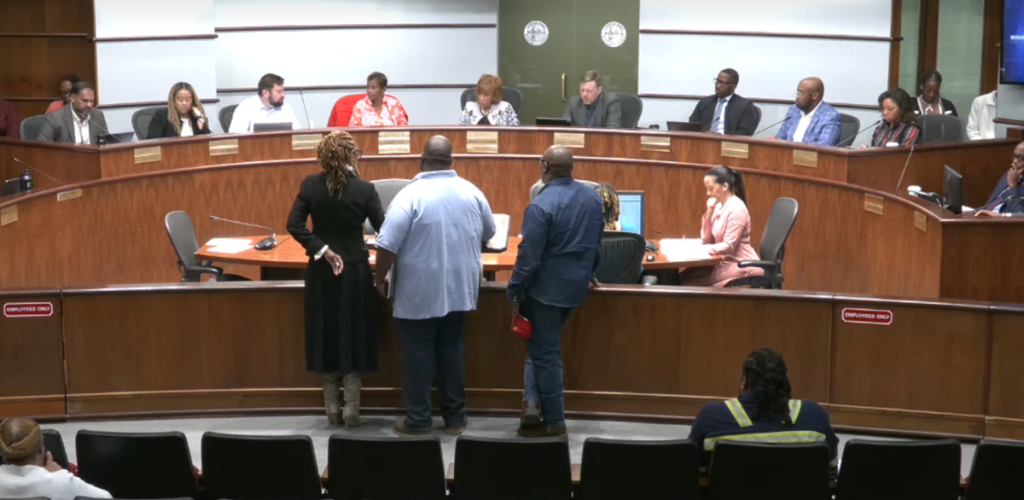
The Birmingham City Council on Tuesday denied two liquor license applications, including one to a group that surrendered its license last year for illegally selling alcohol despite claiming to be a nonprofit supporting local youth.
The council voted to deny a Class 1 Lounge Retail Liquor license to Happy Hour Hangout 2 at 2417 Ave. C.
An entity called Happy Hour Hangout, at the same address, operated as a tax-exempt nonprofit with the stated mission of mentoring youth in the community. However, the group surrendered its business license in 2025 after Birmingham police seized more than 100 bottles of beer and several bottles of alcohol at the location.
During Tuesday’s meeting, a police official confirmed that the same people were involved with the new application.
Roderick Lee, one of the two applicants, told the council the new business would be a small spot for people 30 and older.
Chaz Mitchell, the city’s chief financial officer, told the council the original Happy Hour Hangout still has outstanding financial obligations that “need to be cured before we can release anything.”
The resolution to approve the application failed by an 8-1 vote, with Councilor Clinton Woods being the sole yes vote.
The council on Tuesday also denied a Class 1 Lounge Retail Liquor License for The Black Hole Hookah Bar and Lounge at 137 Sixth Ave., SW. Councilor LaTonya Tate said some members of the neighborhood opposed the business because of concerns over “possible crowds and disturbances.”
Councilor Crystal Smitherman said she is familiar with the area as her parents’ old campaign office was nearby.
She said she has nothing against the applicant but feels the proposed location for the business is too close to residential homes.
“I know they would not want a hookah lounge right there in their neighborhood,” Smitherman said.
That application was denied by a unanimous vote.
In other business, the council approved a measure in which the chief of police will “verify that Alabama Power Company has a separate specific agreement with the City of Birmingham for the Birmingham Police Department to provide specific CJI (Criminal Justice Information) sharing services and/or products for the administration of justice.”
Councilor Darrell O’Quinn asked city staff to summarize what the agreement would do. An official told the council that the measure verifies that the city has an agreement with Alabama Power to supply license plate reader cameras, which gives the company access to that information.
O’Quinn began asking about the data from license readers, saying many constituents have expressed concern about who will have access to that information. However, the city attorney advised the council to enter into an executive session to discuss security plans and measures.
Once the council returned from the closed-door session, the measure passed unanimously with no further discussion.