
Category: Alabama Prisons
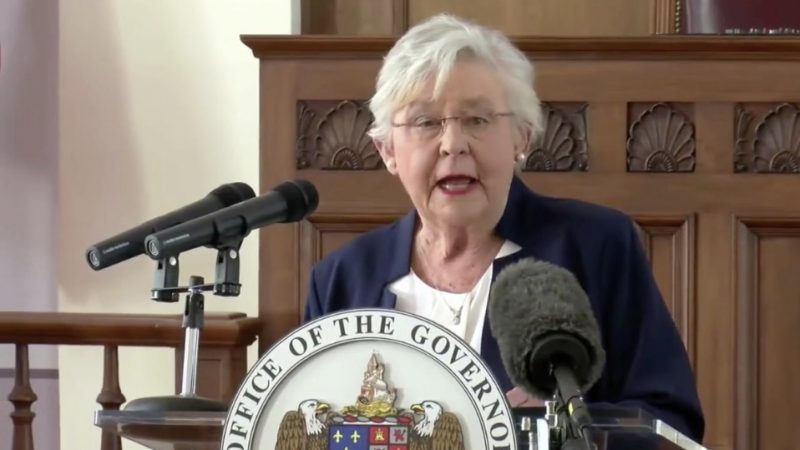
Ivey’s Call Sets Prison Special Session Agenda
MONTGOMERY — Lawmakers next week will focus on prison construction and funding legislation and two criminal justice reform bills, according to the special session proclamation released by Gov. Kay Ivey. Read more.
Lawmakers Estimate New Elmore, Escambia Prison Costs
The construction of the two men’s prison, which the Alabama Legislature will debate and possibly approve next week, will cost an estimated $1.2 billion to $1.3 billion. Improvements at other prisons and a new women’s prison will add to that amount, State House leaders say. Read more.
Draft Bill Closes 5 Prisons, Leaves Fate of Others to Be Determined
The prison construction bill the Alabama Legislature will consider in next week’s special session expressly closes five prisons in the state but leaves the futures of others up to decision makers at a later date.
Men’s facilities Hamilton Aged and Infirmed Center, Staton, Elmore and Kilby and the Julia Tutwiler women’s prison would be closed under the bill in its draft form.
The prison plan’s first phase includes two new 4,000-bed prisons in Elmore and Escambia counties and allows the state to borrow up to $785 million for their construction. Phase two includes a new women’s prison, though there’s no dedicated funding for that project in the bill. Read more.
Perry County Facility Key Factor in Prison Plan
The proposed plan to build new prisons in Alabama would also allow the purchase of the empty, privately owned prison in Perry County to hold parole violators who are crowding some county jails around the state.
The Perry County Correctional Facility “has always been the Rubik’s Cube of the prison problem that no one’s ever been really able to figure out,” Alabama Bureau of Pardons and Parole Director Cam Ward told Alabama Daily News.
Built in the 2000s, Ward said, it’s a good 730-bed facility but its remote location and distance from medical care has been a challenge to operations. At one point, U.S. Immigration and Customs Enforcement used the space.
“But it’s never been used to capacity,” Ward said.
Ward and other state leaders will meet with GEO Group, the private prison company that owns the site, this week, about the possible purchase.
Read more.
Majority of House GOP Said to View New Prison Bill Positively, Democrats Still Discussing
MONTGOMERY — State Representative Steve Clouse, R-Ozark, who is set to sponsor the new prison building legislation for a likely special session, said he has about 70% of House Republicans responding positively to the bill as of Tuesday afternoon. Read more.
Two Construction Companies in Position to Build Alabama Prisons
Two Alabama construction companies could be in the best position to get state contracts to build two men’s prisons under a proposal lawmakers are now weighing.
Montgomery-based Caddell and Birmingham-based BL Harbert were both part of teams expected to build prisons under Gov. Kay Ivey’s earlier plan to lease from private developers three new facilities. That plan fell apart in the spring, but some legislative leaders say Caddell and Harbert have been vetted and put in the groundwork to quickly move on construction, if the Legislature can pass a bill that includes borrowing as much as $785 million.
“It would be problematic if we tried to move out and get somebody else,” Sen. Greg Albritton, who has helped lead discussions on new prisons over the summer, said. “(These companies) are in the best position to do this work.”
Read more.
Counties Ask for $10M Reimbursement From State for County Jail Strains
The Association of County Commissions of Alabama is asking for a $10 million reimbursement from the state for the increased strain on county jails taking care of state inmates.
The association approved a resolution last week requesting Gov. Kay Ivey and the state Legislature to “retroactively reimburse county governments for their extended care of an increased number of State-responsible inmates throughout the COVID-19 pandemic, a consequence of the Alabama Department of Corrections’ decision to drastically reduce its intake activities in 2020 and 2021.”
The reimbursement amount is for the time from Jan. 1, 2021, to July 31, 2021, and accounts for all counties, Abby Fitzpatrick, director of communication and engagement for the association, told Alabama Daily News.
Read more.
Ivey ‘Encouraged’ by Lawmakers’ Prison Plan Work
MONTGOMERY – Summer discussions between lawmakers and Gov. Kay Ivey’s administration on how to fix the state’s crowded and crumbling prisons have entered the draft legislation phase.
Officials aren’t talking publicly about the details, but Ivey said she’s “encouraged” by the work done so far.
A draft bill prepared at the State House calls for new and renovated prison infrastructure over a 10-year period.
“While there has yet to be a final plan in terms of legislation, I’m encouraged by the progress being made from the ongoing discussions with the Legislative leadership,” Ivey told Alabama Daily News in a written statement. “For several months, they have engaged with our team, and I can assure the people of Alabama that we are like-minded and laser-focused on finding a solution to our decades-long problem within our correctional facilities. I’m extremely hopeful they are on the right-track, and I am encouraged by their holistic approach to this issue.”
Read more.
Commission on Reentry: Further Discussion Needed on Recidivism Definition
MONTGOMERY – A new state commission studying how to help released inmates stay out of prison spent much of a meeting Wednesday working on a definition of recidivism that all state agencies can use.
One of the goals of the Joint Commission on Reentry is to create a definition so the state can implement best practices to aid those leaving prisons and create a safer Alabama.
Cam Ward, director of the Alabama Bureau of Pardons and Parole, said during the meeting that since every state agency defines recidivism differently, it is a nearly impossible task to settle on a singular meaning and mission.
Read more.
‘Lost Revenue’ Could Be Used in Prison Fix
Alabama fiscal leaders should soon know how much of the state’s federal COVID-19 relief funds can replace lost revenue and potentially fund new prisons. Read more.