Environment
Purdy Dam Foundation Not Strong Enough to Support Rehab, Must Be Stabilized
Donate today to help Birmingham stay informed.
The first phase of a project to stabilize Lake Purdy Dam has hit a snag, with engineers finding part of the dam’s foundation is not strong enough to support additional concrete that was to shore up the structure.
Central Alabama Water, formerly Birmingham Water Works, owns the 115-year-old dam and lake, which supplies water for a large portion of the utility’s service area, including parts of Birmingham along with Homewood, Hoover, Mountain Brook, Vestavia Hills and surrounding areas.
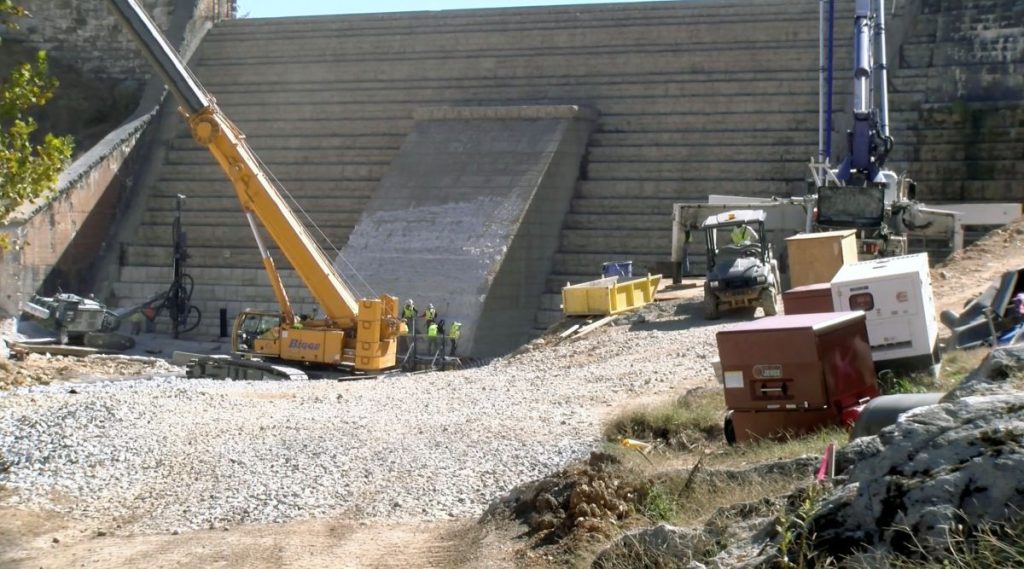
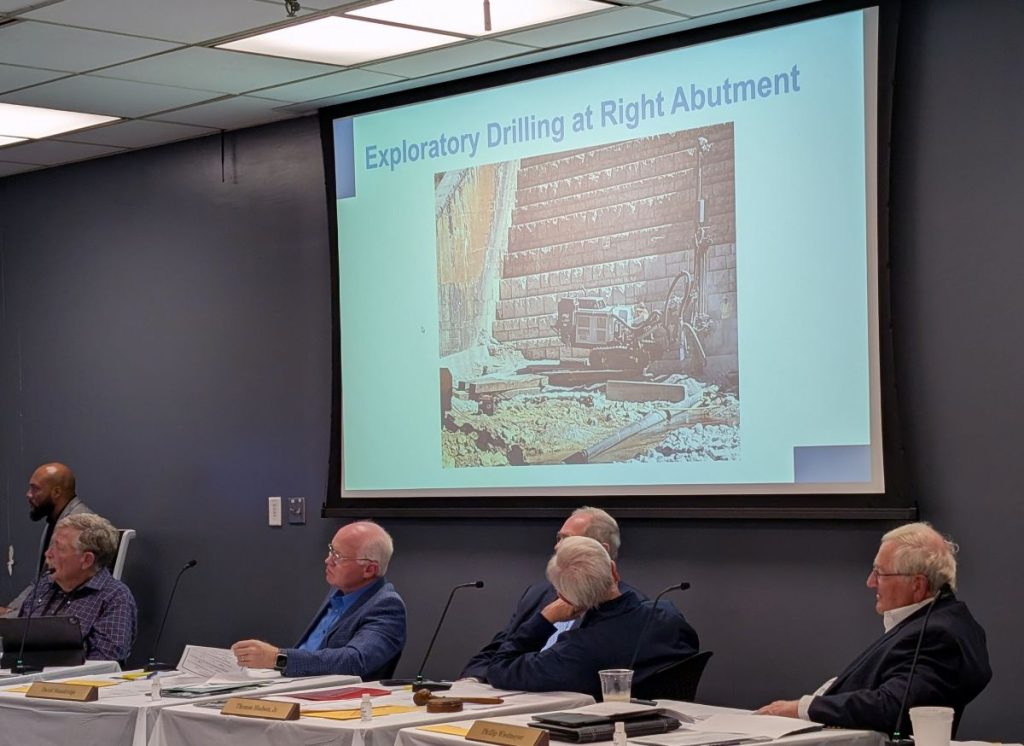
“We exposed the concrete apron at the bottom of the dam, and what we noticed was some voids that we didn’t expect, and so we decided to bring a drill rig in to actually examine those voids,” Patrick Flannelly, senior vice president for Arcadis North America, an engineering firm for the water works, told the CAW board of directors Monday evening. “We’re going to have to have a different type of support for all the concrete in this area.”
The board also learned Monday that its insurance broker has found a $20 million liability policy for the dam to replace an existing policy for only $1 million.
Flannelly told the board in July the dam was not strong enough and its failure would threaten lives and thousands of homes in a 40-mile wave stream. The board learned at that time about potential problems with the dam’s foundation.
A statement CAW released to the media Tuesday says the utility has been assured Lake Purdy Dam is safe and there is no imminent danger to the public.
“The reservoir was nine feet below its full capacity as of Friday, October 17,” the statement reads. “Because of these conditions, it would take more than seven inches of rainfall in 24 hours for the water level to reach the crest of the dam. Therefore, there is little risk that water could overflow the top of the dam.”
Water overflowing the dam could cause it to fail.
No Dye Test to Measure Seepage Since the 1980s
Flannelly revealed Monday that a common dye test to analyze water seepage through the dam’s foundation, which can be a sign of instability, not only wasn’t performed before work on the $88 million stabilization project began, but seepage testing hasn’t been performed since the 1980s.
“A tracer dye test should have been done at the very beginning,” said board member Bill Morris, who is also general manager of Leeds Water Works. “You’re talking about 40 years ago. We’re talking about today. That should have been done. Somebody dropped the ball.”
The board gave the go-ahead Monday for the test, at a cost of $10,000. It will introduce two colors of dye to the upstream side of the dam as early as next week and measure seepage under the dam by monitoring how much dye makes its way to the downstream side, where it appears and how long it takes to work its way through.
“The dye is non-toxic, biodegradable and NSF (National Science Foundation) approved,” the CAW statement reads. “Passersby may notice some of the dye in the Little Cahaba River and possibly the Cahaba River for a brief period. There is no risk to the river or to drinking water because water from the Cahaba River is filtered and treated at the Shades Mountain Filter Plant before it is distributed to customers.”
Schnabel Engineering, the project’s design engineer of record for seepage control, will perform the dye test.
Deep Foundation Work Planned
The engineering firm also is working on a plan to strengthen the dam’s foundation by adding micro piles beneath it, creating a “deep foundation,” Flannelly said.
To create the micro piles, a contractor would drill a series of holes, install steel pipes filled with rebar and concrete and then pour a concrete slab on top, according to the CAW statement. Construction of the deep foundation could be complete by the end of December, the statement continues, and costs would be covered by contingency funds budgeted into the project.
Schnabel Engineering also will oversee additional exploratory drilling, at a projected cost of approximately $25,000.
“While we’re at this point in the project, it makes good business sense to conduct additional exploration before the area is covered with concrete,” board Vice Chairman Phillip Wiedmeyer said. “We can do this exploration at minimal expense and receive data to help inform future decisions.”
The first phase of the dam stabilization project, which was slated for completion in January, was already behind schedule, Flannelly said, and now it likely won’t be finished until April.
In the 2025 capital budget, $22 million was earmarked for the dam project. The previous board approved a total cost of $88 million for the rehabilitation work, which was anticipated to take four years.
The current board decided in July to complete phase one at a cost of $28 million and then make a determination about continuing the project.
The board has been struggling to find ways to continue funding capital projects, including the dam stabilization, while balancing a preliminary 2026 budget that doesn’t include a rate increase.
Independent-Expert Review of Dam
Board members during their Oct. 20 meeting talked about retaining two independent experts to examine the dam and Schnabel’s design plan but wanted more information. A week later, they approved resolutions hiring the experts during a special called meeting Oct. 29.
The board hired Donald Bruce, a grouting expert, and David Campbell, a professional engineer with expertise in dams. Eugene Bentley Sorrell, who retired as chief engineer for the Birmingham Water Works Board in 2020, also will review the ongoing dam rehabilitation project.
Water works external attorney Shan Paden said Bruce and Campbell would be giving independent opinions about the foundation voids and the plan to add pilings and would be looking at the overall project to advise on steps moving forward.
Board members Jarvis Patton Sr. and Sheila Tyson initially questioned how the two had been selected.
Wiedmeyer, a retired engineer who was involved in dam-safety inspections during his career with Alabama Power, said he recommended Campbell, whom he described as a nationally renowned expert in his field. Flannelly said Campbell suggested consulting a grouting expert as well and recommended Bruce.
Campbell and Bruce would each spend approximately 60 hours on the project, Flannelly said, and Paden said their hourly rates are $275 and $350, respectively.
Patton said he’s concerned about the number of consultants the water works has doing unlimited work for hundreds of dollars an hour.
“I just want to make sure we don’t just continue to open up the vault and say, ‘Take as much as you need,’” Patton said.
Wiedmeyer suggested capping Campbell and Bruce’s pay at $30,000 each.
Dam Liability Insurance to Increase
The board also Monday approved an agreement with insurance broker Valent Group for property and casualty insurance policies, including $20 million in liability insurance for Lake Purdy Dam.
Phillip Moultrie with Valent Group told the board last week that its current $1 million in liability insurance for the dam was “pocket change,” and even $20 million in liability insurance would not be enough.
The board decided to remove a stand-alone terrorism package added to the dam last year that covered chemical, biological, radiation and nuclear perils. That change reduced premium costs by $125,000.
The new property and casualty policies are effective Nov. 1 and extend for one year at a cost of $3.46 million.
Moultrie said as the board’s broker, he shops the insurance market for policies. He asked board members if they wanted him to continue looking for additional insurance for the dam, and board Chairman Tommy Hudson said yes.
CAW posted to YouTube a video of the Lake Purdy Dam construction site on Oct. 14.
This story has been corrected to show the dye test cost of $10,000. The $35,164 cost approved during the meeting also included other exploratory work. It also has been updated to show the water board returned in a later meeting to hire independent experts to examine the dam and plants to strengthen the foundation.