Donate today to help Birmingham stay informed.
An attorney for Birmingham’s regional water utility said Friday that its board of directors should have voted on the new employee handbook the organization implemented last month.
Central Alabama Water has conducted drug screenings and fired employees based on provisions in the new handbook. At Friday’s board meeting, member Jarvis Patton Sr. asked why the utility’s senior managers didn’t bring the new handbook to the board before adopting it.
“My opinion is I need to review it,” said Shan Paden, an external attorney for CAW. “You (board members) need to review it, and the board needs to take action on policy changes.”
Paden initially deferred Patton’s question to Jeffrey Thompson, chief executive of CAW.
Thompson said he believed a state law that went into effect last year gave the CEO authority to control the operations of the board.
“And it says it in black and white, subject to the policy provisions of the board,” he said. “I don’t believe that policy directions have to come exclusively from the board.”
According to the new law, which restructured the utility and its board, the CEO has full authority to manage the operations of the regional board, “subject to policy directives and other governance decisions adopted by the board of directors.”
“We are the legislative branch, aren’t we?” Patton asked. “And we set policy — is that right?”
Paden responded in the affirmative to both questions.
“When are we going to get to the point where we’re going to follow the rules and regulations, all of them?” Patton asked. “The organization has disregarded the board totally.”
Paden suggested the board consider the new handbook at its next meeting, March 20. Patton asked whether it would be appropriate for the utility to revert to the rules in the previous handbook until the board approves a new one.
“How many people are being affected by this?” he asked. “If there’s something that we don’t want in there and the administration acts on something like that, what happens to the person that’s affected?”
With consideration of the handbook not on Friday’s agenda, Paden said the appropriate action was to wait until the next meeting.
“That’s all you can do at this point,” he said.
Employee Firings
CAW managers emailed the handbook to employees on Feb. 5, a Thursday, and asked them to complete a handbook acknowledgement form by Feb. 13, according to records reviewed by BirminghamWatch. On Feb. 9, the utility began conducting unannounced drug testing of all employees.
AKhi King, then president of the Employee Association, said more than 30 employees were terminated or placed on unpaid leave in relation to the testing.
Under the previous handbook, revised in 2024, employees who tested positive were suspended without pay for 30 days and given a second chance, provided they produced a negative test. The new handbook states a violation of the drug and alcohol policy subjects employees to corrective action up to and including termination.
King said some employees were terminated or placed on leave because they refused to take the drug tests or the tests were positive for prescription medications. In the latter case, employees were asked to provide physician verification, even if their prescriptions were already on file with their employer, he said.
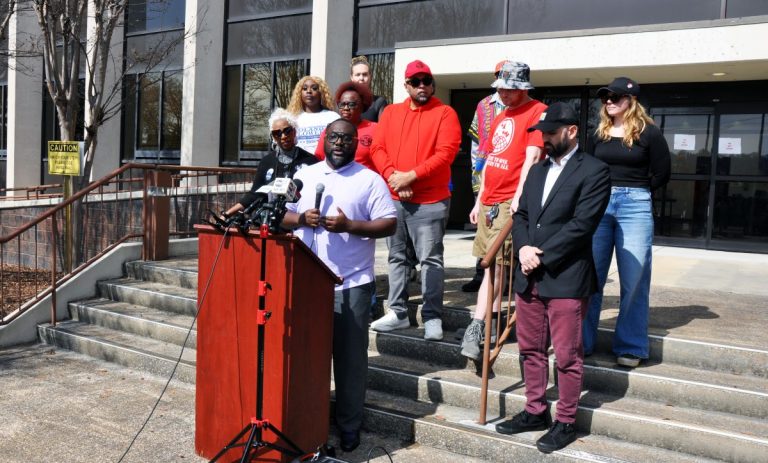
King himself was terminated after asking Thompson about the firings, said Eric Hall, who led a Feb. 20 press conference about employee relations at CAW held by community activists and workers’ rights advocates.
John Matson, public relations manager for CAW, said the utility was conducting baseline drug testing in accordance with the new handbook. CAW has a public health and safety responsibility to ensure its employees are not impaired at work, he said.
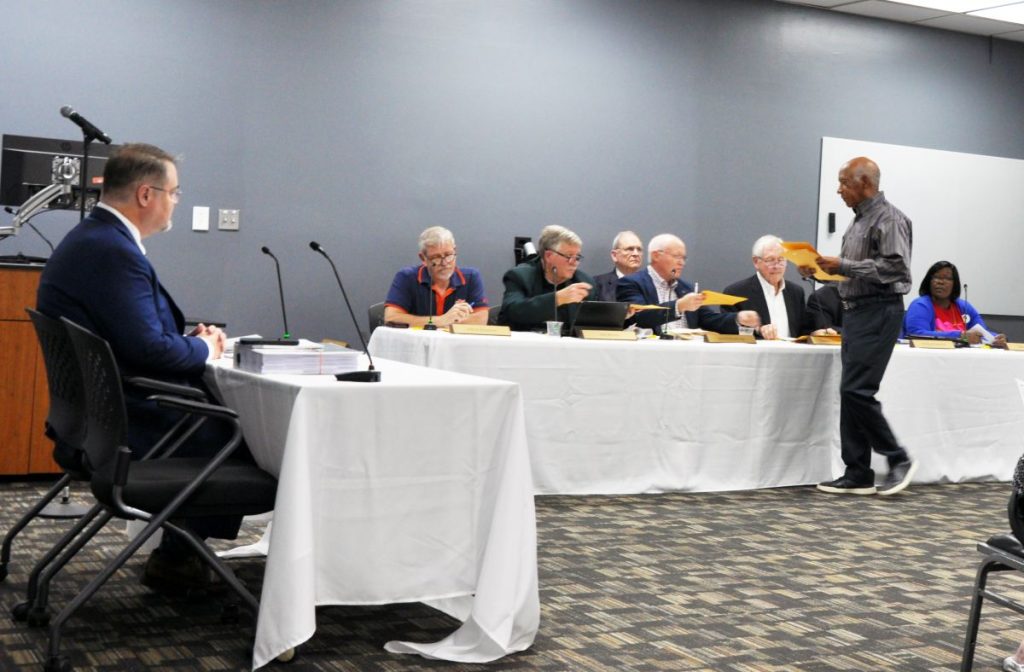
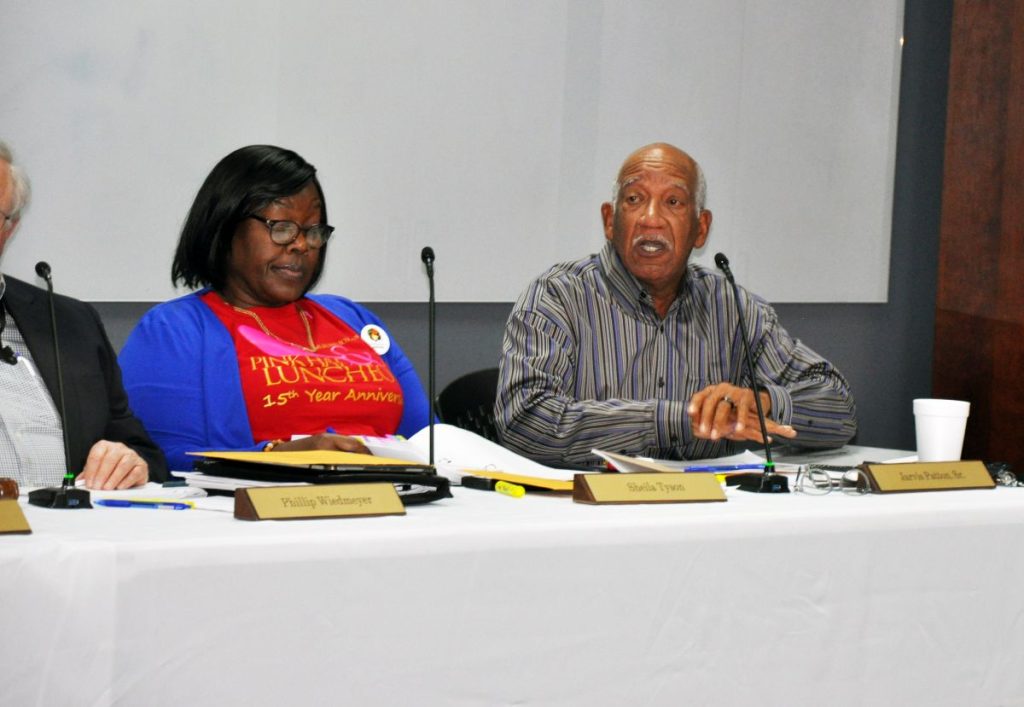
During Friday’s meeting, Patton passed out manila envelopes to other board members after board Chairman Tommy Hudson denied his request to give a report. Patton asked them to read the documents inside.
After the meeting, he and board member Sheila Tyson said the documents related to former employee Brittany Reynolds, who they said was terminated because of a positive test for medication her doctor prescribed.
“They brought her in for a hearing, then they fired her again,” Patton said, that time because “they didn’t like her conduct.”
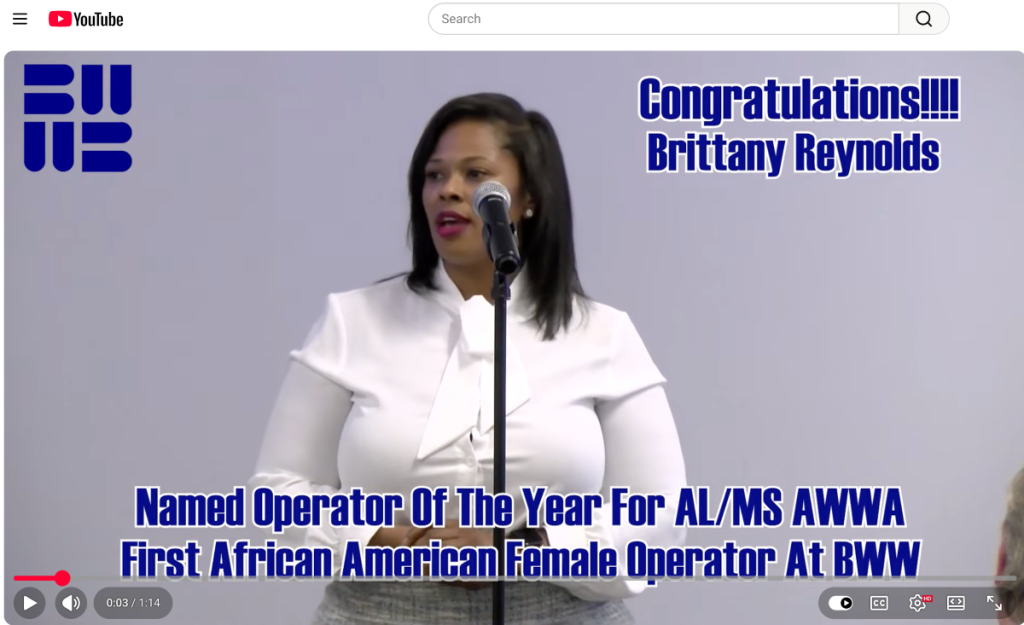
That would be a significant change in CAW’s stance toward Reynolds. As lead operator of CAW’s Western Filter Plant, Reynolds received multiple commendations from the utility and water-industry organizations in recent years.
She was part of a three-member team the board recognized during a June meeting for its performance in an American Water Works Association competition. Treatment Plant Operator magazine featured her in a lengthy article in September. In 2024, AWWA’s Alabama-Mississippi Section named Reynolds Operator of the Year, and CAW celebrated her achievement in an Instagram post and YouTube video. In 2022, the utility lauded her for winning a scholarship from the Alabama Water and Pollution Control Association.
Tyson said about 20 employees met the same fate as Reynolds and were terminated after failing the recent drug testing due to prescription medication.
“They got a prescription in the bottle and everything, and a doctor-written letter,” Tyson said. “They still fired them.”
Some of those employees had hearings as well and their terminations were upheld, Tyson said. Reasons given were that one employee lied and the others had bad attitudes, she said.
“We don’t discuss personnel matters,” Matson said when asked about Patton’s and Tyson’s claims.
The process for terminated employees to dispute their dismissals also changed significantly with the new handbook.
The previous handbook required a three-member panel to review investigation findings before terminations were finalized. After being dismissed, employees could appeal to the general manager.
Under the new handbook, there is no review panel. Terminated employees can appeal to the chief people officer or, if they report directly to members of the senior executive team, to the chief executive officer.
Board Agrees to Lease Lab Building
Also at Friday’s meeting, the board voted to list with Sandner Commercial Real Estate a building a previous board purchased for $6 million in July 2023.
The plan had been to move the utility’s EnviroLab water-testing laboratory from a facility on its main campus to the 30,000-square-foot facility in Oxmoor Corporate Park, just off Lakeshore Parkway in Birmingham.
Thompson said modifying the building would be expensive, and he would like to see the building leased. CAW faces financial challenges, and a global bond-rating agency recently downgraded its bond rating.
“The cost is prohibitive right now, and we don’t have use for the building at the moment,” Thompson said. “We have an existing lab building here on this campus, so the building can potentially generate some revenue for the utility.”
Paden said CAW can’t sell real property right now due to a lawsuit city of Birmingham officials filed contesting the state law that restructured the water works.