Donate today to help Birmingham stay informed.
The embattled Central Alabama Water came under heavy fire Friday as four lawsuits were filed against it, one alleging that the state’s takeover of the system last year was unlawful and the others alleging the utility illegally fired three former managers without regard for the terms of their contracts.
A federal lawsuit brought by two former members of the utility’s board of directors contends Birmingham residents bought their water utility in the 1950s, and the state-mandated reorganization to lessen Birmingham’s representation amounts to a contract violation.
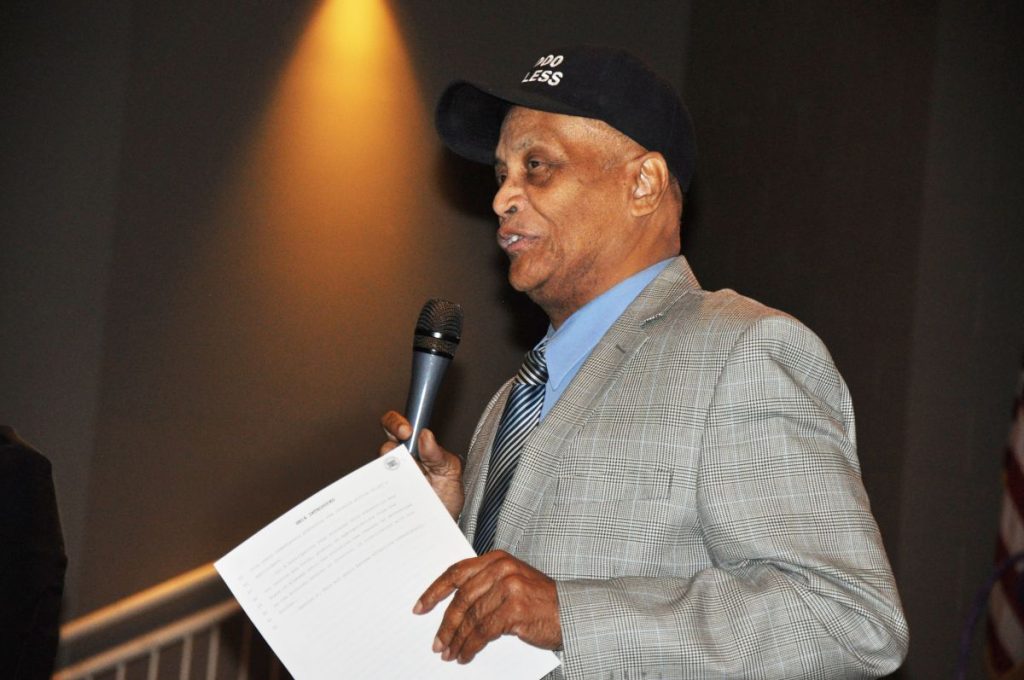
“The state did not give us a water works,” said William Muhammad, who served on the board from 2016 to 2020 and is a plaintiff in the federal lawsuit along with former board member Brenda Lewis. “We had to buy it. So how can the state come in and change the board and take it over with no regard for the $20 million that was invested in it by the citizens of Birmingham?”
The lawsuit against Gov. Kay Ivey and several other state and county officials alleges the state unconstitutionally seized control of the Birmingham Water Works Board through legislation governors signed in 2015 and 2025 that expanded the board’s membership and altered appointing powers, shifting majority representation from the city to suburban areas.
The plaintiffs argue 92% of the customers and ratepayers reside in Birmingham and Jefferson County, yet the new governance structure shifts decision-making authority away from those communities.
Birmingham city officials also filed a federal suit challenging the 2025 law soon after Ivey signed it in May. A motion for dismissal is currently on the table in that case.
Muhammad said he was concerned about leaving the situation in the hands of politicians because politics are about compromise and officials might cut a deal to get something else they want.
“I’m afraid that they’re going to get to a certain point and they’ll come back to the community and say, ‘Well, we tried,’” Muhammad said. “So I needed to know that if we got involved in the lawsuit, that we can take it as far as it can be taken.”
State’s Rights Questioned
The suit claims the utility — which a new, regional board renamed Central Alabama Water last year — is a privately established public-benefit corporation rather than a government-created utility and therefore the state doesn’t have the right to modify it.
“The Boards of public utilities established by municipalities or the State government may be changed or modified at will by State legislation because they are creatures of the government, whereas the perpetual Boards of public utilities and institutions established by natural persons are protected from state takeover or political interference, maintaining their autonomy under the Contract Clause of the U.S. Constitution, which prohibits states from impairing the obligation of contracts,” the lawsuit states.
It refers to the utility’s 1999 charter as a contract and alleges the state violated it in multiple ways. That charter stipulates the board will be composed of five members elected by the city of Birmingham’s governing body. The 2015 and 2025 laws expanded the board to nine and then seven members, respectively, ultimately reducing the Birmingham City Council’s appointment power from 100% to 14%.
Muhammad and Lewis, who according to the suit represent themselves as well as other Birmingham voters and property owners, also argue in the suit that the state’s legislative actions violate the Fifth and 14th amendments to the Constitution.
Under the Fifth Amendment, the suit cites the illegal taking of private property for public use without just compensation.
Birmingham citizens financed the water system through decades of rate payments, infrastructure investments and municipal support, the suit contends. It argues the state effectively seized the water works’ assets and owes compensation of $1.6 billion to “voters, property owners and investor/ratepayers of the City of Birmingham whose dollars built the company.”

Racist Motives Alleged
The suit’s 14th Amendment claims center on the equal protection clause, asserting that the state’s legislation selectively targets a majority-Black city. While the 2025 law doesn’t name a specific utility, it’s written such that it applies only to the Birmingham-area water system.
Muhammad said Birmingham officials established an independent board to govern the water system and take ownership of its assets after the city purchased the utility in 1951 because they didn’t want politics interfering with the water.
“Little did they know that race was going to interfere with the water,” he said.
For 30 years, state legislators regularly introduced bills to take over Birmingham’s water utility, he said.
“We feel like they’re only doing it because it had a majority Black board,” Muhammad said. “The narrative that they’ve always said was that they were doing it because the people who were in charge of it, who were generally Birmingham citizens, who the majority were Black, that they were incompetent in the management and corrupt. And now, in as little as five or six months, the people who the state sent to take over are running the system into the ground.”
A global bond-rating agency lowered the utility’s rating last week, and it is struggling to fund projects to maintain aging infrastructure. Current board members have said the city’s lawsuit prevents the water works from financing those projects through the bond market.
What Plaintiff’s Want
Aside from the $1.6 billion in compensation to Birmingham ratepayers, the lawsuit asks the court to: declare the state’s actions unconstitutional; reinstate the board structure as it existed under the 1999 charter; and enforce a buy-sell agreement between the previous board and the city of Birmingham in which the city would purchase the utility’s assets for repayment of debt plus $1. The previous board approved the agreement after the governor signed the 2025 law that effectively dissolved that board.
Richard Rice, an attorney for the plaintiffs said the lawsuit is larger than one utility. “This case tests whether a state can dismantle the governing authority of the ratepayers of a predominantly Black city’s most valuable asset without compelling justification or attempting less intrusive temporary intervention,” he said. “Self-governance and fundamental property rights are not symbolic — it is the bedrock for the rule of law and our Constitution.”
Muhammad said the lawsuit has been in the works since December and the main thing he hopes it accomplishes is restoring a five-member board appointed by the Birmingham City Council. Some people have said a settlement could involve Birmingham officials gaining authority to appoint more — but not all — board members, he said.
“But I’m not in favor of that, and I’m not doing this for them to give us back our $20 million and still take control of something that I feel legally is not theirs,” he continued. “I hope and pray that we can get before a high enough court that they will look at the law and say, ‘We agree with you and this was wrong. It’s just as wrong as if it was done to Alagasco or Alabama Power.”
Former Managers File Suit

On Friday, three former managers at the water works filed suit in Jefferson County Circuit Court, alleging they were effectively fired in December when they were put on indefinite or permanent administrative leave, and they have not been paid the severance packages outlined in the work agreements they signed.
Former General Manager Mac Underwood, former interim Senior Manager of Customer Care Michael Parker and former interim Assistant General Manager of Finance and Administration Barry Williams filed suits individually. Each asked the court to award him compensatory and punitive damages, equitable and injunctive relief and any other relief to which he might be entitled.
Williams’ and Parker’s agreements outline that they be paid one year’s pay if the contract is ended early, with limited exceptions, and each makes more than $300,000 a year. Underwood’s work agreement states that he be paid through the end of his contract, which is in 2030. That would grant him more than $2 million in severance pay.
All three had previously worked for Birmingham Water Works, retired and been brought back in 2024, when that water works board was trying to solve problems that had developed since they left. Jeffrey Thompson, whom the new state-mandated board hired as chief executive in November, initially put the three on leave the same day he was hired.
The former managers allege that CAW breached the agreements. They contend they were wrongfully terminated and that CAW’s move to put them on indefinite administrative leave was an attempt to get around paying them the severance outlined in their work agreements.
The three lawsuits have been assigned to separate judges.
Virginia Martin contributed to this report.