Government
Water Utility Workers Consider Unionizing Amid Claims of Poor Treatment
Donate today to help Birmingham stay informed.
Employees of Alabama’s largest water utility have begun meeting to consider organizing into a labor union, according to a group of community activists and workers’ rights advocates.
The development comes after a slew of firings that included CAW’s Employee Association president and following a statement from the Employee Association that morale has declined since the utility appointed a chief executive in November and replaced the entire senior management team.
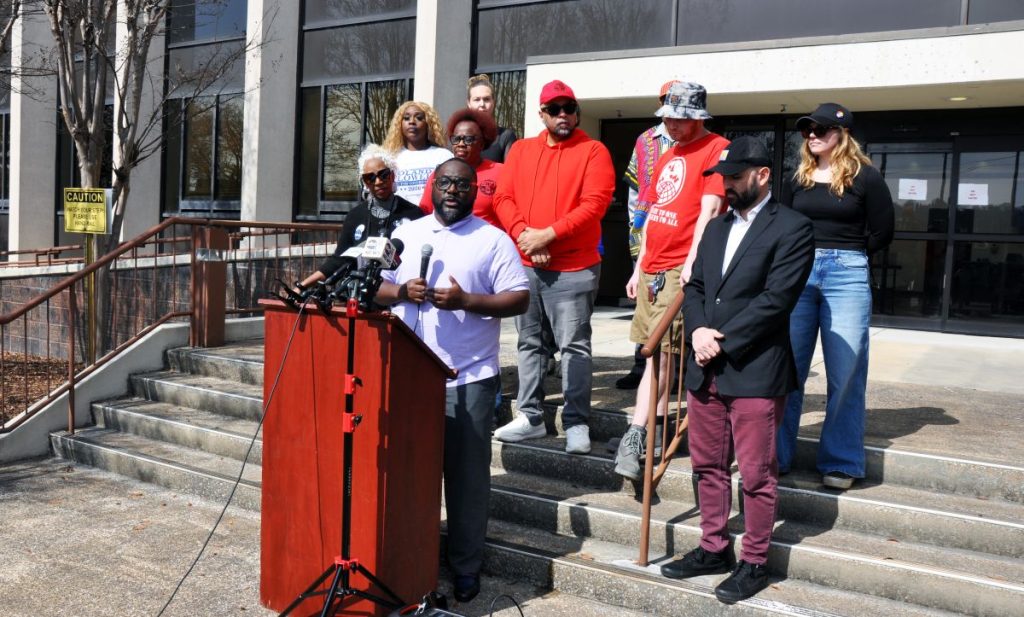
“We have a right to demand equitable treatment, equitable pay, and when we question that, we should not be penalized,” said Eric Hall, who led a press conference by the advocates Friday on the steps of Central Alabama Water’s administration building.
“We realize when we see authoritarianism taking place, where those who are in positions of power want to rule with strong fists, and we are fighting back, and our fist as workers is mighty and stronger than the fists that they have,” said Hall, who describes himself as a labor organizer with Black Lives Matter Birmingham and the Southern Workers Assembly.
Employees have met recently via Zoom and in person to discuss the possibility of unionizing, Hall said.
Luis Robledo, a senior organizer for Jobs to Move America, said after the press conference that workers already have some protections under the National Labor Relations Act because they have expressed interest in organizing.
“They’re already protected, even today, by concerted organizing activity, because they’ve decided to collectively band together,” Robledo said. “So under our rights as people that want to organize, there are protections just having organizing meetings.”
Employee Complaints
The Employee Association statement attributed deteriorating morale to lack of communication from management, unclear promotion procedures and the random creation of job titles.
CAW managers didn’t respond to specific questions about employee complaints and unionization discussions, but John Matson, public relations manager for CAW, provided a statement saying the utility will continue taking steps to put the system on the path toward sustainability and high performance.
“All employees have at least a half dozen avenues by which they may bring any employment-related concerns to the attention of management,” the statement continued.
In a press release announcing Friday’s event, organizers described the work environment for rank-and-file CAW employees as hostile and toxic, with workers feeling distressed, undervalued and unsupported.
“Serving consumers has historically been a source of pride and joy for Central Alabama Water employees,” the press release states. “Unfortunately, under the current board administration, many workers report feeling like they are laboring under conditions reminiscent of a plantation, marked by unjust treatment and lack of respect.”
A state law that went into effect in May restructured the water utility’s board and operations. The law required a new board, shifting majority representation from the city of Birmingham to its suburbs, and directed that board to hire a chief executive. On the same day the board hired Jeffrey Thompson, he placed the utility’s entire senior management team on administrative leave. Numerous ongoing lawsuits challenge both the state law and the managers’ dismissal.
Wrongful Firings, Racism Alleged
The week of Feb. 9, AKhi King, then president of the Employee Association, said more than 30 employees had been terminated or placed on unpaid leave in relation to surprise drug testing. King was then dismissed himself after asking Thompson about the firings and presenting a list of employee questions for senior managers, Hall said.
“Representing the employees, he had the right to ask that question,” Hall said. By firing King, Thompson “sent a message that anybody that challenges me, as a worker, you’ll be terminated,” he continued.
CAW did not respond to a question asking why King was fired.
King said Friday he can’t speak publicly about his situation because he has obtained legal counsel regarding his termination.
He previously said some employees were terminated or placed on leave because they refused to take the drug tests or the tests were positive for prescription medications. In the latter case, employees had to provide physician verification, even if their prescriptions were already on file with their employer, he said.
The statement the Employee Association released last week linked the drug testing with CAW’s need to cut costs, saying the move appeared to be aimed at reducing staffing levels through “attrition.”
CAW is struggling financially, and one way it reduced expenses in its 2026 budget was by freezing hiring for many positions and eliminating employee raises.
Matson said the utility is conducting baseline drug testing in accordance with a new employee handbook it instituted days before that testing began Feb. 9. CAW has a public health and safety responsibility to ensure its employees are not impaired at work, he said.
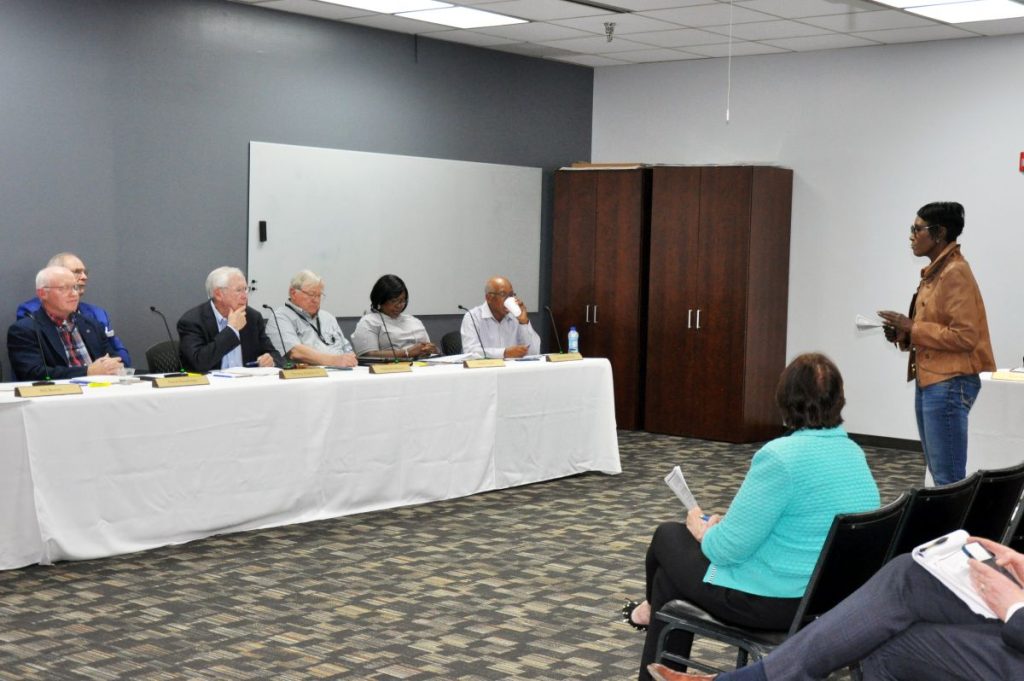
During a CAW board meeting Friday, state Rep. Juandalynn Givan, D-Birmingham, addressed the board, raising questions about employee treatment that echoed those voiced at the press conference.
She requested data surrounding the recent drug testing, including the number of people tested and terminated, broken down by race and other demographics. She also asked for a plan of action related to medical drug testing.
“I have no issues with drug testing,” Givan said after the meeting. “The issue here is whether they are targeting a particular class of people. In this instance, under Title VII, Black people.
“It is my understanding that there have been several individuals that were white who either said to their supervisor that they had been smoking or had an issue, and because they respected them enough, wanted them to keep their jobs, they are working through those issues with them. So what do you do for one, you do for all.”
William Muhammad, a former board member who is a plaintiff in a federal lawsuit challenging the state’s restructuring of the utility, also has alleged racial discrimination at the water works.
Four of the five senior managers Thompson placed on leave are Black, and the board replaced them with a team of seven executives, six of whom are white. Muhammad said Thompson passed over Black employees with more experience when he recommended the new management team.
“I asked so many people who work over there, were there any managers who had more experience and had been there longer, and they said yes, and they were Black, and Jeff skipped over them,” Muhammad said.
Changes to Employee Handbook
Givan and speakers at the press conference took issue with changes in the new employee handbook, its implementation without approval from CAW’s board and its timing relative to the drug testing.
Givan said remedial or second-chance policies in relation to drug and alcohol testing that were part of the former employee handbook were removed from the new one.
Under the previous handbook, revised in 2024, an employee who tested positive was suspended without pay and granted 30 days to produce a negative test from a designated laboratory, at their own expense. If they provided a negative test and returned to work, they were subject to unannounced random testing for the next seven years. A subsequent positive test during that period resulted in immediate termination.
The new handbook states that a violation of the drug and alcohol policy subjects the employee to corrective action up to and including termination.
The process for employees terminated for any reason to dispute their dismissal also changed significantly with the new handbook.
The previous handbook required a three-member panel to review investigation findings before terminations were finalized. Panels consisted of a department manager from a department in which the employee did not work, an employee representative and a human resources representative. The panel had the authority to affirm, reverse or modify the proposed termination by a majority vote.
Dismissed employees could take a formal appeal directly to the general manager, who would make a final decision. Employees could appeal suspensions and demotions as well as terminations.
Under the new handbook, employees can only appeal terminations. They can appeal to the chief people officer or, if they report directly to members of the senior executive team, to the chief executive officer.
“What’s very disturbing to me is the appeal rights, muting the voice of the workers, and then also limiting their right to appeal before a board to demand and request their jobs back,” Hall said.
Givan pointed out CAW’s board didn’t approve the handbook.
“It was not voted on, and this board body has always voted on employee handbooks and policies,” she said.
During Friday’s board meeting, member Jarvis Patton Sr. asked to speak about policies and procedures, and board Chairman Tommy Hudson denied his request, saying the matter could be discussed in an executive session.
After the meeting, Patton said he had planned to bring up the employee handbook.
“I want to know what the policy and procedure is with respect to… who has the authority to approve handbooks, employee handbooks, and if there’s a new handbook out, why is it that the board wasn’t apprised of it and the board didn’t take a vote on it?” Patton said. “It’s a policy that’s been set, and we are a policy-setting body. The board has been ignored on this.”
According to the state law that restructured the utility, the CEO’s authority to manage day-to-day operations of the utility is subject to the “policy directives and other governance decisions adopted by the board of directors.”
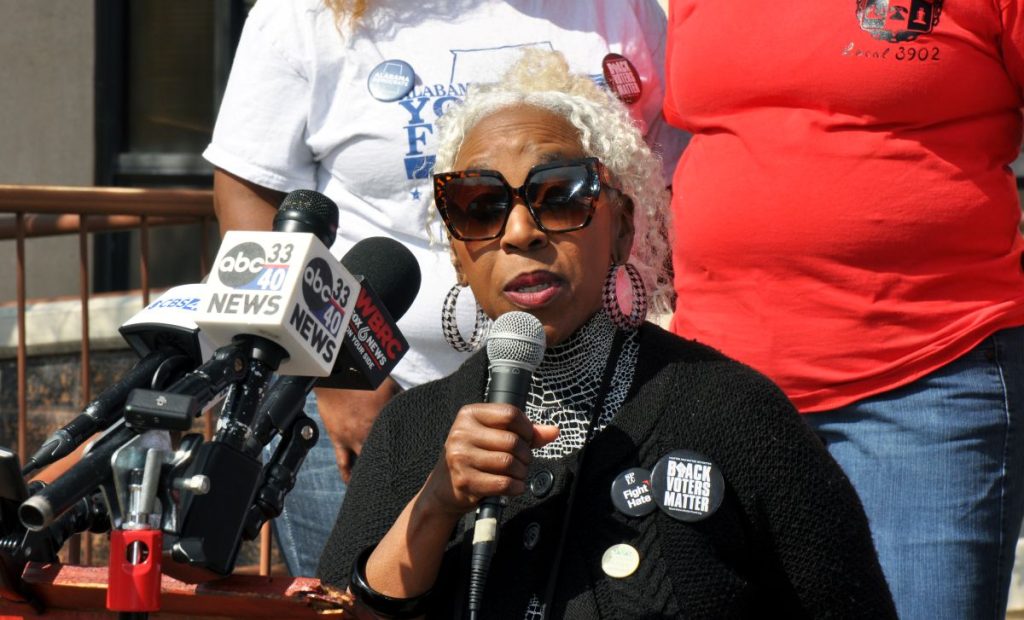
Press conference speakers said one of their objectives is helping terminated CAW employees regain their jobs.
“I’m standing for equity, demanding, along with my cohorts here…fairness on the job, restoration for those who have been canceled from their job positions,” said Yolanda Flowers, a candidate for Alabama governor and a representative of the Southern Christian Leadership Conference.
Hall said the groups at the press conference want to ensure terminated employees have legal representation.
“Ultimately, our goal is to get them all represented by the same legal team,” he said.
Next Steps Toward Unionization
Because Alabama is an “at-will” employment state, employers can terminate any employee at any time and for any reason – except illegal reasons such as discrimination – or for no reason.
Union contracts typically protect employees from wrongful termination by replacing at-will employment with a just-cause standard that requires employers to prove legitimate, documented reasons for dismissal.
Hall said the next steps for possible unionization of CAW employees is to find out what the employees want from their employer, whether they want to unionize and, if so, which union they would like to join. They also could form an independent union.
“That will come down to like the meetings that the workers have and see what fits best,” Robledo said, adding that the workers will form a workplace committee to strategize.
A representative of the Communications Workers of America union spoke at the press conference.
“This is the time for all of the ratepayers, all of the workers, to now stand together and begin to ask the most difficult questions,” said Errol Minor of CWA Local 3902 in Birmingham. “We need to know the who, the where, the why, the how and we have to stop standing and sitting on the sidelines.”