Category: Coronavirus

Coronavirus Cases Top 11,000 in Alabama

Alabama had 11,101 confirmed cases of the novel coronavirus Thursday night after hitting 10,000 cases on Monday. Of those cases, 2,899 were diagnosed in the past 14 days, according to the Alabama Department of Public Health’s COVID-19 Data and Surveillance Dashboard.

Deaths in the state have risen to 473, up 23 from a day before. In addition, 401 people were hospitalized with COVID-19 on Thursday. Since the pandemic began, the virus has put 1,364 people in the hospital. Read more.

After Dispute, Ivey Sends Lawmakers Proposal for $1.8B in Coronavirus Spending

MONTGOMERY — A week after a public dispute between Gov. Kay Ivey and members of the Legislature about who should control about $1.8 billion in federal coronavirus relief money, the governor on Thursday sent lawmakers a detailed proposal for allocating most of it.

The proposed expenditures include money for state agencies’ COVID-19 expenses, businesses, nonprofits and faith-based groups and technology and infrastructure expenses. Read more.

Beef, Poultry Farm Operations Hit by Coronavirus, but Peaches Are on Their Way

Pricing and processing delays caused by the coronavirus pandemic have made a direct hit on the Alabama cattle and poultry industries.

Those were more problems that farmers did not need in the wake of tariffs President Trump imposed on China in 2018 and the swath cut by Hurricane Michael on South Alabama farmlands last year.

“A lot of different things have affected the farmers,” said state Agriculture Commissioner Rick Pate, himself a cattle farmer.

About 600,000 people in Alabama are involved in the farming industry. That includes row crop, fruit and vegetable farmers as well as beef and poultry farmers.

It’s unclear whether row crop farmers will take a major hit this year. Prices for crops are low now, according to agriculture officials, but a lot depends on whether that remains true through the fall harvest.

On the produce side of the table, it appears the pandemic won’t have as big an impact on Alabama’ fruits and vegetables farmers, because most of those crops are sold direct to consumers. A new website, Sweet Grown Alabama, was launched recently to connect consumers with farmers and ease the process of buying and selling produce. Read more.

Alabama Republicans Criticize New Pelosi Relief Bill

Republican members of Alabama’s Congressional delegation are none too pleased with a new coronavirus relief bill pushed by House Speaker Nancy Pelosi, with some calling the $3 trillion plan “liberal la la land” and a “socialist wish list” that won’t pass the Senate.

Pelosi has said she wants a vote Friday on the package that includes more than $900 billion to state and local governments, a second round of $1,200 checks to individuals and up to $6,000 per household, a $200 billion hazard pay fund for essential workers, health insurance subsidies for laid-off workers, $175 billion for rent and mortgage assistance, $25 billion to boost the U.S. Postal Service and an extension of $600-a-week supplemental unemployment benefits.

“It’s nothing but a socialist wish list that has no chance of passing the Senate, so it’s an incredible waste of time,” said Rep. Mike Rogers, R-Saks, who represents east Alabama’s 3rd Congressional District.
Read more.

Five COVID-19 Cases at State Mental Hospital for the Elderly; Admission to State Mental Hospitals Halted

Five patients at the state’s Mary Starke Harper Geriatric Psychiatry Center have tested positive for COVID-19 since May 1.

The positive cases came from two of four units in the hospital in Tuscaloosa. Interactions among the elderly patients, many of whom have dementia, in those units have been limited, Dr. Mark Woods, medical director for the Alabama Department of Mental Health, told Alabama Daily News on Wednesday.

“You have to realize, social distancing in this population is very, very difficult,” Woods said. “You know, you don’t want to restrain or force this population that already has a major issue with confusion. Any restrictions are very difficult.
Read more.

Are Alabama’s COVID-19 Numbers Really Leveling Out? It Depends on Which Numbers You Look At.

The efforts to reopen Alabama’s economy continue this week, as Gov. Kay Ivey relaxed more regulations in her “Safer-at-Home” initiative. In the process of deciding what to open and when, state and health officials continue to look at data to see what effects the regulations have on the number of COVID-19 cases reported and deaths attributed to the disease.

The question is: which pieces of data are government officials using to gauge the effects?

The Alabama Department of Public Health’s COVID-19 web page shows the raw number of cases and deaths continue to increase, and the number of additional cases each day has been 221 or more for the seven-day period of May 7-13.

But another way to look for trends is to use the percentage increase in cases and deaths. Read more.

Census Response Map Shows Lags as Field Operations Restart

About 1.4 million Alabama households have turned in their 2020 census forms, a state self-response rate of 56.7% compared to a national rate of 58.6%, according to the U.S. Census Bureau.

State agencies are now putting extra effort in those parts of the state where responses are lagging. A swath of Black Belt and southern counties, and a few in north Alabama, are trailing in mail-in, internet and telephone replies, according to a map maintained by the Census Bureau. Early this week, Coosa County in central Alabama had the lowest return rate at 26.6%. The response rate data is based on 2018 and 2019 population estimates.

Census kickoff efforts in March and April got off to a slow start because of the coronavirus. Read more and see interactive map.

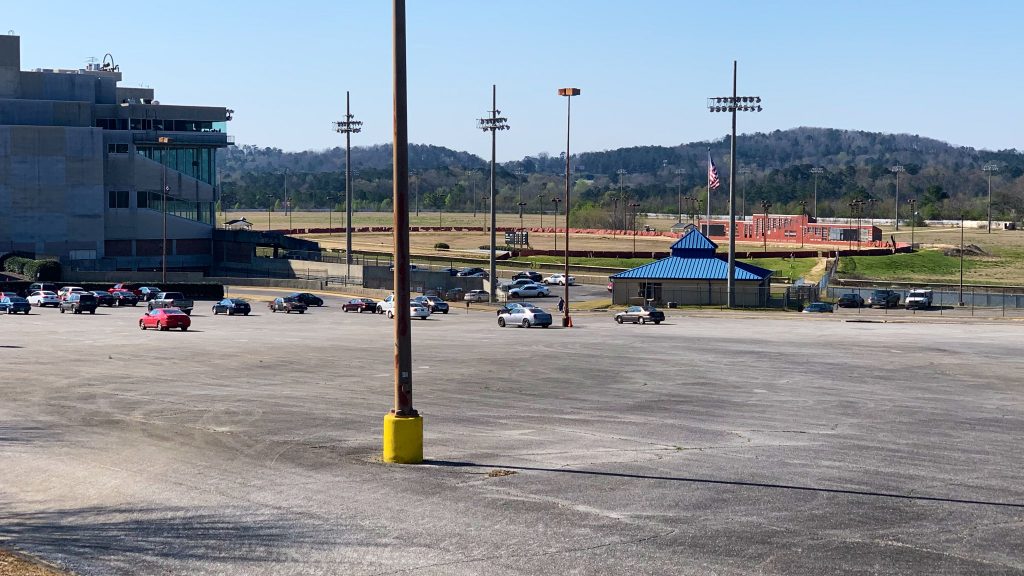
Dogs Gone: Live Greyhound Racing Ends at Birmingham Race Course

The COVID-19 pandemic is known for being fatal mostly to those who were in poor health before they were infected.

One of the latest victims of the virus would certainly fit that description, even though the victim is not a person, but a well-known institution.

The Birmingham Race Course, which began in 1987 as a Thoroughbred racing facility and which added greyhound racing in 1992, has run its last live race. The announcement came on April 22 from Kip Keefer, the head of the Birmingham Racing Commission, after he found out from track owners.
Read more.